Proudly serving Phoenix, Mesa, Scottsdale, Tempe, Glendale, Chandler & surrounding areasCall or Text 24/7: 602-449-9593
Aerial view of a Phoenix, AZ suburban neighborhood featuring stucco houses, desert landscaping, and Saguaro cacti.

Commercial Garage Door Repair for Loading Docks and Warehouse Systems in Phoenix, AZ

Phoenix Garage Door Repair Co. repairs commercial garage doors for warehouses, loading docks, retail bays, and multi-unit properties across Phoenix, AZ. Service covers rolling steel, sectional, and high-speed doors, along with springs, cables, openers, tracks, panels, and rollers. Crews also handle new door and opener installation when repair is no longer cost-effective. Same-day appointments receive priority for stuck, off-track, or non-functioning commercial doors, with weekend requests available for businesses that cannot wait until Monday.

Phoenix direct sun can push asphalt and steel past 150 degrees, and repeated heat cycling fatigues springs, cracks nylon rollers, and shifts steel tracks at their brackets. An inoperable bay can interrupt throughput, idle staff, and leave inventory exposed. Our licensed and insured operation works under Arizona Registrar of Contractors requirements, and technicians are trained to DASMA and International Door Association standards. Crews carry parts for sectional, rolling steel, and high-speed commercial doors, allowing most repairs to be resolved in a single visit.

Commercial repair generally runs $75 to $150 per hour plus a $50 to $70 service call, with the final total determined by the door type, size, parts, and spring system. We inspect the equipment and provide a written estimate rather than relying on a generic phone quote.

Phoenix Garage Door Repair Co. provides commercial garage door repair throughout Phoenix and the surrounding metro, including Glendale, Tempe, Scottsdale, Peoria, Mesa, and Chandler.

★ ★ ★ ★ ★4.9/5.0 Customer Rating · 19 Years of Garage Door Experience · Thousands of Doors Serviced · Licensed, Bonded & Insured · Residential & Commercial Service

Commercial Garage Door Repair Options & Benefits

What Does Commercial Garage Door Repair Include?

Commercial garage door repair restores the springs, cables, tracks, rollers, panels, operators, controls, and safety devices that keep a business opening moving. The work may involve a standard sectional bay, a rolling steel door, a high-speed fabric door, or specialized hardware on a fire-rated assembly.

Urgent conditions include a warehouse door that will not close, a snapped cable on a retail bay, or an off-track panel blocking a fire lane. Every hour a commercial bay remains unusable can mean lost throughput, idle staff, or inventory left exposed to weather and theft.

The repair starts with identifying the door system and the failed component before parts are replaced. Spring wire gauge, coil length, door weight, cable diameter, drum size, track condition, and operator safety functions all affect the correct repair.

Benefits of Professional Commercial Door Repair

A correctly matched repair restores more than door movement. It protects the opening, reduces strain on connected hardware, and helps a warehouse, retail bay, or multi-unit property return to normal operation.

  • Restore access to loading docks, service bays, and secured inventory areas
  • Repair sectional, rolling steel, high-speed, and fire-rated door hardware
  • Prioritize same-day appointments for stuck, off-track, and non-functioning doors
  • Match springs and cables to door weight, wire gauge, drum size, and lift system
  • Test opener entrapment protection and auto-reverse functions under UL 325
  • Follow NFPA 80 specifications when servicing fire-rated commercial doors
  • Provide a documented inspection and written estimate before scheduled work
  • Catch heat-, vibration-, and cycle-related wear during preventative maintenance
Commercial Door Services

Commercial Garage Door Repair Services

Commercial openings fail in different ways depending on daily cycles, door construction, impact history, and Phoenix heat exposure. Our repair services address urgent shutdowns as well as worn components that can be corrected before the door leaves its tracks or stops moving.

Urgent and 24-Hour Commercial Door Repair

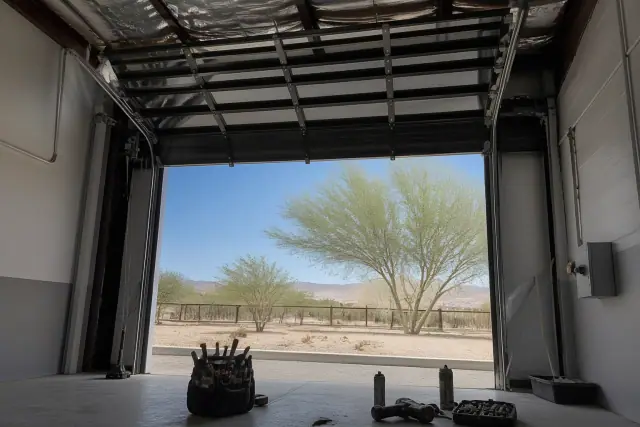
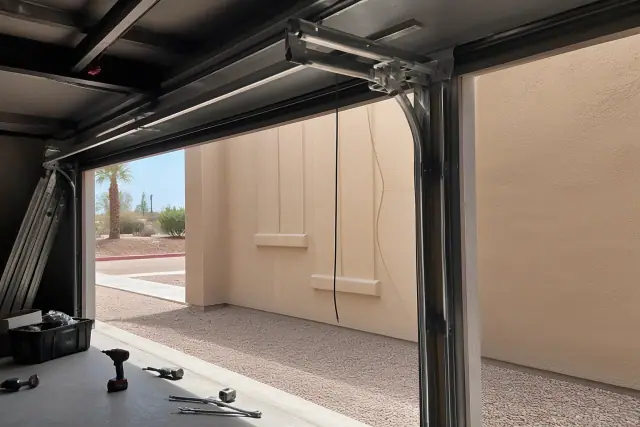
Technician repairing a commercial garage door track in a Phoenix, AZ warehouse with tools on the concrete floor.

A door that will not close, a snapped cable, or an off-track panel can expose a business and stop normal traffic through the opening. We accept 24-hour service requests, prioritize same-day scheduling for stuck and non-functioning commercial doors, and handle weekend requests for businesses that cannot wait until Monday.

Request Estimate

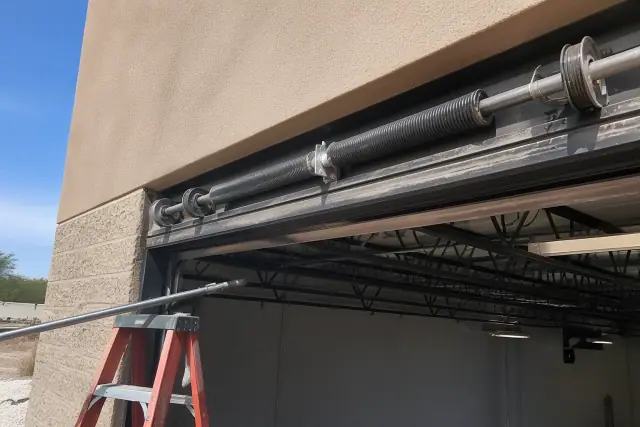
Commercial Spring and Cable Repair

Torsion spring and cable repair on a commercial garage door at a worksite in Phoenix, AZ.

Broken springs can leave a door too heavy to lift, while a failed cable may make it hang crooked or drop on one side. We match cycle-rated springs to door weight and the lift system, and replace lift cables as a set after checking drum size, spring tension, and track alignment.

Request Estimate

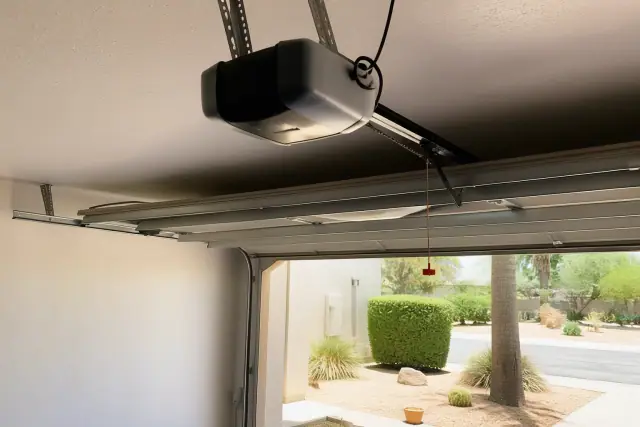
Commercial Opener Repair and Installation

Commercial garage door opener motor mounted to the ceiling at a job site in Phoenix, AZ.

Commercial operator service covers failed circuit boards, stripped gears, dead remotes, and misaligned safety sensors on chain-drive, belt-drive, and jackshaft units. If replacement is more practical, installation includes the header bracket, wall controls, sensor alignment, and a complete cycle test to UL 325 safety standards.

Request Estimate

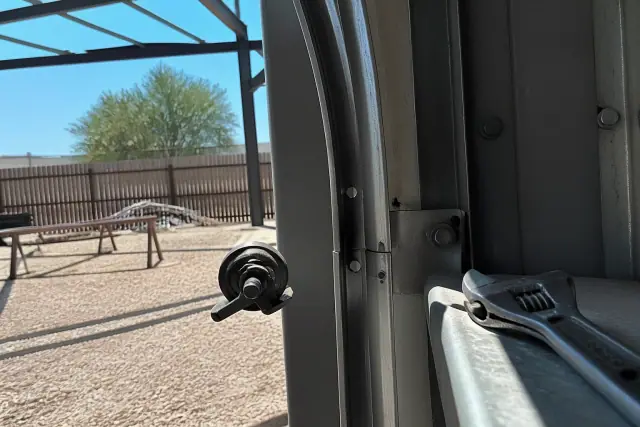
Off-Track Door Realignment

Technician performing an off-track commercial garage door realignment on a metal track system in Phoenix, AZ.

We inspect rollers, cables, track bends, mounting bolts, and the full vertical and horizontal runs before realigning an off-track door. Bent track sections are replaced instead of hammered back into shape because re-bent steel rarely holds alignment for long.

Request Estimate

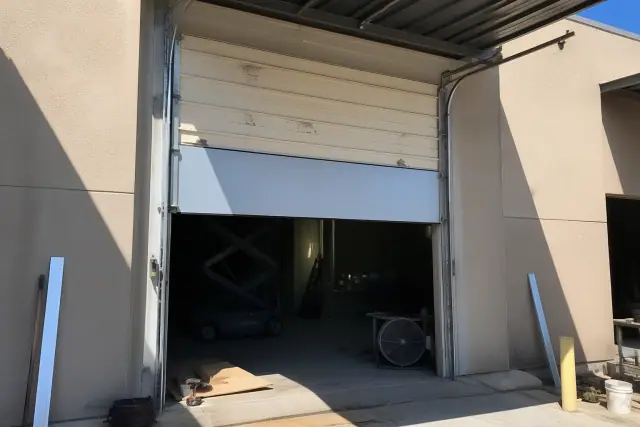
Panel and Roller Replacement

Commercial garage door panel and roller replacement at an industrial building in Phoenix, AZ.

A dented or cracked panel does not always require replacing the complete door. We source matching panels by manufacturer and model when available, then check hinge alignment, track clearance, and balance; roller selection is matched to the door's use, with steel ball-bearing rollers suited to heavier commercial cycling.

Request Estimate

Preventative Maintenance and Tune-Ups

Commercial garage door maintenance with tools and lubricant on a track system in a Phoenix, AZ warehouse.

Annual tune-ups cover spring tension, roller and hinge lubrication, track alignment, cable condition, and opener force adjustment. This inspection can catch a fraying cable or worn roller before it becomes an off-track door or a stuck opener during a 110-degree afternoon.

Request Estimate
Commercial Door Types

Commercial Door Systems We Repair

From rolling steel warehouse doors to sectional retail bays, high-speed openings, fire-rated assemblies, and commercial operators, each system uses different counterbalance, guide, panel, and safety hardware. Identifying the system first keeps the repair focused on compatible parts and the correct operating standard.

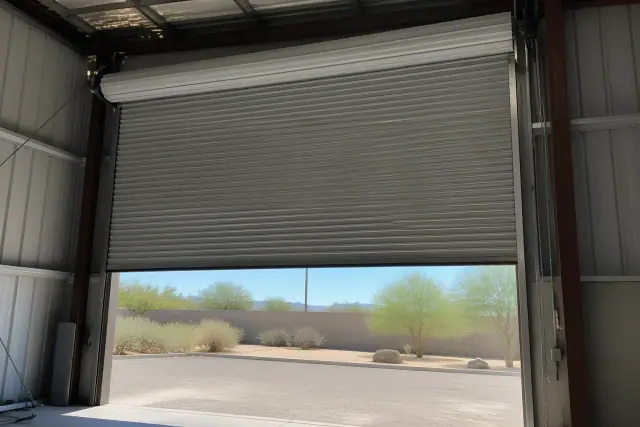
Newly installed rolling steel door on a commercial warehouse track system in Phoenix, AZ.

Rolling Steel Doors

Rolling steel warehouse doors use a barrel, counterbalance springs, guide tracks, interlocking slats, and bottom-bar hardware. These components operate differently from a residential sectional door and often carry far higher daily cycle demands.

  • Barrel and counterbalance spring service
  • Guide-track inspection and alignment
  • Damaged slat replacement
  • Bottom-bar hardware repair
  • Service for high-cycle warehouse openings
Request Estimate
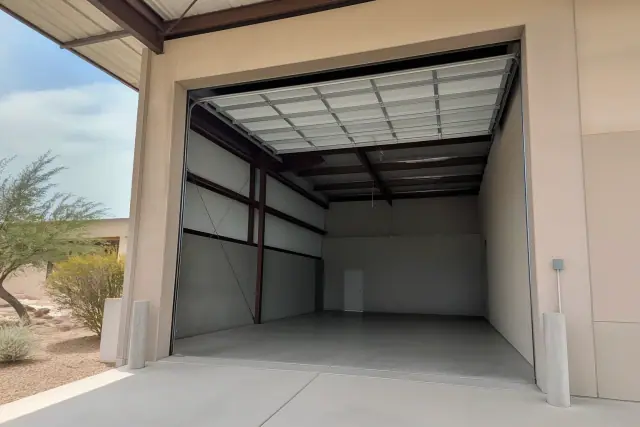
Sectional commercial door installation in an industrial warehouse bay in Phoenix, AZ.

Sectional Commercial Doors

Sectional commercial doors serve retail bays and small distribution centers with heavier-gauge panels and industrial hardware. Repair decisions account for the extra panel weight and higher use compared with a typical residential door.

  • Heavier-gauge commercial panel service
  • Industrial hinge inspection and alignment
  • Higher-cycle torsion spring replacement
  • Reinforced track and installation hardware
  • Retail-bay and distribution-center repairs
Request Estimate
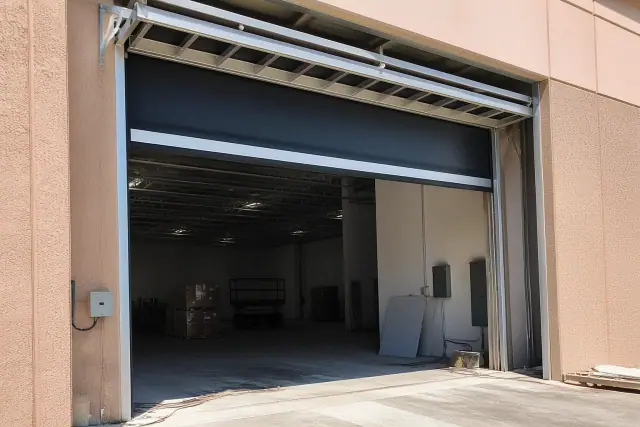
High-speed commercial warehouse doors installed on a metal track system at a facility in Phoenix, AZ.

High-Speed Commercial Doors

High-speed doors support rapid traffic at cold-storage and distribution facilities. Repairs focus on the door's guides, operator, fabric or panel travel, and the photo-eye safety edges used around powered operation.

  • High-speed operator diagnosis
  • Guide and travel-path inspection
  • Photo-eye safety-edge setup
  • Powered-door checks informed by OSHA guidance
  • Parts support for rapid-cycle commercial doors
Request Estimate
Fire-rated door assembly with a fusible link and certification tag on a metal track at a jobsite in Phoenix, AZ.

Fire-Rated Door Assemblies

Fire-rated commercial doors require attention to the complete assembly, not only the visibly failed part. Service follows NFPA 80 specifications for fire door assemblies while addressing the springs, guides, operator, and closing hardware involved.

  • NFPA 80 assembly requirements
  • Fire-rated spring and counterbalance checks
  • Guide and closing-path inspection
  • Operator and release-hardware evaluation
  • Repairs that account for the complete door assembly
Request Estimate
Commercial garage door motor and controls mounted on a metal wall at a job site in Phoenix, AZ.

Commercial Operators and Controls

Commercial operators and controls coordinate motor power, wall stations, remotes, sensors, and door travel. Diagnosis separates an isolated control or sensor problem from an operator that is old enough or damaged enough to justify replacement.

  • Chain-drive, belt-drive, and jackshaft operator service
  • Circuit-board and stripped-gear diagnosis
  • Monitored auto-reverse and entrapment protection
  • Safety-sensor alignment and wall-control setup
  • Rolling-code security and full cycle testing
Request Estimate
Finding the Right Repair

Choosing the Right Commercial Door Repair Approach

The right approach depends on whether the failure is isolated to a spring, cable, roller, sensor, or panel, or involves the structure and controls of the whole opening. We inspect the door type, weight, manufacturer, track condition, cycle demands, and safety equipment before recommending repair, component replacement, or a new commercial system.

Licensed, Insured, and Standards-Trained

We operate as a licensed and insured contractor under Arizona Registrar of Contractors requirements. Technicians are trained to DASMA and International Door Association standards for spring systems, opener installation, and commercial door hardware.

Commercial Parts Stocked for Faster Repairs

Crews carry stock for sectional, rolling steel, and high-speed commercial doors. Matching common parts to the opening during diagnosis helps most repairs finish in a single visit instead of requiring a second trip for parts.

Documented Inspections and Written Estimates

Commercial systems vary too much by manufacturer, size, and hardware for an accurate generic phone quote. We document the inspection and provide a written estimate that explains the failed component, recommended work, and line items before the repair is scheduled.

What Sets Our Service Apart

Why Choose Us for Commercial Garage Door Repair?

Phoenix heat, high daily cycles, and heavy commercial hardware require careful diagnosis and correctly matched parts. Our approach combines documented inspections, standards-based safety checks, commercial door experience, and clear written estimates for warehouse, retail, industrial, and multi-unit openings.

Request Inspection

Doors That Will Not Close or Open

A commercial door that will not close can leave inventory and equipment exposed, while one that will not open can stop loading or service traffic. On a powered door, repeated reversing may point to an obstructed or misaligned sensor rather than a failed motor.

Broken or Fatigued Springs

A loud bang, a door that lifts only a few inches, or an operator that strains and reverses can indicate a failed spring. Standard springs may carry a 10,000-cycle rating, and repeated Phoenix heat cycling means springs on 15-year-old doors may already be beyond their service life.

Frayed or Snapped Lift Cables

Fraying near the bottom bracket or drum is an early cable warning, while a snapped cable can make the door hang crooked, jam, or drop on one side. Cables typically last 8-10 years under normal residential cycling and often wear sooner on commercial doors with high daily open-close counts.

Off-Track and Misaligned Doors

Vehicle impact, a broken cable, a roller leaving the track, or mounting bolts loosened by vibration can pull a door off track. Phoenix temperature swings can also shift steel tracks at the brackets, so we verify plumb and level across the full track run before realignment.

Opener and Safety-Sensor Failures

Dead remotes, failed circuit boards, stripped gears, and misaligned sensors can all stop or reverse an operator. Diagnosis matters because an isolated issue may be as small as a $30 sensor bracket, while an older operator with outdated safety technology may be better replaced.

Damaged Panels and Worn Rollers

Vehicle impact, hail, and age can dent or crack a panel, while worn rollers cause noise, binding, and uneven travel. After panel or roller work, we recheck hinges, track clearance, and balance so the repaired section sits flush and moves evenly.

How It Works

Our Commercial Garage Door Repair Process

Every repair follows the condition of the actual door rather than a one-size-fits-all parts list. The process moves from symptom review and safety control through system diagnosis, written pricing, matched repair, and a final operating test.

01.

Describe the Door Failure

Call ahead with the door type, property use, and what you see or hear. For a stuck, off-track, or non-functioning commercial door, we use that description to prioritize scheduling and route a technician with relevant parts.

02.

Secure and Inspect the Opening

Before touching springs, cables, or tracks, the technician controls the door's movement and checks whether the opening is under spring tension. Urgent hazards such as a hanging panel, blocked fire lane, or exposed loading bay are identified first.

03.

Diagnose the Door System

We inspect the tracks, rollers, cables, springs, panels, operator, and safety sensors to isolate the failure. Measurements such as door weight, wire gauge, coil length, cable diameter, and drum size guide correct parts selection.

04.

Review a Written Estimate

You receive a written estimate after inspection instead of a generic phone price. The estimate reflects the door system, failed components, part requirements, and labor involved.

05.

Complete the Matched Repair

The technician installs the matched spring, cable set, track section, roller, panel, operator part, or safety component. Connected hardware is rechecked because a snapped cable or shifted panel can place extra stress on the rest of the system.

06.

Test Travel and Safety Functions

We check track clearance, spring balance, cable travel, opener force, sensor alignment, and full door cycles before finishing. New opener work also includes monitored auto-reverse and entrapment-protection checks required by UL 325.

Restore Your Commercial Door

Schedule Commercial Garage Door Repair in Phoenix

Tell us whether the problem involves a warehouse door, loading dock, retail bay, industrial opening, or multi-unit property. We will inspect the commercial system, explain the failed components, and provide a written estimate for the recommended repair.

Commercial Door Help

Commercial Garage Door Repair FAQs

Find practical answers about Phoenix commercial garage door costs, urgent failures, door types, maintenance, and repair decisions. For a diagnosis tied to your opening, call with the door type and symptoms you are seeing.

Call Our Technicians

Look for a company licensed under the Arizona Registrar of Contractors, carrying liability insurance, and willing to provide a written estimate before work begins. A reputable technician should explain the inspection, credentials, failed part, and repair recommendation without pressuring you into immediate full-door replacement.

Commercial garage door repair generally runs $75 to $150 per hour plus a $50 to $70 service call. The total depends on whether the door is rolling steel, sectional, or high-speed and whether the work involves springs, cables, panels, tracks, or the operator.

Phoenix Garage Door Repair Co. services warehouses, industrial corridors, retail centers, and multi-unit properties throughout Phoenix and the surrounding metro. Technicians work with property managers and business owners on individual bay failures as well as scheduled maintenance across multiple openings.

Phoenix-area residential repair generally falls within a $75 to $150 hourly labor rate plus a $50 to $70 service call, and many single-issue repairs land in the $150 to $400 range depending on parts. Full door replacements range from $800 to as much as $6,000 based on material, insulation, and size, while a standard two-car installation runs around $2,100.

Be cautious if a company will not provide a license number, demands cash-only payment before inspecting the door, or gives a firm phone quote without seeing the system. Another warning is a technician who recommends replacing the entire door after a five-minute look at a narrow issue such as a single broken spring.

Common calls involve broken torsion springs, frayed or snapped lift cables, worn rollers, dead circuit boards, and misaligned safety sensors. Off-track doors caused by a broken cable or impact and panels damaged by vehicles are also frequent repair needs.

A warehouse door that will not close, a snapped cable on a retail bay, or an off-track panel blocking a fire lane should be treated as urgent. These failures can interrupt traffic, expose inventory, or create a risk around a heavy suspended door.

Service covers sectional commercial doors, rolling steel doors, high-speed doors, fire-rated assemblies, and their operators and controls. The repair method changes with the system because barrels, counterbalance springs, guide tracks, panels, fabric travel, and safety devices work differently.

An opener under five years old with an isolated part failure is usually worth repairing. An operator older than 10-15 years, using outdated safety technology, or facing a second major repair may be a better replacement candidate after inspection.

Common causes include a broken cable, a roller that leaves the track, vehicle impact, bent steel, and bolts loosened by years of vibration. Phoenix temperature changes can also shift steel tracks at their mounting brackets, making a complete plumb-and-level check important.

The source maintenance plan calls for annual tune-ups covering spring tension, rollers, hinges, tracks, cables, and opener force. Commercial doors with high daily open-close counts may show wear sooner, so visible fraying, binding, noise, or uneven travel should be inspected when noticed.

Yes, the repair process replaces both lift cables as a set even when only one has failed because the second cable is typically close behind in wear. Cable diameter and drum size are matched to the door weight, followed by checks of spring tension and track alignment.

Service extends throughout Phoenix and the surrounding metro, including Glendale, Tempe, Scottsdale, Peoria, Mesa, and Chandler. Coverage includes warehouse and industrial corridors, retail centers, loading docks, and multi-unit properties.