Proudly serving Phoenix, Mesa, Scottsdale, Tempe, Glendale, Chandler & surrounding areasCall or Text 24/7: 602-449-9593
Aerial view of a Phoenix, AZ suburban neighborhood featuring stucco houses, desert landscaping, and Saguaro cacti.

Off-Track Garage Door Repair and Track Realignment in Phoenix, AZ

Phoenix Garage Door Repair Co. provides residential and commercial off-track garage door repair throughout Phoenix. We also handle garage door spring repair and replacement, opener repair and installation, cable and panel repair, roller replacement, new door installation, maintenance, and commercial garage door repair. Our technicians service sectional roll-up doors, single-panel doors, and commercial overhead doors.

A derailed door can hang unevenly on rollers and cables that were not designed to carry an off-axis load. We diagnose whether rollers escaped the channel or the track bent, separated from a bracket, or pulled loose before recommending work. Our licensed, bonded, and insured technicians follow manufacturer specifications and the ANSI/DASMA 102 structural standard while using torsion spring bars, track gauges, and roller pullers.

Same-day, weekend, emergency, and 24/7 availability helps when a derailed door blocks a vehicle or leaves a property exposed.

Phoenix Garage Door Repair Co. provides off-track garage door repair in Phoenix, Scottsdale, Tempe, Mesa, Glendale, and the greater Maricopa County metro area.

★ ★ ★ ★ ★4.9/5.0 Customer Rating · 19 Years of Garage Door Experience · Thousands of Doors Serviced · Licensed, Bonded & Insured · Residential & Commercial Service

Off-Track Garage Door Repair Benefits

What Is Off-Track Garage Door Repair?

An off-track repair restores rollers to the track channel and corrects the condition that let the door move sideways. The cause may be roller failure, a bent track, a loose wall bracket, an uneven cable load, or a broken spring.

Phoenix covers 517.9 square miles and has more than 1.6 million city residents within a metro of 5.19 million people. Across that service area, older hardware in Sunnyslope, lighter-gauge tracks in Desert Ridge, and heat movement in stucco block construction across South Phoenix can create different repair conditions.

We identify the derailment type during the initial visit, explain which parts and labor are involved, and present the repair scope and cost before work begins.

Benefits of Correcting the Whole Door System

Repairing the visible derailment and its underlying cause helps the door travel smoothly without placing avoidable strain on the opener, cables, drums, panels, or remaining rollers.

  • Restores rollers to the correct track channel
  • Corrects track width, plumb, and bracket position
  • Finds cable, spring, hinge, and roller damage
  • Reduces metal-on-metal grinding and popping
  • Protects panels from secondary bending
  • Balances movement on both sides of the door
  • Verifies opener force and auto-reverse operation
  • Supports quiet, true travel through a full cycle
Track and Roller Services

Complete Off-Track Garage Door Repair Services

The correct service depends on whether the door needs roller reseating, track correction, damaged-part replacement, or repairs to the cables and springs that control its load.

Track Realignment and Straightening

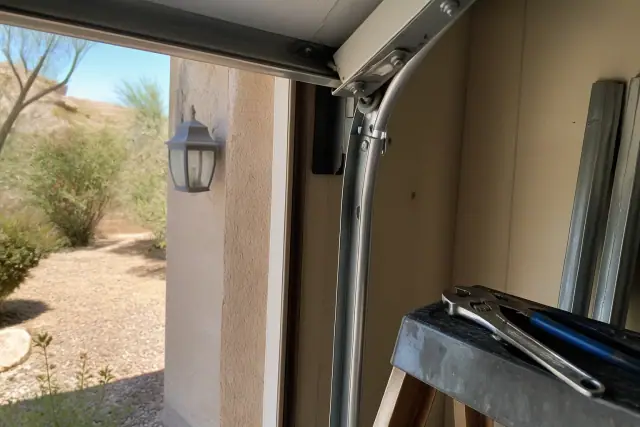
Garage door track repair in progress at a Phoenix, AZ home, showing track hardware, rollers, and tools on a nearby ladder.

For a minor derailment, we reseat the rollers and use a track gauge to confirm the vertical and horizontal sections are correctly spaced and plumb. Specialized bar clamps can correct a minor bend when the steel remains structurally sound.

Request Estimate

Roller Replacement and Lubrication

New rollers and lubricant on a garage door track system at a home in Phoenix, AZ.

Cracked or worn rollers can let the door wobble laterally and leave the rail. We install sealed steel ball-bearing rollers rated for high-heat environments and use lithium-based lubricant rather than household oils that attract desert dust.

Request Estimate

Full Track Replacement

Technician installing new garage door tracks on an interior wall in a Phoenix, AZ garage.

Rust pitting, several bend points, warped vertical sections, fatigued steel, or brackets pulled from framing can make replacement safer than another straightening attempt. New galvanized steel track is mounted to manufacturer specifications before roller placement and full-cycle testing.

Request Estimate

Cable and Spring Repair

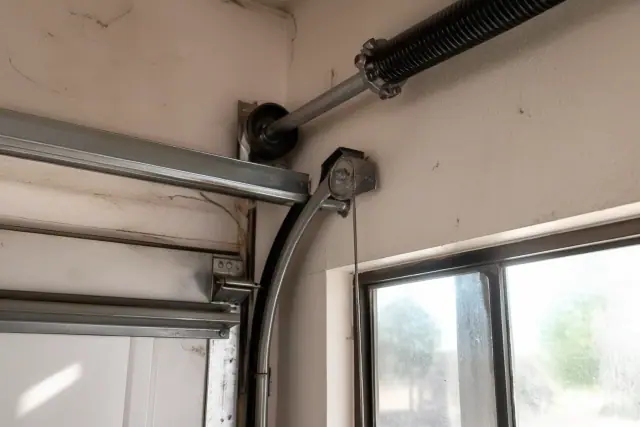
New steel cable and tensioned torsion spring on a garage door track in a Phoenix, AZ home garage.

A frayed cable or failed torsion spring changes the load on one side and can pull rollers from the channel. We inspect cable condition and spring tension with the track so the repaired door runs balanced on both sides.

Request Estimate

Residential Derailment Repair

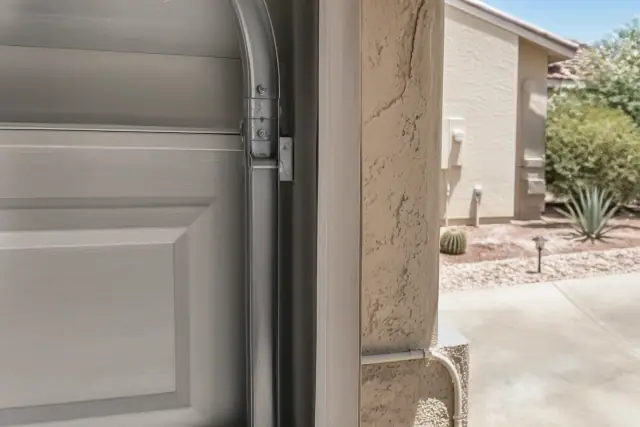
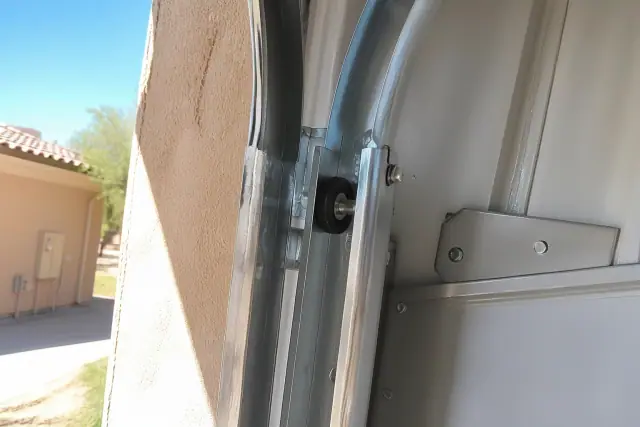
Garage door track repair in progress on a stucco home in Phoenix, AZ, showing rollers and brackets on the metal tracks.

Most residential off-track repairs take one to two hours on-site when common rollers, hinges, and track parts solve the problem. A full section replacement or panel damage can extend the visit based on door size and access.

Request Estimate

Commercial Overhead Door Repair

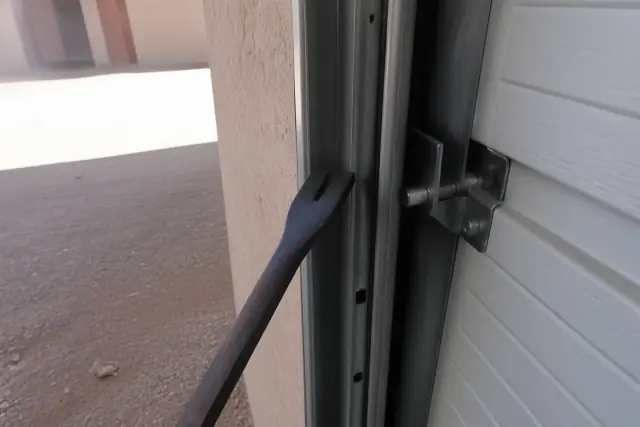
Technician using a pry bar to realign an off-track commercial garage door in Phoenix, AZ.

Warehouse, auto-shop, distribution-center, and loading-dock doors may cycle dozens of times daily, creating more track and roller wear than a residential door sees in a month. We service commercial roll-up and sectional doors with heavy-duty steel rollers and reinforced brackets.

Request Estimate
Door and Track Options

Door and Track Repair Options

Inspection separates a straightforward roller reseating job from a track, cable, spring, or panel problem. These common repair paths show how we match the work to the condition of the door.

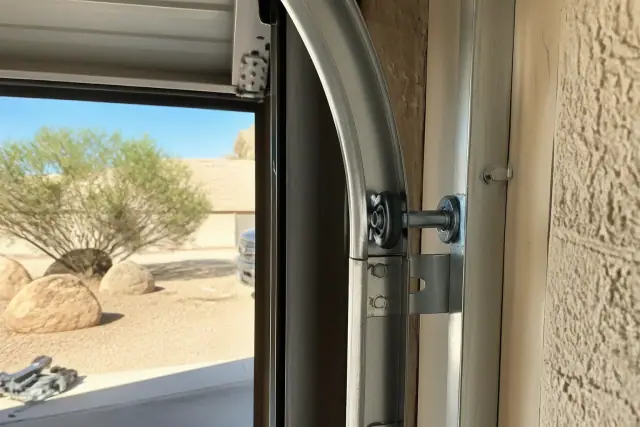
Garage door rollers securely seated in the metal guide tracks during a repair in Phoenix, AZ.

Minor Roller Reseating

When the track is sound and the rollers have simply left the channel, the repair focuses on safely controlling spring tension, restoring roller position, and verifying alignment.

  • Disconnect the opener before moving the door
  • Control torsion or extension spring tension
  • Reseat rollers without forcing panels
  • Check track width and plumb
  • Test balance through a complete cycle
Request Estimate
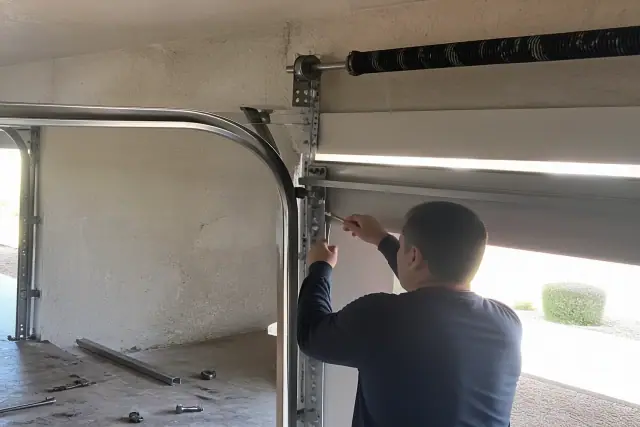
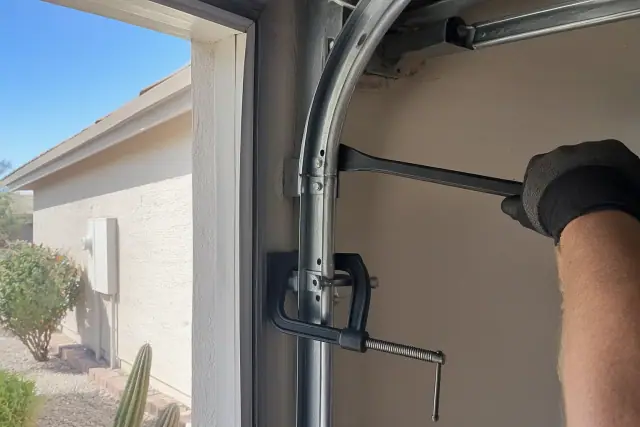
Technician using a pry bar and C-clamp to straighten a bent garage door track at a home in Phoenix, AZ.

Bent Track Straightening

A repairable bend can be straightened with controlled pressure and then measured against the door manufacturer's specification. Hammering the rail can work-harden the steel and create a weak point.

  • Inspect the full vertical and horizontal track
  • Locate impact damage and bend points
  • Use specialized bar clamps for correction
  • Reset wall-bracket position and torque
  • Confirm smooth roller travel
Request Estimate
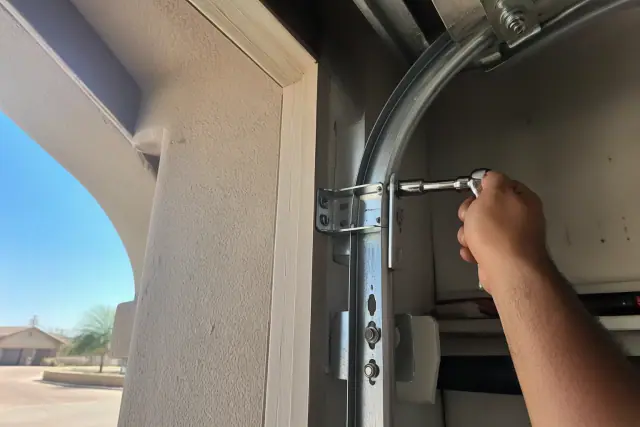
Technician using a socket wrench to install a new heavy-duty steel garage door track at a home in Phoenix, AZ.

Damaged Track Replacement

A track with structural damage is removed and replaced rather than repeatedly bent back into shape. Full track replacement on one or both sides typically runs $400 to $600 including parts and labor, while the installation is typically a half-day job depending on door size and panel condition.

  • Remove fatigued or warped sections
  • Mount galvanized steel track to framing
  • Set correct width and plumb
  • Reset roller placement
  • Inspect panels before final testing
Request Estimate
New high-heat rollers installed in an overhead garage door track on a stucco wall in Phoenix, AZ.

High-Heat Roller Upgrade

West-facing steel door surfaces in Phoenix regularly exceed 160 degrees Fahrenheit. Replacing brittle nylon rollers with sealed steel ball-bearing rollers can better match that heat exposure, especially when original 1990s-era track is being upgraded to heavier-gauge steel.

  • Remove cracked or wobbling nylon rollers
  • Install sealed ball-bearing rollers
  • Match roller hardware to the door
  • Apply lithium-based lubricant
  • Check lateral movement under load
Request Estimate
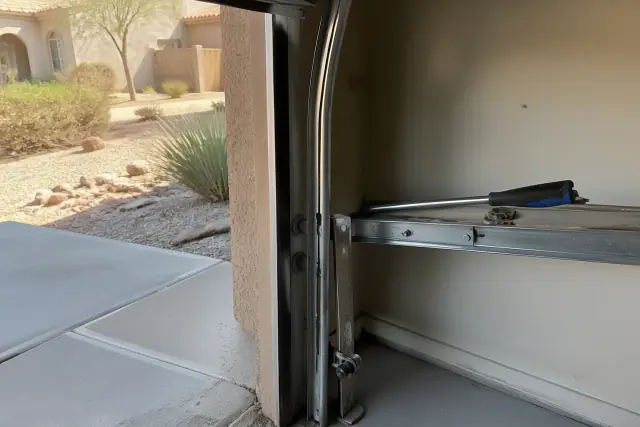
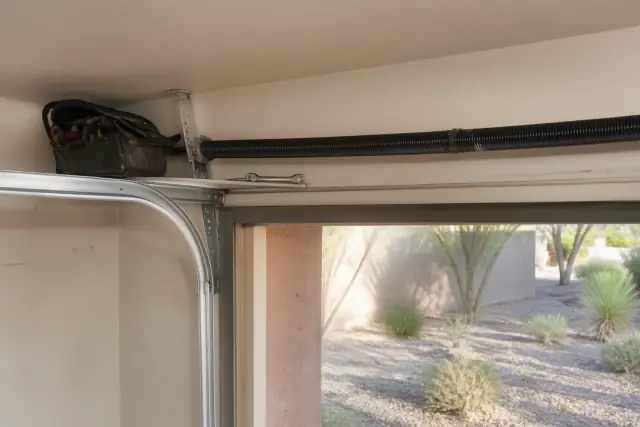
Technician's view of garage door track and spring maintenance in Phoenix, AZ with tools resting on the header.

Preventive Maintenance and Tune-Ups

Residential doors in Phoenix benefit from a tune-up every 12 months because heat accelerates roller wear and lubricant breakdown. Commercial doors cycling heavily may need checks every three to six months.

  • Measure track alignment
  • Check cable tension and fraying
  • Inspect roller and hinge wear
  • Tighten track brackets
  • Refresh desert-appropriate lubrication
Request Estimate
Choosing the Repair Path

Choosing the Right Off-Track Repair Approach

The right approach starts with the whole counterbalance and track system, not just the roller that is visibly out of place. We evaluate structural damage, hardware wear, spring tension, and operating conditions before deciding whether to realign, straighten, replace, or upgrade components.

Root-Cause Diagnosis

We inspect tracks, rollers, cables, springs, hinges, and wall brackets before touching the rail. That diagnosis helps avoid a repeat derailment within weeks or a callback three months later.

Proper Tools and Standards

Technicians use track gauges, roller pullers, spring bars, spring-tension-rated vise grips, and torque wrenches set to manufacturer specifications. Repair work follows the ANSI/DASMA 102 structural standard for residential garage doors.

Licensed, Bonded, and Insured

Phoenix Garage Door Repair Co. is licensed, bonded, and insured. Technicians explain the diagnosis and cost before starting instead of relying on a vague, sight-unseen quote.

What Sets Us Apart

Why Choose Us for Off-Track Garage Door Repair?

Crews arrive with common residential and commercial parts so many repairs can be completed during the initial visit. We combine track correction with the cable, spring, roller, bracket, and opener checks needed to verify the door as a complete operating system.

Request Inspection

Vehicle Impact

Vehicle contact is the most common derailment cause on our service calls. Even a low-speed bump can bend a rail, disturb brackets, or push rollers sideways.

Broken Cables or Springs

A snapped cable or torsion spring can let one side drop faster than the other and force rollers from the channel. Spring replacement in Phoenix typically runs $185 to $385 based on door weight and whether a single spring or matched pair is replaced.

Heat-Damaged Rollers

Daily heat cycling expands and contracts steel tracks, hinges, and panel seams while sustained desert heat can make nylon rollers brittle. A cracked roller lets the door wobble laterally until it leaves the rail.

Loose or Bent Tracks

Wall brackets can loosen, tracks can pull away from framing, and stored items leaning on a rail can create a bend. Each condition changes the track geometry and calls for a different repair.

Monsoon Wind Pressure

Monsoon wind gusts can catch a door mid-cycle and force it off-axis. Older sectional doors with worn end hinges are particularly vulnerable to that sideways load.

Uneven or Noisy Movement

A door that hangs unevenly, shows daylight beside one track, grinds, pops, stutters, reverses unexpectedly, or lags on one side is already showing compromised alignment. Stop operating it before the damage spreads.

How it works

Our Off-Track Garage Door Repair Process

A controlled repair process protects the door while moving from diagnosis to alignment, component work, and final safety verification.

01.

Disable and Secure the Door

We disconnect the opener, control spring tension, and stabilize the door before moving rollers or track. Homeowners should cut opener power and keep the area clear rather than forcing a derailed door.

02.

Inspect the Full System

Tracks, rollers, cables, springs, hinges, wall brackets, panels, drums, and the opener are checked for the condition that caused the derailment and for secondary damage.

03.

Explain Scope and Price

Most off-track repairs in Phoenix run $150 to $385, depending on whether the work is a simple roller realignment or includes a bent track. We explain inspection findings and provide a clear price before starting.

04.

Realign or Replace the Track

Rollers are repositioned into the channel and the rail is measured for width and plumb. A sound bend is straightened with bar clamps, while structurally compromised track is replaced.

05.

Replace Worn Parts and Lubricate

Damaged rollers, cables, springs, hinges, or brackets are corrected as the scope requires. The track and roller assembly receive lithium-based lubricant that does not attract dust like household oil.

06.

Test Balance and Safety

The finished door runs through multiple open-close cycles, a balance test, an auto-reverse check, and opener force-setting adjustment. The repair is complete when the door travels quietly and true.

Restore Safe Door Travel

Schedule Off-Track Garage Door Repair Service

Running a derailed door under opener power can turn a $150-$385 track repair into a $600-plus job involving cable, panel, or full-track damage. One documented two-week delay led to a bent panel and snapped cable, so keep the area clear and request an inspection before operating the door again.

Phoenix Repair Help

Off-Track Garage Door Repair FAQs

Get direct answers about off-track repair costs, causes, safety, timelines, parts, maintenance, and service for Phoenix homes and businesses.

Call Our Experts

Most off-track repairs in Phoenix run between $150 and $385, depending on whether the door needs roller reseating and realignment or has a bent track section. Full track replacement on one or both sides typically reaches $400 to $600 including parts and labor. Cable or panel damage can increase the scope, so we quote after inspection and before work begins.

We disconnect the opener, release tension safely, reseat the rollers, check the track for bends and loose brackets, and correct damaged components. The door is then re-tensioned and tested for balance, auto-reverse operation, opener force, and smooth travel.

A track alignment gauge checks vertical plumb and horizontal level against manufacturer specifications. Wall brackets are loosened and repositioned as needed, while bent steel is straightened with bar clamps or replaced if repeated bending has caused fatigue.

Common causes include vehicle impact, worn or cracked rollers, broken cables, loose brackets, bent tracks, and torsion spring failure. In Phoenix, severe heat can accelerate nylon roller wear, and monsoon wind can catch an older sectional door mid-cycle.

We recommend a tune-up every 12 months for most Phoenix residential doors because summer heat accelerates roller wear and lubricant breakdown. Commercial doors that cycle dozens of times daily can benefit from checks every three to six months.

Look for licensing through the Arizona Registrar of Contractors, bonding, insurance, and a written estimate before work begins. Phoenix Garage Door Repair Co. is licensed, bonded, and insured, and our technicians explain the diagnosis and price before touching the door.

Watch for an uneven door, daylight beside one track, grinding or popping sounds, rollers outside the channel, unexpected reversing, stuttering, or one side lagging. Stop using the opener if the door cannot complete a full cycle or produces metal-on-metal grinding.

Yes. The door can drop unexpectedly, while misaligned cables and torsion springs remain under dangerous tension. Cut power to the opener, keep people and property clear, and do not force or pry the door into place.

Replacement is usually the better path when the track has rust pitting, several bends, a warped vertical section, brackets pulled from framing, or steel that has already been forced back into shape more than once. A minor bend may still be straightened if the rail remains structurally sound.

Most residential off-track repairs take one to two hours on-site when common roller, track, and hinge parts resolve the problem. Full track replacement is typically a half-day job, depending on door size, access, and whether panels also need attention.

Nylon rollers can become brittle under sustained desert heat, especially when a west-facing steel door surface regularly exceeds 160 degrees Fahrenheit. Sealed steel ball-bearing rollers rated for high-heat environments resist that failure pattern, while lithium-based lubricant avoids attracting dust like household oil.

Yes. We repair commercial roll-up and sectional doors at warehouses, auto shops, distribution centers, and loading docks. Crews carry commercial-grade parts, and scheduled maintenance can check alignment, cable tension, and roller wear before a high-cycle bay door fails.

Keep stored items away from the rails, stop the opener when the door begins grinding or traveling unevenly, and schedule regular maintenance. A tune-up can identify loose brackets, worn rollers, frayed cables, spring imbalance, and lubricant breakdown before they force the door off-axis.