Proudly serving Phoenix, Mesa, Scottsdale, Tempe, Glendale, Chandler & surrounding areasCall or Text 24/7: 602-449-9593
Aerial view of a Phoenix, AZ suburban neighborhood featuring stucco houses, desert landscaping, and Saguaro cacti.

Garage Door Cable Repair and Safety Balance Services in Phoenix, AZ

Phoenix Garage Door Repair Co. provides garage door cable repair for homeowners and businesses in Phoenix, Arizona. We diagnose frayed, slipped, and broken cables and service sectional, rolling, swing-out, and side-hinged doors. Our team also evaluates drums, pulleys, springs, bearings, and track alignment because cable failure often signals a wider counterbalance problem. We match replacement cable to the door's lift type, gauge, and length for residential and commercial systems.

Salt River Valley pavement temperatures regularly climb past 150 degrees in summer, radiating heat into garages while monsoon dust packs grit into drum grooves and pulley bearings. Those conditions can accelerate cable wear and dry out lubricant. When a cable fails on a 400-pound sectional door, the door can twist, jump the track, or drop unexpectedly. Correctly matched cable and balanced tension restore controlled movement and help prevent a repeat failure.

Our technicians follow DASMA-aligned tensioning procedures and test automatic openers for UL 325 entrapment-protection function after replacement. An assortment of cable gauges, drums, and fittings on the truck allows most repairs to be diagnosed and completed in one visit.

Phoenix Garage Door Repair Co. provides garage door cable repair across Phoenix and supported nearby service areas including Scottsdale, Tempe, Mesa, Glendale, and Chandler.

★ ★ ★ ★ ★4.9/5.0 Customer Rating · 19 Years of Garage Door Experience · Thousands of Doors Serviced · Licensed, Bonded & Insured · Residential & Commercial Service

Garage Door Cable Repair Options & Benefits

What Does Garage Door Cable Repair Address?

Lift cables work with torsion or extension springs to control the door's moving weight. If one cable stretches, slips, or breaks, the uneven load can leave the door crooked, bind it in the tracks, and strain the opposite cable and spring.

A thorough cable repair checks the surrounding system rather than replacing one visible part. Drums, pulleys, springs, bearings, bottom brackets, and track alignment can reveal why the cable frayed or came off its groove.

Replacement work uses galvanized aircraft cable matched to the original door specifications and lift arrangement. Proper seating, winding, and equal tension help the door travel smoothly and hold position without drifting.

Benefits of Professional Cable Repair

Professional cable work restores the counterbalance as a complete system. The result is a door that moves evenly while reducing avoidable stress on springs, drums, tracks, and the opener.

  • Level travel with equal cable load
  • Cable gauge and length matched to the door
  • Drum, pulley, spring, and track inspection
  • Safer control of the door's moving weight
  • Reduced rubbing at drum flanges and grooves
  • Balance and auto-reverse function testing
  • Repair recommendations adjusted for Phoenix heat and dust
  • Clear parts and labor scope before work begins
Cable Service Options

Phoenix Garage Door Cable Services

Cable problems range from early strand damage to a complete break that leaves the opening unusable. We tailor inspection, replacement, alignment, and maintenance work to the door type and the condition of its supporting hardware.

Broken Cable Replacement

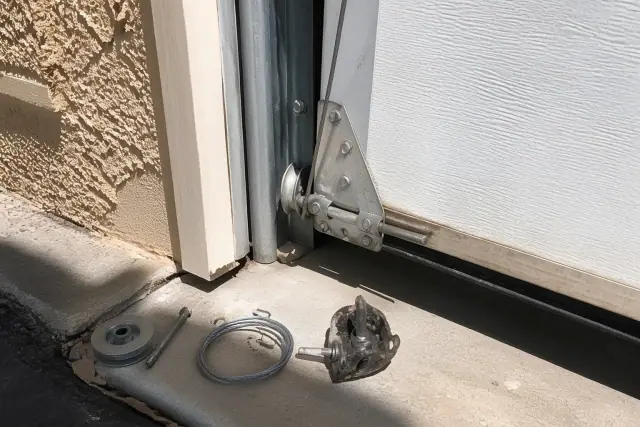
New garage door cable installed on a bottom bracket with tools on a stucco wall in Phoenix, AZ.

A snapped cable can trap a vehicle, leave the garage unsecured, or allow the door to hang unevenly. We safely release stored tension, replace the cable with the correct gauge and length, and restore equal load before cycling the door.

Request Estimate

Cable and Drum Alignment

Garage door torsion spring and cable drum alignment on a home in Phoenix, AZ.

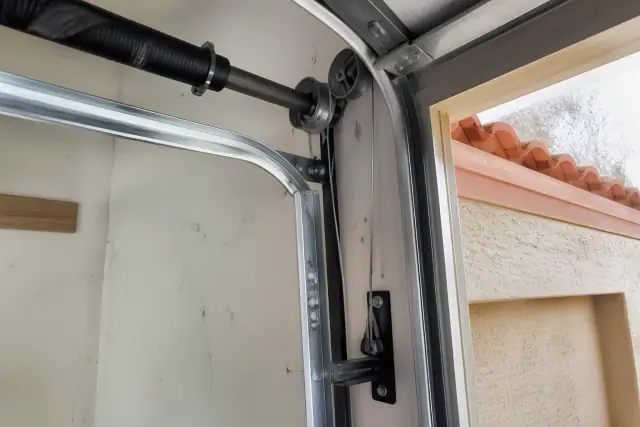
A cable that slips from its drum or rubs against a flange needs more than simple reseating. We inspect drum grooves, cable routing, track alignment, spring balance, and bearing wear to correct the condition that pushed the cable out of place.

Request Estimate

Residential Cable Repair

Residential garage door cable repair on a steel pulley system in a Phoenix, AZ home garage.

Residential cable routing varies across sectional, rolling, swing-out, and side-hinged doors. Older swing-out and side-hinged doors in Phoenix neighborhoods require a different hardware and tensioning approach than sectional doors common in newer subdivisions.

Request Estimate

Commercial Cable Repair

Garage door cable repair in progress at an interior workspace in Phoenix, AZ.

Warehouses, auto shops, and distribution facilities near the Sky Harbor corridor and west Phoenix may cycle doors dozens of times a day, compared with twice-daily use for many residential doors. We service the heavier cable, reinforced drums, and higher-tension spring arrangements used on commercial sectional and rolling doors.

Request Estimate

Same-Day Cable Assessment

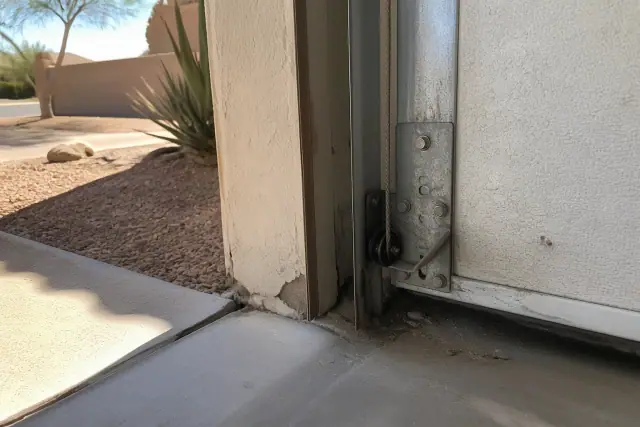
Garage door cable frayed at the bottom bracket during an assessment in Phoenix, AZ.

Broken cable calls receive priority for same-day scheduling whenever route capacity and availability allow, especially in Phoenix, Tempe, and Mesa. A stocked assortment of common cables, drums, and fittings helps reduce delays caused by a second parts trip.

Request Estimate

Cable Maintenance and Tune-Ups

Technician repairing frayed garage door cables near the tracks at a home in Phoenix, AZ.

Maintenance checks can catch popping strands, rust bloom, flattened cable sections, drum wear, and uneven tension before a full break. Cleaning debris from drum grooves and identifying a drifting door also helps limit damage to related hardware.

Request Estimate
Lift and Door Configurations

Cable Repair for Different Door Types

Cable length, drum design, spring arrangement, and tension requirements change with the door configuration. Identifying the lift type before selecting parts is essential because the wrong cable length can throw off the entire counterbalance.

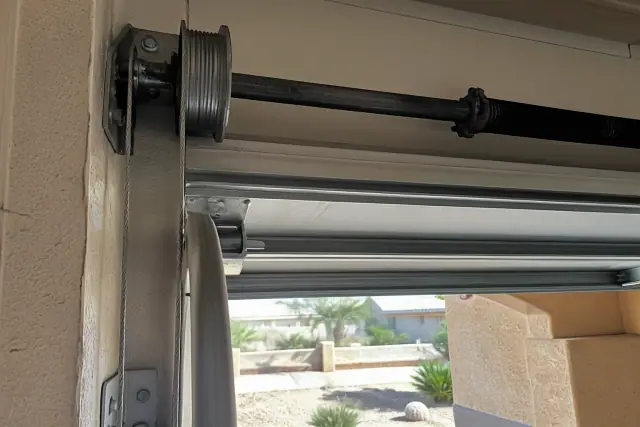
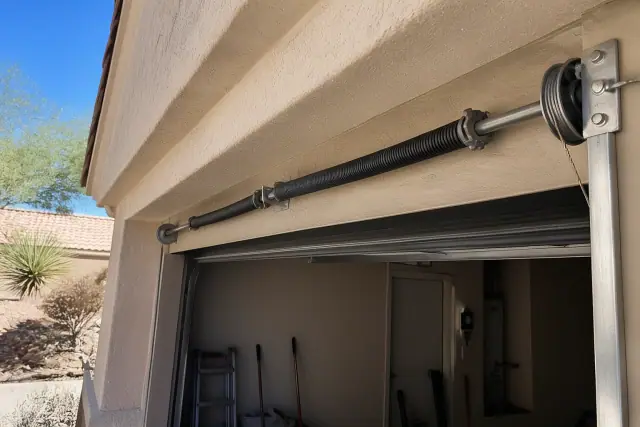
Torsion springs and cable drums on a garage door shaft at a home in Phoenix, AZ.

Standard Torsion-Lift Doors

Standard sectional doors use lift cables wound onto drums while torsion springs counterbalance the door. Repair requires both cables to seat cleanly in their grooves and carry an equal load through the full travel path.

  • Cable diameter checked against the original specification
  • Drum grooves cleared of wear and debris
  • Bottom bracket connection inspected
  • Equal tension set on both sides
  • Door balance checked through its travel
Request Estimate
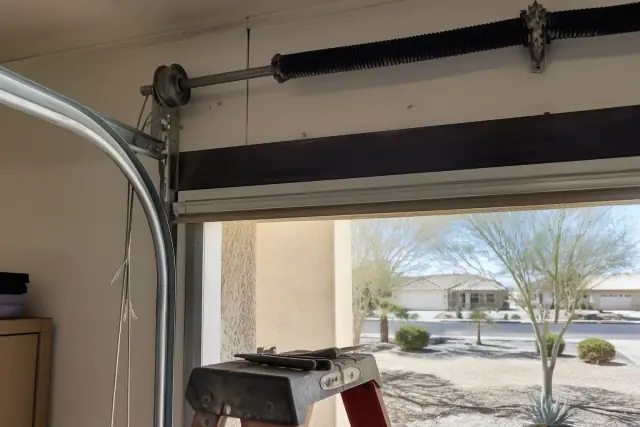
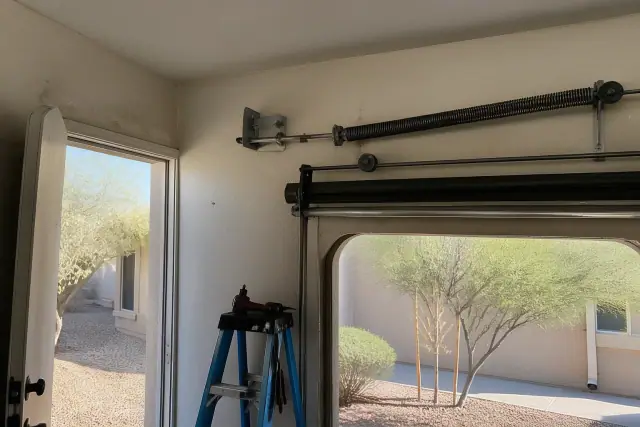
Extension-spring garage door cable repair on a wall in Phoenix, AZ, with visible desert landscaping.

Extension-Spring Door Systems

Extension-spring doors route cables through pulleys rather than winding them on a standard torsion drum. Pulley condition, spring balance, cable path, and anchor points all affect how evenly the door lifts.

  • Pulley bearings checked for grit and wear
  • Cable routing verified at each pulley
  • Anchor and bracket connections inspected
  • Spring and cable loads evaluated together
  • Door movement tested for level travel
Request Estimate
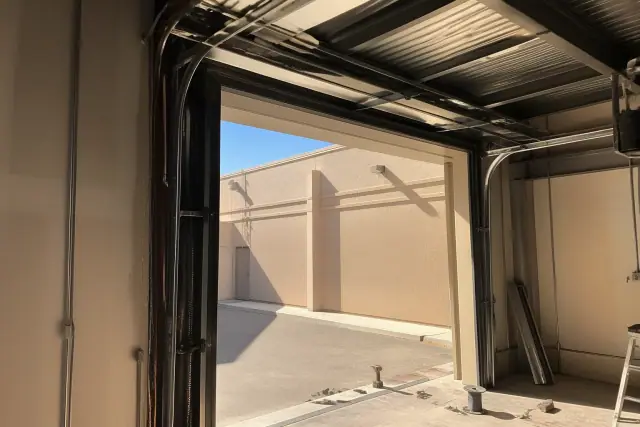
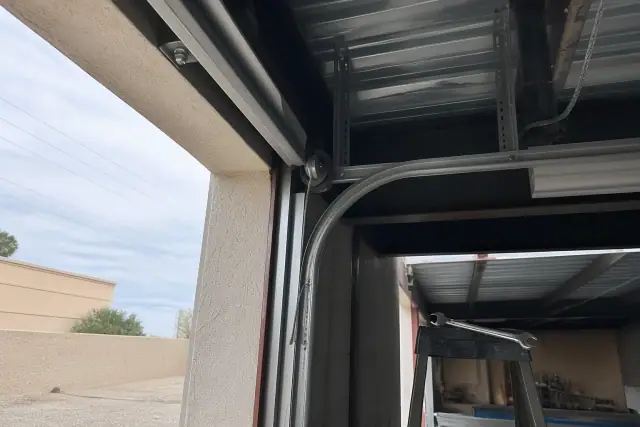
High-lift garage door cable repair on a commercial track system at a building in Phoenix, AZ.

High-Lift Garage Doors

High-lift doors use a different cable length and drum arrangement to move the door farther up the wall before it turns overhead. Accurate drop, drum, and cable measurements are especially important on these more complex setups.

  • Door drop measured before cable selection
  • Drum size compared with manufacturer specifications
  • Cable length matched to the high-lift path
  • Winding turns set with proper tools
  • Balance verified before opener use
Request Estimate
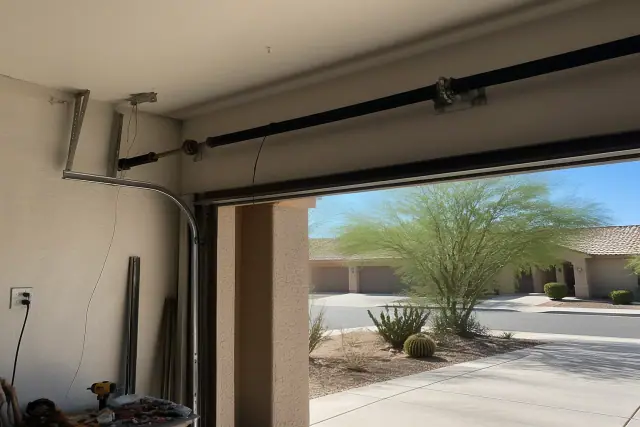
Low-headroom garage door cable repair in a Phoenix, AZ garage with tools and spring assemblies visible.

Low-Headroom Garage Doors

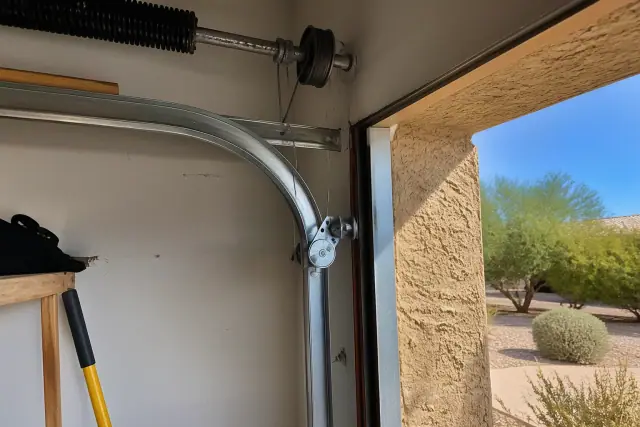
Low-headroom doors use specialized routing where overhead clearance is limited. Their cable length, drum position, and track arrangement must stay coordinated so the door does not bind or pull unevenly.

  • Clearance and track geometry reviewed
  • Cable length matched to the routing
  • Drum seating checked for side pull
  • Track binding and cable rubbing corrected
  • Final travel checked for even movement
Request Estimate
Commercial garage door cable repair on a high-lift track system at a job site in Phoenix, AZ.

Commercial Rolling and Sectional Doors

Commercial rolling steel and sectional doors use heavier-duty cable and hardware than typical residential systems. With scheduled inspection of cable wear, drum seating, and track alignment, a well-maintained commercial door can operate for 15 to 30 years.

  • Heavier-gauge cable selected for the door
  • Reinforced drums and barrel hardware inspected
  • Higher-tension springs evaluated with the cable
  • High-cycle wear documented for maintenance
  • Loading-dock downtime risks addressed
Request Estimate
Specifications Before Parts

Choosing the Right Cable Repair Approach

The right repair starts with the door's drop, drum size, cable diameter, spring arrangement, and lift configuration. Matching those details to the original specification is more reliable than treating every frayed or broken cable as the same part swap.

Matched Cable Specifications

Residential and commercial doors may use galvanized aircraft cable in 7x19 or 1x19 strand configurations. We match the configuration, gauge, and length to standard extension, torsion, high-lift, low-headroom, or rolling-door requirements.

Whole-System Diagnosis

Fraying is often the result of a bent track, unbalanced spring, worn bearing, dirty drum groove, or incorrect routing. Inspecting those components alongside the cable helps address the cause instead of leaving a new cable exposed to the same wear pattern.

Standards-Aligned Safety Testing

Cable winding and tensioning follow procedures aligned with Door and Access Systems Manufacturers Association guidance. After replacement, balance, cable load, and automatic opener safety function are checked before the door returns to service.

Technical Work, Clear Scope

Why Choose Us for Phoenix Cable Repair?

Our technicians hold licensing recognized by the Arizona Registrar of Contractors and work with the hardware and tensioning procedures used across Phoenix-area residential and commercial doors. Before work begins, we explain the diagnosis, required parts, labor, and any related drum or spring concerns so the scope is clear.

Request Cable Assessment

Frayed or Flattened Cable Strands

Inspect the cable near the bottom bracket and where it wraps around the drum. Individual strands popping loose, rust bloom, or flattened areas indicate advancing damage that should be treated as urgent rather than cosmetic.

Crooked or Sagging Door

A door that hangs crooked, drops faster on one side, or binds partway through its cycle may have a stretching cable or a cable slipping off the drum. Continuing to run it transfers more stress to the opposite cable and spring.

Popping or Snapping Sounds

A snapping or popping noise during travel can be cable strands separating under tension before complete failure. Stop operating the door and keep clear of the opening until the cable and counterbalance can be inspected.

Grinding at the Cable Drum

Grinding near the upper drums often means a cable is riding incorrectly in its groove or rubbing the flange. Drum wear, debris, poor alignment, or uneven spring tension can all contribute to the noise.

Broken Cable and Drop Risk

A fully broken cable can leave the door uneven, prevent it from opening, or allow a sudden drop if failure occurs mid-cycle. Do not use the opener, lift the door manually, or disconnect the trolley when the counterbalance is compromised.

Heat and Monsoon Dust Wear

Phoenix heat can cook lubricant on cable and drum components, while monsoon dust pushes abrasive grit into grooves and pulley bearings. These local conditions can shorten component life and make periodic visual inspection more important.

How It Works

Our Garage Door Cable Repair Process

Cable replacement is a controlled sequence of securing the door, measuring the system, checking related hardware, installing the matched cable, and restoring balanced tension. Final travel and safety checks confirm the repair before the opener is reconnected for normal use.

01.

Secure the Door and Release Tension

The door is stabilized before stored spring tension is released with the proper tools. This creates a controlled work area for measuring and removing damaged cable without relying on the opener to hold the load.

02.

Measure the Door and Cable

We measure the door's drop, drum size, cable diameter, and existing length against the manufacturer's original specification. The lift type is confirmed before replacement cable is selected.

03.

Inspect Supporting Hardware

Drums, pulleys, springs, bearings, tracks, and bottom brackets are checked for wear, debris, misalignment, or damage. This step identifies conditions that could quickly wear or dislodge the new cable.

04.

Remove and Install the Cable

Damaged cable is removed from the drum and bottom bracket after the groove and track are cleared. New galvanized aircraft cable is threaded, seated, and wound with winding bars to the correct turns rather than tensioned by hand.

05.

Set Tension and Balance

Spring tension is calculated against door weight and cable drum ratio, then adjusted so both cables carry equal load. With the opener disconnected, the door should hold near the halfway point without drifting up or down.

06.

Cycle and Safety-Test the Door

The door runs through several full openings and closings while cable seating, drum alignment, flange clearance, and equal load are observed. We also test auto-reverse function and confirm that the door holds position throughout the track.

Restore Controlled Door Movement

Schedule a Garage Door Cable Assessment

Request an estimate with your door type, approximate age, and a description of the cable problem; photos of fraying or a sagging door can help us prepare suitable parts. The estimate explains the diagnosis, required components, and labor before repair work begins.

Cable Repair Help

Garage Door Cable Repair FAQs

Get practical answers about broken-cable safety, Phoenix repair costs, cable life, same-day scheduling, door types, inspections, and maintenance.

Call Our Experts

Standard residential cable repair across the Phoenix market generally runs $90 to $250 for parts and labor, while work involving drums, springs, high-lift or low-headroom setups, or commercial-grade cable can reach $300 to $350. Garage door labor typically runs $75 to $150 per hour, often with a $50 to $70 service or trip fee. Broader Phoenix garage door repair visits average about $162 to $392, with a metro average near $277 depending on scope. We provide a specific estimate after checking the door type, drum size, cable gauge, and related hardware.

Stop using the door manually and with the opener, and keep people, pets, and vehicles clear of the opening. Do not disconnect the opener trolley because an unsupported door can drop. Note whether one side or both sides appear affected, then call a technician to evaluate the counterbalance.

Garage door cables in the Phoenix area typically last 7 to 10 years under normal residential use. High-cycle operation, extreme heat, and dust exposure may shorten that lifespan. Annual inspections can catch fraying and drum wear before the cable fails.

Look for loose strands, rust bloom, flattened cable sections, a crooked or sagging door, popping sounds, or grinding near the drums. A door that drops faster on one side or binds partway through travel also warrants inspection. Stop operating the door if the cable is visibly damaged.

Do not try to open it with the opener or by hand. The cable is part of the counterbalance that controls the door's weight, so a break can let the door twist or fall unexpectedly. Keep the opening clear until the system is secured and inspected.

Most repairs can be diagnosed and completed in a single visit because technicians carry an assortment of common cable gauges, drums, and fittings. A second visit may be needed when the inspection identifies specialized parts for a high-lift, low-headroom, or commercial door.

Radiated summer heat can degrade lubricant, while monsoon dust pushes grit into drum grooves and pulley bearings. That combination can accelerate strand, bearing, and drum wear compared with milder conditions. Cleaning and inspection help identify the resulting wear before failure.

Cable repair is available for sectional, rolling, swing-out, and side-hinged doors. The correct parts and method depend on whether the lift uses torsion springs, extension springs, a high-lift track, low-headroom hardware, or a commercial rolling arrangement.

A frayed cable may be a symptom of a bent track, unbalanced spring, worn bearing, dirty drum groove, or incorrect routing. Replacing only the cable without correcting the cause can expose the new part to the same uneven load or rubbing.

The estimate covers the diagnosis, the parts required for the door type, and labor. If the inspection finds spring, drum, track, or bearing concerns that change the repair scope, those items are explained before work begins. Photos and the door's approximate age can help with initial preparation.

Broken cable calls are prioritized for same-day scheduling whenever route capacity and availability allow. Call when the problem occurs, day or night, and the team will place the service as quickly as current routing permits. Same-day service is not presented as a guarantee.

Not necessarily. Garage doors in Arizona typically last 10 to 15 years, while cables commonly need replacement before the door itself. An inspection determines whether cable replacement and related hardware work can restore safe, balanced operation.

Commercial doors often use heavier-gauge cable, reinforced drums, and higher-tension springs, and rolling steel doors use a different cable and barrel arrangement than sectional doors. Their higher cycle volume makes scheduled checks of cable wear, drum seating, and track alignment especially important.