Proudly serving Phoenix, Mesa, Scottsdale, Tempe, Glendale, Chandler & surrounding areasCall or Text 24/7: 602-449-9593
Aerial view of a Phoenix, AZ suburban neighborhood featuring stucco houses, desert landscaping, and Saguaro cacti.

Garage Door Repair and Spring Replacement in Peoria, AZ

Phoenix Garage Door Repair Co. serves Peoria homeowners and business owners with garage door spring repair and replacement, garage door opener repair and installation, and new garage door installation and replacement. Our technicians also repair cables, off-track doors, panels, and rollers. We maintain residential sectional, roll-up, and tilt-up doors and service commercial overhead doors. Factory-trained technicians arrive with OEM-grade parts for the mechanical failures described in the draft.

Peoria's summer highs regularly exceed 110 degrees, and south-facing garage-door surfaces can climb well past 150 degrees. Those temperature swings fatigue steel springs while dust from washes and unpaved lots adds friction at tracks and rollers. Monsoon humidity between July and September can also promote rust on unlubricated coils. We inspect spring condition, cable tension, drum alignment, brackets, and door balance before recommending work.

Service covers older neighborhoods near Old Town and the Peoria Sports Complex, newer communities around Lake Pleasant, Vistancia, and Trilogy, and regular routes across the west and northwest Valley.

★ ★ ★ ★ ★4.9/5.0 Customer Rating - 19 Years of Garage Door Experience - Thousands of Doors Serviced - Licensed, Bonded & Insured - Residential & Commercial Service
Garage Door Services

Garage Door Repair & Installation in Peoria, AZ

We work throughout Peoria, including Vistancia, Arrowhead, Trilogy, Fletcher Heights, Westwing Mountain, and areas near Lake Pleasant. Regular routes also reach Glendale, Sun City, Sun City West, and Surprise, AZ , along with western Maricopa County and northern Peoria in Yavapai County.

Garage Door Spring Repair & Replacement
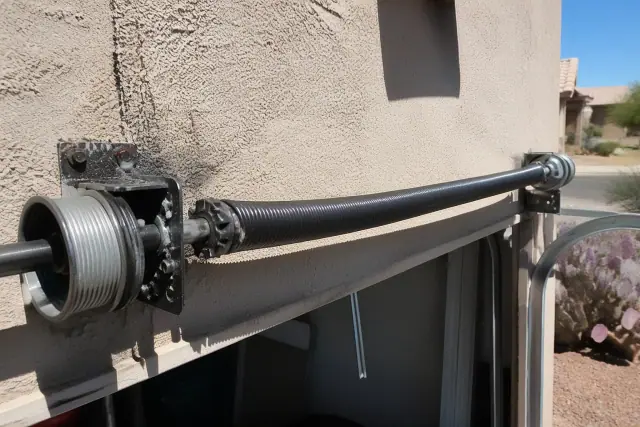
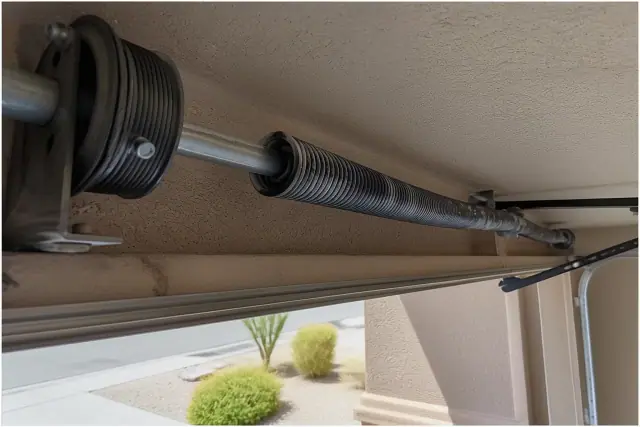
New torsion spring installed on a metal shaft above a residential garage door in Peoria, AZ.

We check coil gaps, rust, cable tension, drum alignment, and winding cones before matching a torsion or extension spring to the door's weight. Replacement typically runs $150 to $350 per spring including labor, and most single-car spring jobs are completed in under an hour. Explore Service

Explore Service
Garage Door Opener Repair

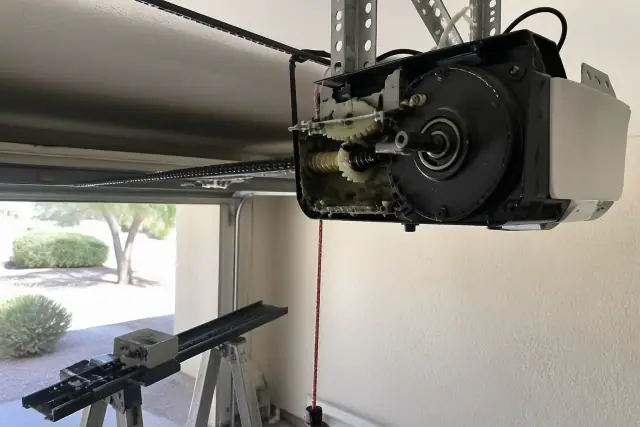
Garage door opener motor repair with a detached drive rail and worn gears at a home in Peoria, AZ.

Chain-, belt-, and screw-drive openers can develop failed circuit boards, worn gear sets, remote-sync problems, or unexplained reversing. We troubleshoot the logic board, motor, drive mechanism, and safety sensors before recommending repair or replacement. Explore Service

Explore Service
New Garage Door Installation & Replacement

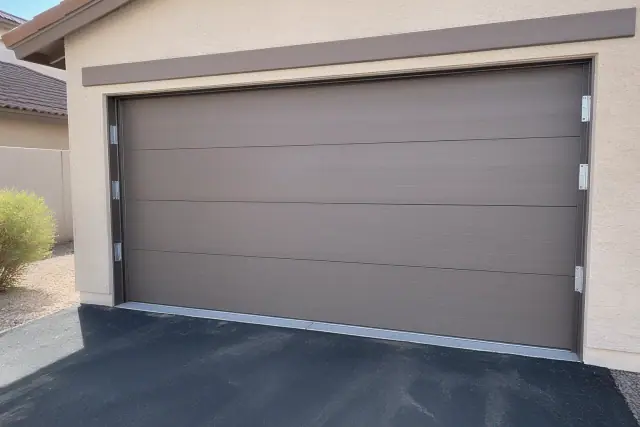
Newly installed garage door with fresh sealant and hardware on a stucco home in Peoria, AZ.

Installation options range from standard steel sectional doors to insulated, energy-efficient models designed for Arizona heat. We measure the opening, confirm header clearance, and review material, R-value, and design options before ordering and installing the new system. Explore Service

Explore Service
Garage Door Opener Installation

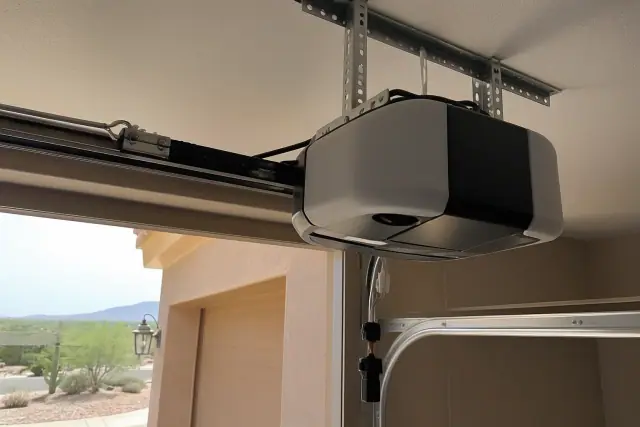
Garage door opener motor installed on a ceiling bracket inside a garage in Peoria, AZ.

Garage door opener installation is available for the chain-, belt-, and screw-drive configurations named in the draft. We confirm opener compatibility, calibrate the safety sensors, and complete a full-cycle test with the door.

Garage Door Cable Repair

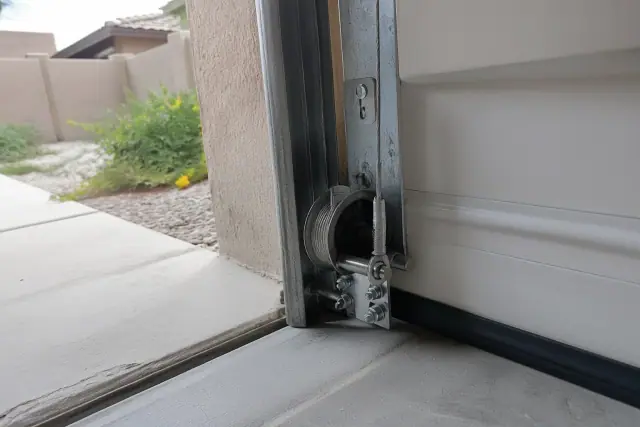
New braided steel cable attached to a garage door bottom bracket at a home in Peoria, AZ.

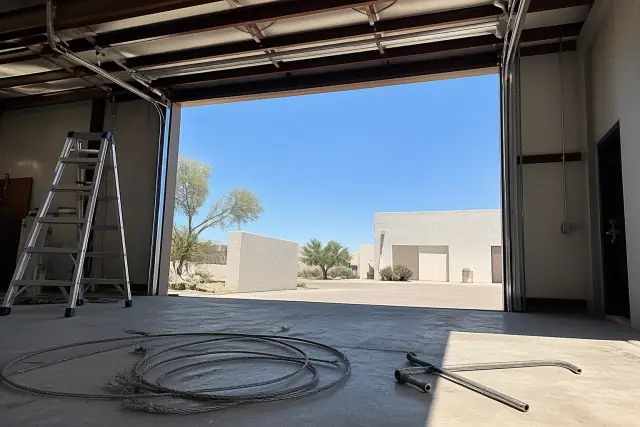
Frayed or snapped lift cables often appear with spring trouble because both systems carry the door's load. We install galvanized aircraft-grade cable rated to the door's cycle count and inspect the cable drum and spring at the same visit.

Off-Track Garage Door Repair

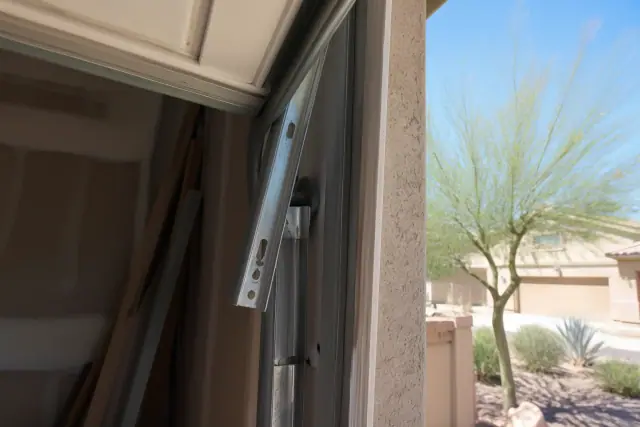
Garage door roller displaced from its track on a stucco house in Peoria, AZ.

An off-track door can threaten vehicles and anyone nearby. We realign rollers, straighten or replace bent track sections, and inspect panels for the damage that may have caused the derailment.

Garage Door Panel Replacement

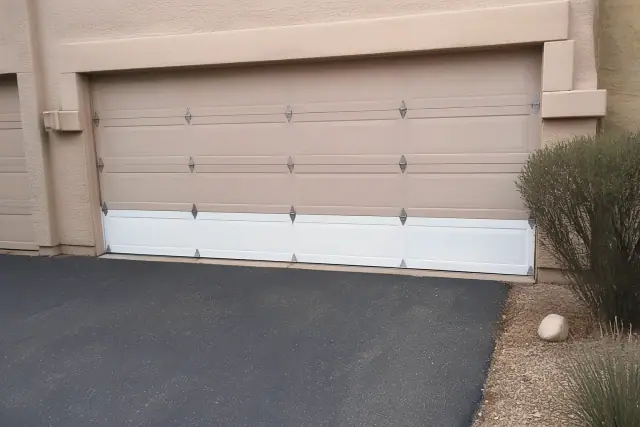
A garage door with a new bottom panel installed at a residential home in Peoria, AZ.

A dented or cracked section does not always require a complete new door. When available, we source a matching panel by manufacturer and model to restore the damaged area while keeping the serviceable door in place.

Garage Door Roller Replacement

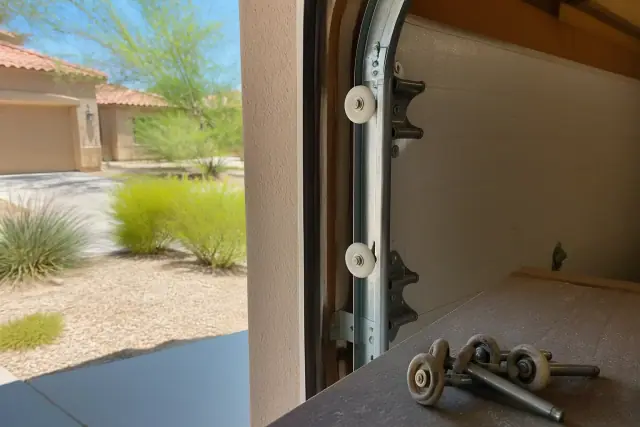
New nylon garage door rollers installed in a metal track at a home in Peoria, AZ.

Worn rollers can create the grinding and shaking homeowners sometimes mistake for spring failure. Nylon rollers handle Peoria's dust and heat better than steel over the long term and can be installed during a repair or tune-up.

Garage Door Maintenance & Tune-Ups

Torsion springs and cable drums on a garage door being maintained in Peoria, AZ.

A tune-up covers spring tension, roller condition, track alignment, lubrication, and opener sensor calibration. Service every six to twelve months is recommended for Peoria conditions, and consistent maintenance can help a torsion spring deliver its full 10 to 20 years instead of failing early.

Commercial Garage Door Repair

Technician repairing a commercial garage door track with a torsion spring wrench and frayed cables in Peoria, AZ.

Commercial and industrial overhead doors run more daily cycles than residential doors, so heavier-duty springs and more frequent inspections matter. We service warehouse roll-up doors, fire station bays, and retail overhead doors along Peoria's commercial corridors.

Service Selection

Choosing the Right Garage Door Service in Peoria

Peoria grew from 154,065 residents in 2010 to 190,985 in the 2020 census, leaving a broad mix of older doors near Old Town and systems installed in newer developments. Many homes built 10 to 15 years ago are now reaching the point when original springs can approach end of life. An on-site inspection separates a spring issue from roller, cable, track, opener, or panel damage before the scope is chosen.

Match the Spring to Door Weight

Torsion springs have been standard on nearly every Peoria door installed over the past two decades, but the correct spring still depends on the individual door. Wire gauge, coil diameter, spring length, and exact door weight must match whether the opening serves a single-, two-car, or three-car configuration.

Consider Cycle Rating and Daily Use

Original torsion springs rated for 10,000 to 15,000 cycles can reach end of life sooner on a door used several times each day. For high-use doors exposed to direct sun, the draft describes higher-cycle springs typically rated for 20,000 to 25,000 cycles.

Account for Direct Sun and Desert Heat

Hot afternoons followed by cooler desert nights repeatedly expand and contract spring steel. Direct sun, trapped garage heat, and dust-related roller friction can all increase the load that a spring experiences beyond ordinary temperate-climate use.

Repair Intact Springs; Replace Damaged Coils

An intact spring that has only lost tension may sometimes be re-tensioned after inspection. A cracked, badly rusted, stretched, or broken coil has lost structural integrity and requires replacement rather than repair.

Evaluate Both Springs as a Pair

Both springs on a two-car door usually share the same age, load, and wear rate. If one fails, industry guidance recommends considering pair replacement because the second spring may be only months from failure.

Choose Panel Repair or Full Replacement

A matching panel can address isolated impact damage, while a severely damaged, outdated, or persistently off-balance door may justify complete replacement. Spring repair in the $150 to $350 range is usually far below a new door that can cost several thousand dollars, so the condition of the full system should guide the decision.

Peoria Garage Door Issues

Common Garage Door Problems in Peoria

Heat cycling, monsoon moisture, airborne dust, and high daily use can expose several different weak points in a garage door system. Symptoms often overlap, so the spring, cables, rollers, tracks, opener, and panels should be evaluated together.

Request Inspection

Broken or Gapped Spring Coils

A broken torsion spring can sound like a loud bang and leave the door unable to move, while a visible gap in a coil signals the same structural failure. Stop operating the door so the opener and remaining hardware are not forced to carry an unsafe load.

Grinding and Shaking Rollers

Dust and worn roller bearings can make the door grind, shake, or drag in the tracks. Because those symptoms can resemble spring trouble, roller condition and track alignment should be checked before parts are selected.

Stuttering or Unbalanced Door Travel

A door that stutters halfway up, opens crooked, or will not hold position during a manual balance test may have uneven spring tension. Cable seating, drum alignment, and spring specifications can reveal why the door is no longer balanced.

Rust and Heat-Fatigued Springs

Humidity spikes from July through September can create intermittent rust on unlubricated coils. Combined with severe day-to-night temperature swings, corrosion accelerates metal fatigue and shortens spring life.

Frayed Cables and Off-Track Doors

A damaged lift cable can pull one side of the door unevenly and contribute to a roller leaving its track. These conditions are safety hazards, so the cable, drum, track, rollers, and affected panels need a coordinated inspection.

Dead or Reversing Garage Door Openers

Peoria heat is hard on opener circuit boards and gear sets, while misaligned safety sensors can make a door reverse unexpectedly. Diagnosis should isolate whether the fault is in the remote, sensor, logic board, motor, or drive mechanism.

Why Choose Us

Why Choose Phoenix Garage Door Repair Co. in Peoria?

Phoenix Garage Door Repair Co. uses factory-trained technicians rather than subcontractors and carries OEM-grade parts for common failures. The company is licensed through the Arizona Registrar of Contractors, carries licensing and insurance documentation, and follows International Door Association guidance on spring cycle ratings and safety cables.

Factory-Trained Technicians

Technicians are trained on current manufacturer certification programs from major opener and door brands. That preparation supports systematic diagnosis across torsion springs, cables, rollers, tracks, panels, and opener components.

Arizona Licensing and Insurance

The company states that it is licensed through the Arizona Registrar of Contractors and carries insurance and licensing documentation for its work. Customers can weigh that documentation alongside the proposed repair scope instead of relying on price alone.

Measured Final Safety Checks

Spring work is finished with proper winding-cone torque, cable-tension checks, and a full door-balance test. Calibrated winding bars, manufacturer turn counts, secure anchoring, and full-cycle testing address the details that keep the system operating as intended.

Simple Process

Our Garage Door Spring Service Process in Peoria

The service process moves from visual evidence to measured specifications and a verified final test. Each step checks related hardware so a spring problem is not treated in isolation from the cables, drums, brackets, rollers, and opener.

01.

Inspect the Spring Coils

The technician looks for gaps, rust, stretching, cracking, and a completely separated coil. Visible condition helps distinguish an intact spring that may have lost tension from one that must be replaced.

02.

Test Door Balance

With the opener disconnected, the door is lifted by hand to check its balance. A properly balanced door should hold its position at any point rather than rising, dropping, or tilting.

03.

Check Cables, Drums, and Brackets

Cable condition, drum seating, winding cones, and bracket integrity are inspected because spring failure can stress these components at the same time. Bent tracks and worn rollers are also noted when they affect door travel.

04.

Measure Spring Specifications

Wire gauge, inside diameter, coil length, cycle rating, and door weight are measured against the installed system. These details confirm whether the original spring specification was correct and identify an appropriate replacement.

05.

Choose Repair or Replacement

An intact coil with age-related tension loss may be adjusted, but a cracked, rusted, stretched, or broken spring is replaced. On a two-spring door, the condition and matching wear of the second spring are considered before work begins.

06.

Install and Verify the System

The old spring is unwound under controlled tension, and the new spring is mounted and wound to the manufacturer's specified turn count with calibrated winding bars. The technician then lubricates the coil, cable drums, and bearing points before completing balance and full-cycle tests.

Service Results

Garage Door Service Outcomes for Peoria Properties

Case Study 1: Broken Spring Replacement: Matching the spring to door weight, setting cable tension, and verifying drum alignment restores balanced travel before the opener is reconnected.

Case Study 2: Noisy Door Correction: Replacing worn rollers and correcting track alignment addresses grinding and shaking that can be mistaken for a failed spring.

Case Study 3: Commercial Door Maintenance: Inspecting heavier-duty springs, cables, tracks, and opener controls supports higher-cycle warehouse, retail, and bay-door operation.

Schedule Garage Door Service

Request a Garage Door Service Estimate

Tell us whether the door is stuck, noisy, crooked, off-track, or showing a visible spring gap. A technician can inspect the full system, explain whether repair or replacement fits the hardware condition, and provide a firm price after seeing the door.

Peoria Garage Door Help

Garage Door Spring & Repair FAQs for Peoria, AZ

These answers cover spring pricing, expected cycle life, warning signs, safety, maintenance, and related garage door repairs in Peoria.

Call Our Experts

Single-spring replacement generally runs $150 to $200, while double torsion-spring replacement on a two-car door runs $200 to $350 including parts and labor. The spring type, door weight, and condition of cables, drums, and bearings can change the total. The company provides a firm price after an in-person inspection.

A standard 10,000-cycle torsion spring represents roughly 7 to 9 years of average use. Higher-cycle springs rated for 20,000 to 25,000 cycles can reach 14 to 20 years with proper maintenance. In Peoria's heat, lower-rated springs may fail closer to the 7- to 10-year mark.

Yes. A wound torsion spring stores enough energy to cause serious injury if a winding bar slips or the wrong spring is installed. Professional work uses calibrated winding bars, door-weight calculations, manufacturer turn counts, and appropriate safety cables.

A fully broken or cracked spring cannot be repaired because its coil has lost structural integrity. An intact spring that has only lost tension may occasionally be adjusted after inspection, but a rusted, stretched, cracked, or separated coil requires replacement.

An opener may try to lift a two-spring door after one spring breaks, but doing so puts severe strain on the motor, remaining spring, and cables. The door will be unbalanced and may fall unevenly, so it should not be operated until the system is inspected.

Spring replacement in the $150 to $350 range is usually worthwhile when the rest of the door remains in good condition. A complete door replacement can cost several thousand dollars. Severe panel damage, an outdated system, or persistent balance problems may make full replacement the better long-term option.

Replacing both torsion springs on a standard two-car door typically costs $200 to $350 total including labor. Completing the pair during one visit avoids a second service call and keeps springs of the same age and wear rate working together.

A visible coil gap, loud bang, stuttering travel, crooked opening, or a door that will not hold position can point to spring trouble. Grinding and shaking can also come from worn rollers or misaligned tracks, so the related hardware should be checked before diagnosis.

Most single-car spring replacements described in the draft are completed in under an hour. Most common spring, cable, and roller repairs finish in a single visit because the service trucks carry parts for common sectional and roll-up door failures.

Both springs on a two-car door are generally installed together and wear under the same load. Industry guidance recommends considering pair replacement because the second spring may be only months from failure when the first one breaks.

Outdoor summer highs regularly exceed 110 degrees, while south-facing garage-door surfaces can rise well past 150 degrees. Repeated heating and cooling expands and contracts spring steel, and monsoon humidity can add corrosion to unlubricated coils.

Industry guidance recommends garage door maintenance every six to twelve months under Peoria conditions. Doors used several times daily or exposed to direct sun may benefit from the six-month spring-and-lubrication schedule described in the source.

No. Worn rollers, dusty tracks, opener gear sets, cable issues, and misaligned safety sensors can all create noise or uneven movement. A combined spring, roller, track, cable, and opener inspection identifies the actual source.

The source covers single-, two-car, and three-car residential configurations using sectional, roll-up, and tilt-up doors. Commercial service includes warehouse roll-up doors, fire station bays, and retail overhead doors that require heavier-duty springs and more frequent inspection.

An isolated dented or cracked panel may be replaceable when a matching section is available from the manufacturer and model. Complete replacement may make more sense when the door is severely damaged, outdated, persistently off-balance, or has broader hardware compatibility concerns.