Proudly serving Phoenix, Mesa, Scottsdale, Tempe, Glendale, Chandler & surrounding areasCall or Text 24/7: 602-449-9593
Aerial view of a Phoenix, AZ suburban neighborhood featuring stucco houses, desert landscaping, and Saguaro cacti.

Garage Door Spring Repair and Torsion Spring Replacement in Phoenix, AZ

Phoenix Garage Door Repair Co. provides garage door spring repair and replacement for homes and businesses in Phoenix, Arizona. We diagnose broken, weakened, and incorrectly sized springs before recommending a replacement. Our technicians service both torsion springs above the door and extension springs along the horizontal tracks. Related garage door cable, roller, and off-track problems are checked when spring failure affects the rest of the system.

Phoenix summer afternoons regularly push past 115°F, and the sustained heat in July and August accelerates steel fatigue and lubricant breakdown. Because a garage door can weigh from 130 to 400 pounds, a failed spring can leave the door immobile or allow it to drop hard. We match wire gauge, inside diameter, wind direction, and cycle rating to the door instead of using a generic replacement. Same-day appointments for spring failures are prioritized whenever the schedule allows.

Phoenix spring replacement commonly runs from $155 to $362 for a single-spring job, with an average around $258; door weight, spring type, spring count, and cycle rating determine the final quote.

Phoenix Garage Door Repair Co. provides garage door spring repair and replacement in Phoenix and throughout the surrounding metro, including Scottsdale, Tempe, Mesa, Glendale, and Chandler.

★ ★ ★ ★ ★4.9/5.0 Customer Rating · 19 Years of Garage Door Experience · Thousands of Doors Serviced · Licensed, Bonded & Insured · Residential & Commercial Service

Garage Door Spring Options & Benefits

What Does Spring Repair and Replacement Involve?

A garage door spring counterbalances the full weight of the door so it can move safely and smoothly. When the spring loses tension or breaks, the opener must fight the door's weight instead of guiding a balanced system.

Diagnosis starts with the spring type and condition, then continues to the cables, rollers, and track. That broader check helps identify damage caused by the sudden shift in tension rather than treating every failure as an isolated broken coil.

A stretched, cracked, or snapped spring is normally replaced rather than repaired. When a two-spring system has one failed spring, replacing the pair keeps their age, cycle history, and lift force matched.

Benefits of Correct Spring Replacement

A correctly selected and tensioned spring restores controlled movement while reducing avoidable strain throughout the door system.

  • Restores even, predictable door balance
  • Matches wire gauge and inside diameter to door weight
  • Keeps paired springs consistent in age and lift
  • Checks cables, rollers, and track for related wear
  • Verifies safety cables on extension spring systems
  • Reduces excess load on the garage door opener
  • Confirms performance with a manual balance test
  • Uses stocked common spring sizes to keep most jobs to one visit
Phoenix Spring Service

Spring Repair & Replacement Services

Our spring work covers diagnosis, torsion and extension spring replacement, schedule-prioritized failure calls, residential maintenance, and heavy-duty commercial systems. Each service begins with the door rather than a one-size-fits-all part.

Broken Spring Diagnosis

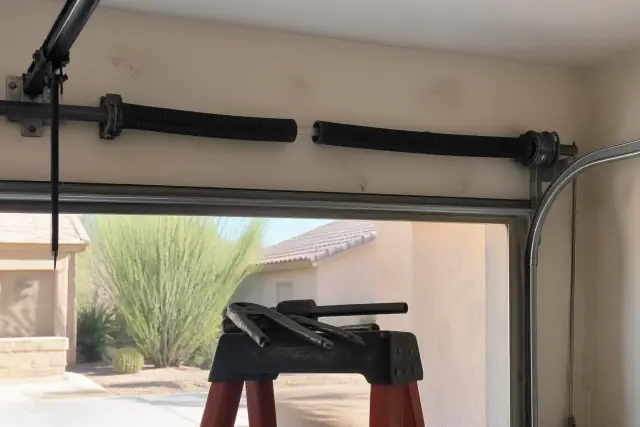
Broken garage door spring with a gap in the coil visible in a home garage in Phoenix, AZ.

We identify the spring type and inspect wire diameter, coil length, wind direction, and visible condition. Loose cables, worn rollers, and track alignment are checked because a sudden spring failure can affect all three.

Request Estimate

Torsion Spring Replacement

New torsion springs and cable drums installed on a garage door shaft in Phoenix, AZ.

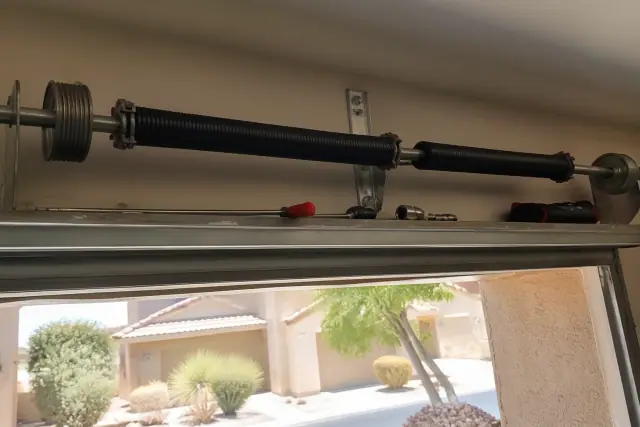
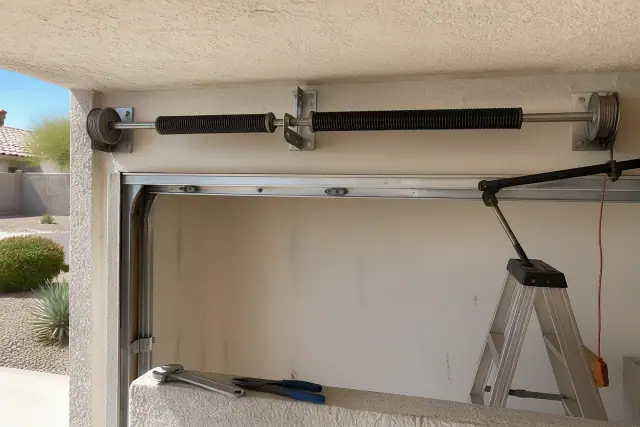
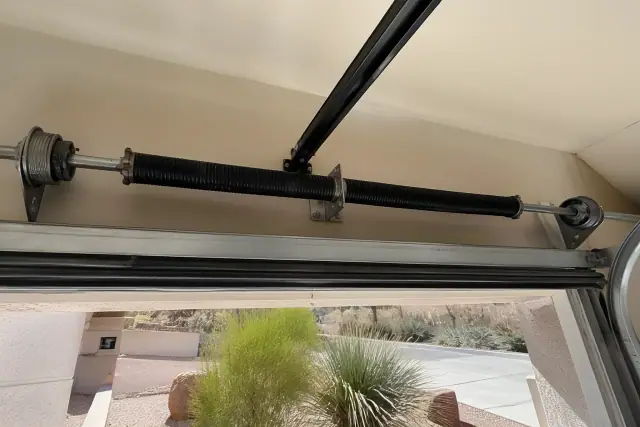
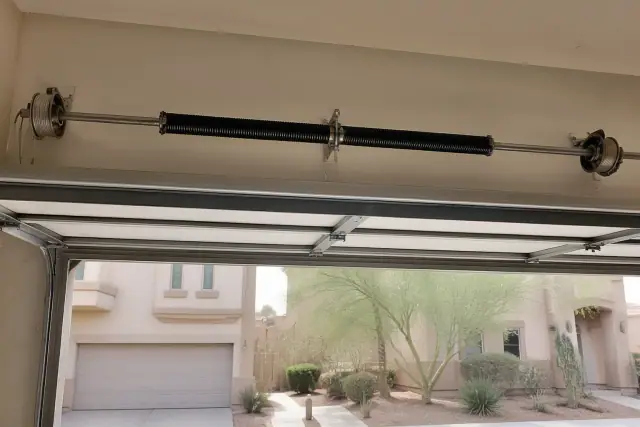
Torsion springs mount on a shaft above the door and use stored torque to lift evenly from the center. Replacement includes safe tension release, door-specific sizing, installation with winding rods, and calibrated re-tensioning.

Request Estimate

Extension Spring Replacement

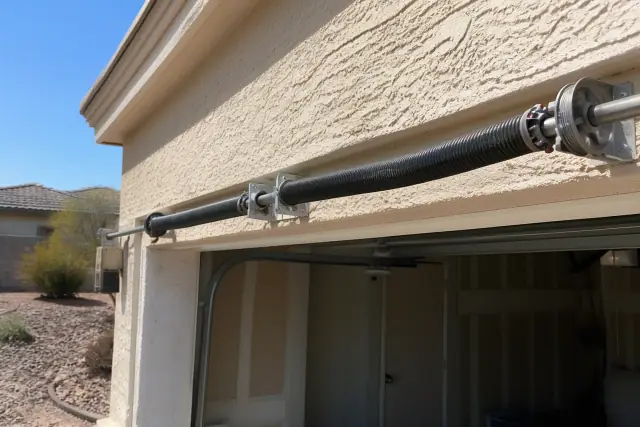
Extension spring garage door repair on a ceiling-mounted track at a home in Phoenix, AZ.

Extension springs stretch beside the horizontal tracks and need safety cables through the coils. We replace failed springs in matched pairs, inspect those safety cables, and correct uneven lift before returning the door to service.

Request Estimate

Same-Day Spring Appointments

Garage door torsion springs and cable drums installed above a doorway at a home in Phoenix, AZ.

A broken spring can trap a vehicle or prevent the door from securing correctly. We prioritize same-day spring appointments whenever the schedule allows and provide an honest next-morning timeframe when it does not.

Request Estimate

Residential Spring Service

Technician repairing residential garage door torsion springs on a metal shaft at a home in Phoenix, AZ.

Residential service ranges from broken-spring replacement to annual tune-ups that inspect coil condition, lubricate the shaft, and check door balance. Preventive attention can reveal weakening tension before it becomes a full failure.

Request Estimate

Commercial Spring Service

Torsion springs and cable drums on a garage door shaft during a repair in Phoenix, AZ.

Commercial overhead doors use heavier-gauge torsion springs and may be rated for 50,000 to 100,000 cycles. Scheduled inspection helps warehouses, loading docks, and retail bays track cycle use before a spring failure interrupts operations.

Request Estimate
Spring Types and Setups

Garage Door Spring Options

The right spring setup depends on how the door is built, how often it moves, and whether the springs work as a pair. Torsion, extension, high-cycle, paired-replacement, and new-door applications each require their own sizing and safety checks.

Torsion springs and cable drums on a garage door shaft at a home in Phoenix, AZ.

Torsion Spring Systems

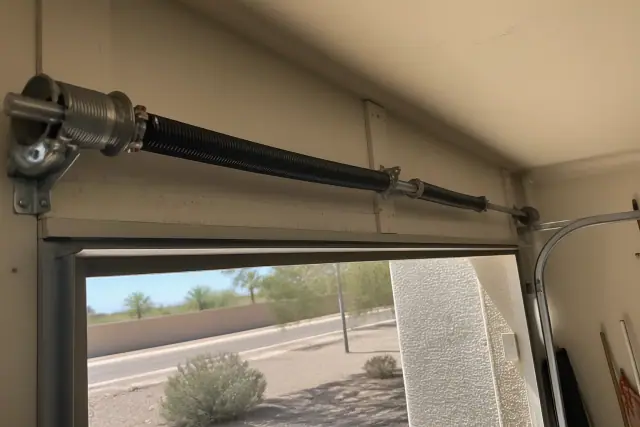
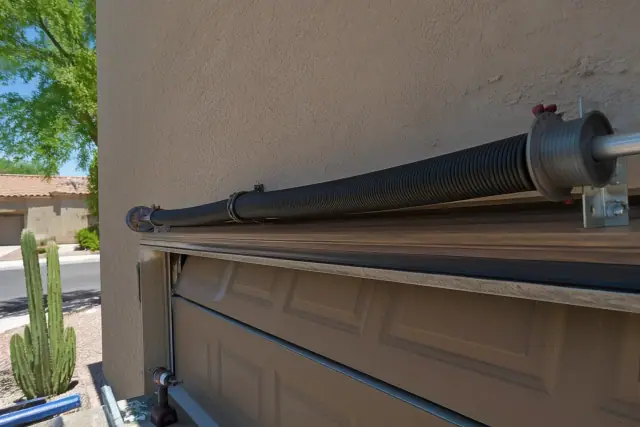
Torsion springs twist on a steel shaft above the opening to distribute lift from the center. Most Phoenix homes built since the 1990s use this design because it generally lasts longer and contains the spring on the shaft.

  • Mounted on a steel shaft above the garage door
  • Typically lasts 10 to 12 years under normal use
  • Sized by wire gauge, inside diameter, and door weight
  • Matched to ANSI/DASMA 102 specifications
  • Uses stored torque for even center lift
Request Estimate
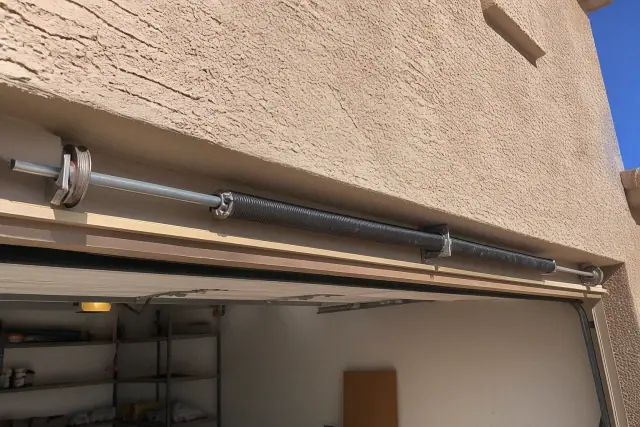
Extension spring system installed on a garage ceiling in Phoenix, AZ.

Extension Spring Systems

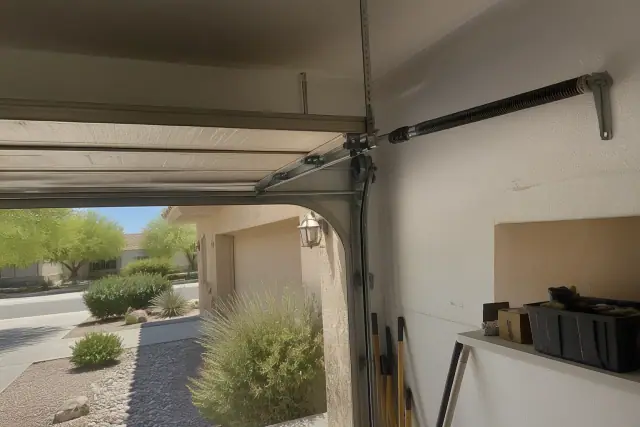
Extension springs run beside the horizontal tracks and stretch as the door closes. Older Phoenix homes in Encanto and Coronado commonly retain these systems from original construction.

  • Typically lasts 7 to 9 years under normal use
  • Requires a safety cable through each coil
  • Shows wear through coil gaps and rust pitting
  • Can cause one side of the door to close unevenly
  • Should be replaced as a matched pair after one fails
Request Estimate
Torsion spring installation on a garage door shaft in Phoenix, AZ, with desert landscaping in the background.

High-Cycle Spring Options

High-cycle springs cost more upfront but are built for doors that open and close frequently. Residential options may be rated for 25,000 to 50,000 cycles, while commercial applications can require still higher ratings.

  • Useful for high-frequency residential door use
  • Selected according to the required open-close cycle count
  • Double-spring and high-cycle jobs can run from $350 to $750
  • Phoenix homeowner totals generally span $155 to $750 across spring setups
  • Commercial ratings account for repeated daily bay use
Request Estimate
New garage door torsion springs installed on a metal shaft above a doorway in Phoenix, AZ.

Paired-Spring Replacement

When one spring in a pair breaks, the other has normally completed the same number of cycles. Replacing both keeps the system balanced and prevents a new spring from working against an older, weaker one.

  • Matches the age and cycle history of both springs
  • Maintains even lifting force across the door
  • Reduces strain on the newer spring, rollers, and opener
  • Avoids a likely second service call within a year or two
  • Applies to paired torsion and extension spring setups
Request Estimate
Torsion springs and cable drums installed on a metal shaft above a garage door in Phoenix, AZ.

New-Door Spring Installation

A new garage door needs springs calculated for the new door rather than carried over from the previous system. Fresh sizing ensures the spring torque matches the actual installed weight.

  • Calculates spring size from the new door's weight
  • Measures the required wire diameter
  • Confirms coil length for the application
  • Matches the correct wind direction
  • Finishes with a manual balance test
Request Estimate
Finding the Right Fit

Choosing the Right Spring Replacement Approach

The right approach comes from the door's weight, spring design, number of springs, daily use, and target cycle life. Because damaged springs are normally replaced rather than patched, accurate diagnosis and sizing matter more than selecting the lowest-priced part.

Door-Specific Spring Sizing

We match wire gauge and inside diameter to the door's exact weight under ANSI/DASMA 102 specifications. Correct wind counts and spring direction help prevent uneven movement and premature failure caused by undersized generic parts.

Trained, Licensed & Insured

Our technicians are trained on International Door Association standards, hold licensing through the Arizona Registrar of Contractors, and every job is fully insured. That preparation matters when working around stored spring tension and heavy moving doors.

Phoenix Heat-Aware Diagnosis

We account for the heat cycling that accelerates steel fatigue in Phoenix instead of looking only for a snapped coil. Trucks carry common torsion and extension spring inventory for typical door sizes, helping keep most correctly diagnosed jobs to one visit.

What Sets Us Apart

Why Choose Us for Garage Door Spring Repair?

Phoenix Garage Door Repair Co. combines door-specific measurements with a full-system check of cables, rollers, track alignment, and opener strain. You receive a recommendation based on the failure and the door's actual setup before work begins.

Request Spring Inspection

Visible Gap in the Coil

A clear break or gap in the coil is one of the strongest signs that a spring has snapped. The door may no longer move because the spring can no longer counterbalance its weight.

Heat-Accelerated Metal Fatigue

Repeated 110°F-plus days make steel expand and contract while heat also breaks down lubricant. That Phoenix exposure can push a spring toward the earlier end of the national 7-to-10-year average.

Heavy or Stuck Garage Door

A door that suddenly feels heavy by hand or will not open may have lost spring assistance. Stop lifting or forcing the opener until the spring and connected hardware can be inspected.

Loose or Snapped Cables

The sudden tension shift from a broken spring can loosen or snap a garage door cable. Cable condition must be checked before the replacement spring is put under load.

Straining Garage Door Opener

An opener that strains, stalls, or hums against a heavy door may be compensating for a weak or broken spring. Continued use can burn out the opener motor, so disconnect it and leave the door closed while awaiting service.

Uneven or Off-Track Door

Uneven spring force puts lateral stress on the rollers and track, so a door may hang crooked or come off track. The root cause must be corrected along with any roller, cable, or track damage.

How It Works

Our Garage Door Spring Replacement Process

Spring replacement follows a controlled sequence from diagnosis and measurement through safe tension handling and final balance testing. Each step is designed around the installed door and the condition of its connected hardware.

01.

Inspect the Spring and Door

We identify the spring design and confirm whether the coil is broken, stretched, rusted, or losing tension. The door's movement and visible hardware condition guide the rest of the diagnosis.

02.

Measure for Correct Sizing

Wire diameter, coil length, inside diameter, wind direction, door weight, and cycle needs are recorded. Those details determine the replacement rather than the appearance of the old spring alone.

03.

Release Stored Tension

The door is secured with locking pliers before spring tension is released with professional winding bars. Eye protection and controlled tool placement are used because the stored energy makes this work unsafe without proper equipment.

04.

Install and Re-Tension

The old spring is removed and the correctly sized replacement is installed. Torsion springs are wound with calibrated rods to the wind count required for the door's weight and design.

05.

Check Related Hardware

Cables, rollers, and track alignment are inspected for damage caused by the failure. Extension spring safety cables and opener strain receive additional attention where those components apply.

06.

Test Door Balance

A manual balance test confirms that the door holds position through its travel instead of rising or dropping on its own. A skilled technician can replace two torsion springs on a standard residential door in 30 minutes to one hour, although cable, roller, or track damage extends the visit.

Restore Safe Door Movement

Schedule Garage Door
Spring Repair
Service

If your garage door will not open, feels unusually heavy, or shows a gap in the spring coil, stop forcing the opener. Request an inspection and estimate based on the door's spring type, weight, and related hardware condition.

Phoenix Spring Service Help

Garage Door Spring Repair FAQs

These answers cover Phoenix spring replacement costs, timing, warning signs, spring types, heat exposure, and maintenance. A door-specific inspection is still needed to confirm the correct spring and any related damage.

Call Our Experts

A single-spring replacement in Phoenix generally runs from $155 to $362, averaging around $258. Double-spring or high-cycle work can reach $350 to $750; parts typically cost $50 to $100 per spring and labor roughly $100 to $150, with door weight and spring type affecting the total.

A skilled technician can replace two torsion springs on a standard residential door in 30 minutes to one hour after diagnosis. Damaged cables, rollers, or track alignment can add time because those issues need to be addressed too.

Yes, in almost every paired system. Both springs usually have the same cycle history, and replacing them together keeps the door balanced while avoiding another likely service call within a year or two.

Garage door springs typically last 7 to 10 years under normal use. Torsion springs are commonly in the 10-to-12-year range, while extension springs are closer to 7 to 9 years, with Phoenix heat often moving failures toward the earlier end.

Common signs include a loud pop, a visible gap in the coil, loose cables, uneven movement, or a door that feels unusually heavy. The opener may also strain or stall because it is trying to lift without proper spring assistance.

In most cases, spring replacement is the appropriate repair because springs are wear components designed to be replaced periodically. A full door replacement is considered when the panels, track, or overall structure are also failing.

Yes. Springs gradually lose tension through normal cycling, so a door can start feeling heavier before the coil snaps. Balance checks and coil inspections during maintenance are intended to catch that change.

Torsion springs twist on a shaft above the door and lift from the center. Extension springs stretch beside the horizontal tracks and require safety cables through the coils to contain a spring if it breaks.

A high-cycle spring suits a door that opens and closes frequently. Residential options can be rated for 25,000 to 50,000 cycles, while commercial overhead-door systems may use 50,000-to-100,000-cycle springs.

Spring failures are prioritized for same-day appointments whenever the schedule allows. If a technician cannot arrive that day, the next available option may be first thing the following morning.

Do not force the automatic opener against a broken spring. Disconnect the opener, leave the door manually closed and locked, and wait for a technician with the proper winding equipment.

Repeated 110°F-plus days make spring steel expand and contract and can speed lubricant breakdown. That heat cycling accelerates metal fatigue, especially on south-facing garages exposed to direct sun.

A maintenance visit checks coil condition, lubricates the shaft, and tests door balance. It also looks for cable, roller, and track wear that can add strain to the spring and opener.