Proudly serving Phoenix, Mesa, Scottsdale, Tempe, Glendale, Chandler & surrounding areasCall or Text 24/7: 602-449-9593
Aerial view of a Phoenix, AZ suburban neighborhood featuring stucco houses, desert landscaping, and Saguaro cacti.

Garage Door Opener Repair and Motor Troubleshooting in Phoenix, AZ

Phoenix Garage Door Repair Co. provides residential and commercial garage door opener repair throughout Phoenix. Technicians diagnose safety sensors, remotes, drive mechanisms, logic boards, and motor units. The team also handles opener installation, spring and cable work, off-track doors, roller replacement, and maintenance tune-ups. Each visit focuses on finding the failed component before recommending repair or replacement.

Phoenix summers routinely climb past 110 degrees, accelerating lubricant breakdown and wear on plastic gears, sensor housings, and circuit boards. Dust, sun glare, and vibration also contribute to sensor and track problems. Our technicians follow manufacturer torque specs and DASMA-recommended installation procedures. Arizona contractor licensing and insurance cover the work from diagnosis through final testing.

A full diagnostic covers the opener, springs, cables, and track before we recommend a solution. You receive a firm quote after diagnosis and before repair work begins.

Phoenix Garage Door Repair Co. provides garage door opener repair throughout Phoenix, Glendale, Peoria, Scottsdale, Tempe, and the surrounding Maricopa County metro area.

★ ★ ★ ★ ★4.9/5.0 Customer Rating · 19 Years of Garage Door Experience · Thousands of Doors Serviced · Licensed, Bonded & Insured · Residential & Commercial Service

Garage Door Opener Repair Benefits

What Is Garage Door Opener Repair?

An opener combines a ceiling- or wall-mounted motor, a chain, belt, or screw drive, a trolley carriage, and a logic board that responds to remotes, keypads, and safety sensors. One failed component can stop the whole system even when the motor still works.

Repair starts by separating sensor, programming, electronic, and mechanical faults. Common Phoenix findings include misaligned photo eyes, worn drive gears, dead circuit-board capacitors, corrupted rolling codes, and heat-damaged housings.

Most openers last 10 to 15 years under normal use, often less in Phoenix heat when they run several cycles a day. Repair is almost always worthwhile when a unit is under 8 years old and the motor remains strong; past 12 years, a failing logic board or worn gear set can make replacement the more practical choice.

Benefits of a Complete Opener Diagnosis

A system-wide diagnosis identifies whether the fault is in the opener or in the door hardware making the motor work too hard. That distinction supports a targeted repair and a clear repair-versus-replacement decision.

  • Restore reliable opening and closing
  • Correct sensor alignment and auto-reverse faults
  • Repair specific components when the motor is sound
  • Reduce strain from loose drives or an unbalanced door
  • Reprogram remotes, keypads, and rolling codes
  • Address Phoenix heat, dust, and lubricant breakdown
  • Compare repair and replacement after testing
  • Receive a firm quote before repair work starts
Opener Repair Services

Garage Door Opener Repair Services

Our opener service covers controls, electronics, drive components, related door hardware, new-unit setup, and preventive care. The goal is to correct the cause of unreliable operation instead of treating one symptom in isolation.

Safety Sensor and Remote Diagnostics

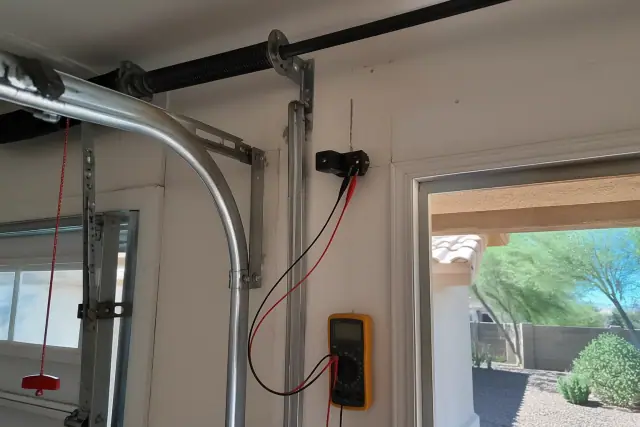
Garage door safety sensor and diagnostic equipment on a door track in a Phoenix, AZ workshop.

Photo-eye sensors sit a few inches above the garage floor and have been required under UL 325 safety standards since 1993. We clean and realign the lenses, then test batteries, rolling codes, keypads, receiver boards, and nearby electronic interference when controls stop responding.

Request Estimate

Drive Gear, Chain, and Belt Repair

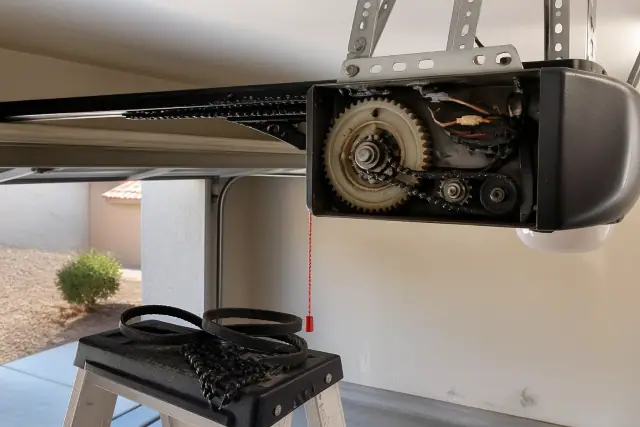
Open garage door opener motor showing internal gears, chain, and belt fragments on a ladder in Phoenix, AZ.

Chain drives stretch and need re-tensioning, while belt drives can crack or slip from the sprocket after repeated heat cycling. We inspect drive tension, sprocket wear, internal gears, and trolley alignment because a slipping drive increases motor strain.

Request Estimate

Logic Board and Motor Diagnosis

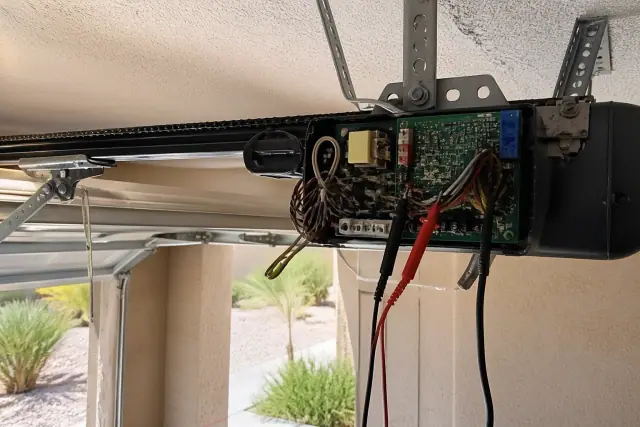
Technician performing a circuit board diagnostic on an open garage door opener motor in Phoenix, AZ.

A dead capacitor, failed receiver, damaged logic board, or worn motor can create similar symptoms. Testing the electronics, drive system, and motor separately shows whether one component can be repaired or the aging motor unit should be replaced.

Request Estimate

Opener Installation and Replacement

Garage door opener motor mounted to ceiling brackets during a repair job in Phoenix, AZ.

New-system setup includes mounting the rail and motor unit, wiring the wall control and sensors, setting travel limits, and securing the emergency release. We follow manufacturer specifications and finish with force, sensor, and auto-reverse tests before the installation is complete.

Request Estimate

Spring, Cable, and Track Repair

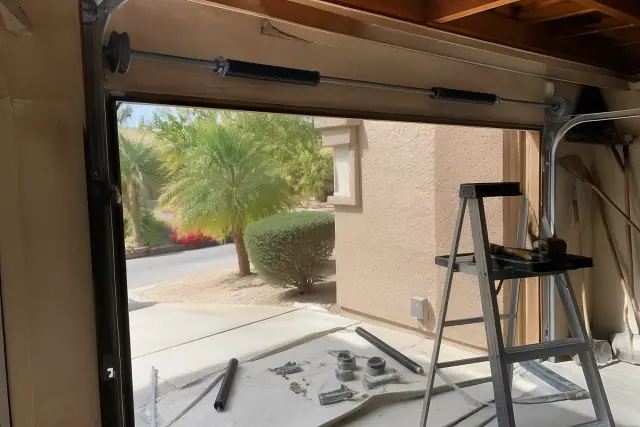
Garage door spring and track repair in progress inside a residential garage in Phoenix, AZ.

A broken spring, frayed cable, uneven drum, bent track, or worn roller can overload a healthy opener. We replace extension springs together because one worn spring can double the load on its partner and lead to another failure within months, and serviced extension-spring systems receive safety cables through the coils.

Request Estimate

Maintenance and Commercial Support

Garage door opener motor and chain drive maintenance in a residential garage in Phoenix, AZ.

Tune-ups cover silicone-based high-heat lubrication, door balance, sensor alignment, auto-reverse, and manual release operation. Commercial doors that cycle dozens of times a day may need heavier-duty springs, commercial-grade openers, steel rollers, and recurring inspections across multiple locations.

Request Estimate
Opener Types

Garage Door Opener Options

The right opener depends on noise, garage layout, drive wear, desired controls, and the condition of the existing motor. Belt, chain, jackshaft, smart, and repair-versus-replacement choices each fit a different set of priorities.

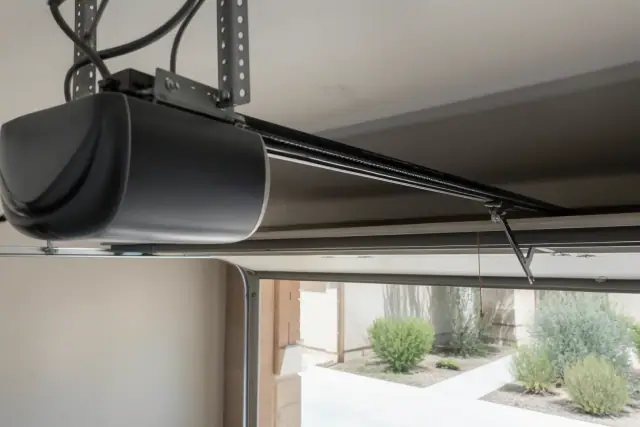
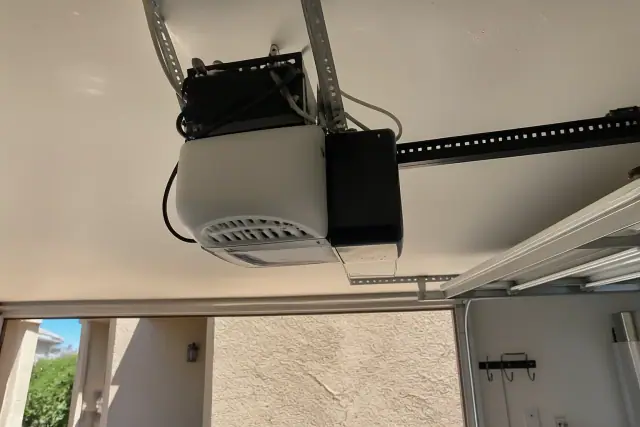
Belt-drive garage door opener motor and rail installed on a ceiling in Phoenix, AZ.

Belt-Drive Openers

Belt-drive units run quietly and suit garages attached to living space. Phoenix heat can crack the belt or make it slip from the sprocket, so condition and alignment matter during service.

  • Quieter operation near living areas
  • Belt cracking and heat-cycle wear checks
  • Sprocket and trolley alignment inspection
  • Travel-limit and sensor setup
  • Smart and battery-backup models available
Request Estimate
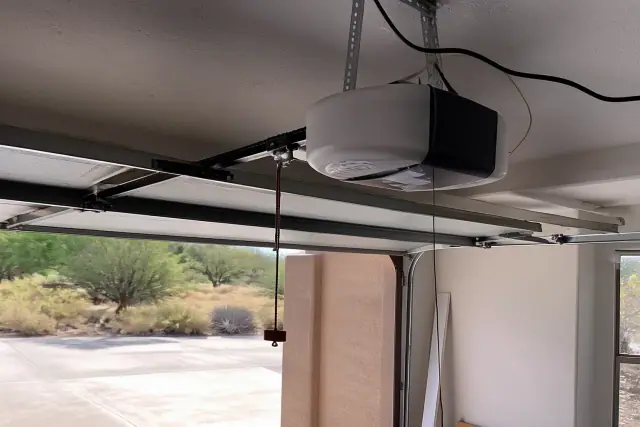
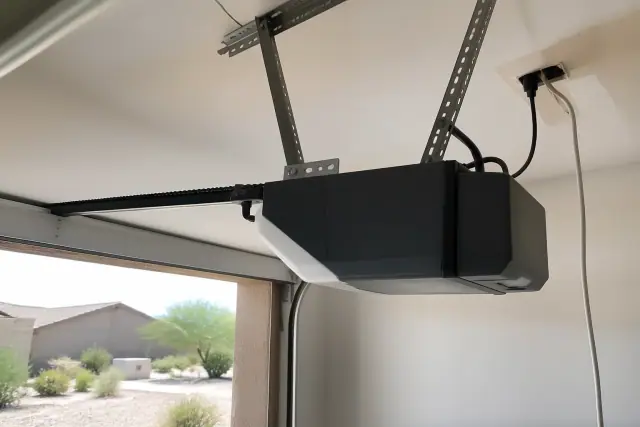
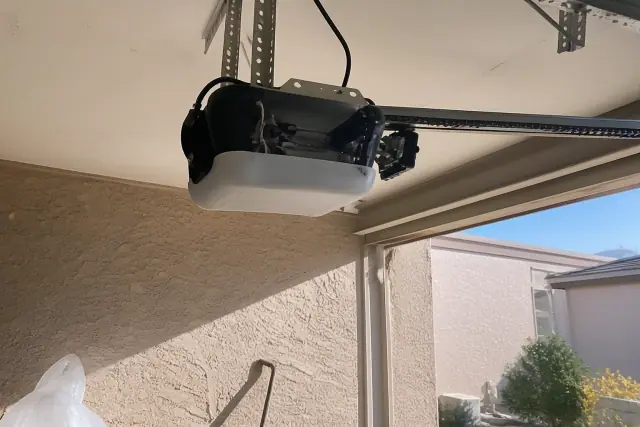
Garage door opener motor assembly mounted to a ceiling in Phoenix, AZ, with desert landscaping visible outside.

Chain-Drive Openers

Chain-drive units cost less and hold up well in detached garages. Basic chain-drive units start around $250 before labor, while service may involve correcting chain stretch, tension, sprocket wear, or trolley alignment.

  • Practical choice for detached garages
  • Lower equipment cost than belt drive
  • Chain stretch and tension correction
  • Drive sprocket wear inspection
  • Trolley alignment and motor-strain checks
Request Estimate
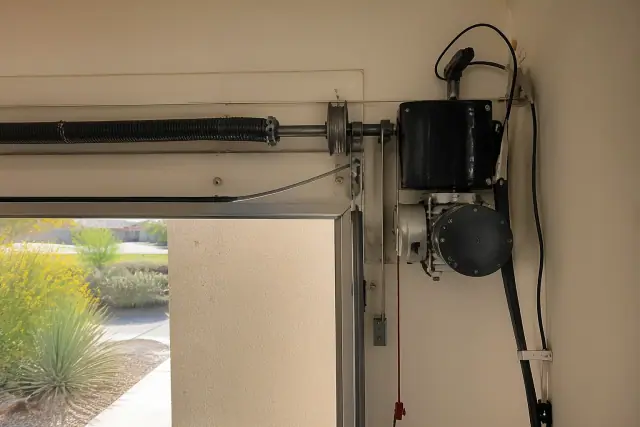
Jackshaft garage door opener installed on a wall with torsion springs and tracks in a garage in Phoenix, AZ.

Jackshaft Openers

Jackshaft openers mount at the wall and work well where limited ceiling clearance makes a conventional rail-and-motor layout less suitable. Installation still includes wall controls, safety sensors, travel limits, an emergency release, and final safety verification.

  • Wall-mounted motor arrangement
  • Suited to limited ceiling clearance
  • Wall-control and safety-sensor wiring
  • Travel-limit and emergency-release setup
  • Force, sensor, and auto-reverse tests
Request Estimate
Smart garage door opener with battery backup installed on a ceiling in Phoenix, AZ.

Smart Openers with Battery Backup

A smart belt-drive opener with battery backup can cost $600 or more before labor. Correct mounting, control wiring, sensor positioning, and travel-limit settings are central to a safe installation.

  • Smart opener controls
  • Battery-backup configuration
  • Quiet belt-drive operation
  • Wall-control and sensor integration
  • Manufacturer-spec safety testing
Request Estimate
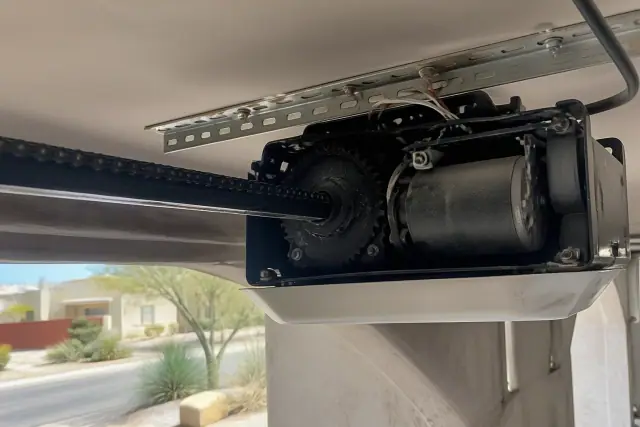
Garage door opener motor mounted to ceiling brackets with a drive rail in a Phoenix, AZ garage.

Repair or Replacement

Age, motor condition, and the cost of repeated component failures guide the decision. A repair can restore a sound system, while replacement can add updated safety features and quieter operation when the old unit is near the end of its service life.

  • Repair is usually worthwhile under 8 years with a strong motor
  • Sensors, capacitors, gears, and logic boards can be tested separately
  • Normal opener lifespan is commonly 10 to 15 years
  • Past 12 years, major electronic or gear failure may favor replacement
  • Repeated repairs are compared with the cost of a new opener
Request Estimate
Finding Your Right Fit

Choosing the Right Opener Approach

Choosing well starts with a complete diagnosis, not an assumption that the motor has failed. We weigh system age, motor strength, component wear, garage layout, noise priorities, door balance, and Phoenix heat exposure before explaining whether repair, a different drive type, or full replacement fits the condition of the system.

Licensed and Insured Arizona Contractor

Phoenix Garage Door Repair Co. holds the contractor licensing required in Arizona and carries insurance on every job. That coverage applies from diagnosis through final testing on residential and commercial work.

Manufacturer-Spec Work and Safety Tests

Technicians follow manufacturer torque specifications and DASMA-recommended installation procedures. New-opener work concludes with force, sensor, and auto-reverse testing to confirm safe operation before completion.

Phoenix Heat and Dust Diagnostics

Desert heat cycling can degrade plastic gears and sensor housings, while dust and grit affect lenses, rollers, and lubrication. Our inspection looks for those local wear patterns and uses silicone-based lubricant suited to high-heat conditions during tune-ups.

What Sets Us Apart

Why Choose Us for Opener Repair?

We evaluate the opener, springs, cables, and track before quoting the work, then explain whether a component repair or replacement makes sense. If an ordered part delays completion, we secure the door and restore safe temporary operation when possible so the property is not left exposed.

Request an Opener Assessment

Misaligned Safety Sensors

A door that opens but will not close often points to photo-eye trouble. Dust on the lenses, sun glare, vibration, or an accidental bump can interrupt alignment, so cleaning and recalibration are the first diagnostic steps.

Remote and Keypad Failures

Dead batteries, corrupted rolling codes, and interference from nearby electronics can all stop a remote from working. We reprogram remotes and keypads on-site and test the receiver board when programming does not resolve the fault.

Worn Gears and Failed Electronics

Worn drive gears, dead capacitors, and failed logic boards can leave the opener silent, intermittent, or unable to move the door. Phoenix heat accelerates plastic degradation, making component-level testing important before replacing the motor unit.

Loose Chains and Cracked Belts

A stretched chain, cracked belt, worn sprocket, or misaligned trolley can slip and strain the motor. Correcting tension and alignment helps the drive transfer power smoothly instead of forcing the opener to compensate.

Spring and Cable Strain

An unbalanced door, broken spring, frayed lift cable, or uneven cable drum makes the opener carry weight it was not designed to lift alone. Balance testing and hardware inspection reveal when the apparent opener problem begins elsewhere in the door system.

Off-Track Doors and Loose Hardware

Broken rollers, bent track, or vehicle impact can pull a door off track, while daily vibration and monsoon-season winds loosen older mounting points. We check vertical and horizontal track alignment, bracket fasteners, and rollers before reconnecting the opener.

How it works

Our Garage Door Opener Repair Process

Our process checks the controls, opener, and door hardware in a deliberate sequence. That approach identifies the failed part, shows what is putting extra load on the motor, and gives you a clear recommendation before work starts.

01.

Assess the Complete Door System

We inspect the opener, springs, cables, rollers, and track together and note the symptoms you are seeing. This separates a motor-unit fault from door hardware that is overloading the opener.

02.

Clean and Align the Safety Sensors

Photo-eye lenses are cleaned and recalibrated to rule out dust, glare, and vibration-related misalignment. We confirm the sensor signal before moving into deeper electronic testing.

03.

Test Controls, Electronics, and Drive

We check batteries, rolling codes, keypads, receiver response, capacitors, the logic board, drive gears, sprocket wear, tension, and trolley alignment. Testing each group separately pinpoints the failed component.

04.

Check Balance, Cables, and Track

The opener is disconnected so we can test door balance at the halfway point. Spring tension, cable winding, pulley bearings, roller condition, track alignment, and mounting fasteners are checked for resistance or unsafe movement.

05.

Review the Diagnosis and Firm Quote

We explain what failed, how the rest of the system affects it, and whether repair or replacement is the better fit. A firm price is provided after diagnosis and before repair work begins.

06.

Repair, Program, and Safety-Test

Approved repairs, adjustments, or installation work follow manufacturer specifications. We then program controls as needed and complete force, sensor, auto-reverse, and manual-release checks before returning the system to service.

Get Better Service

Schedule a Garage Door Opener Consultation

Tell us whether the door will not open, will not close, responds intermittently, sounds strained, or has stopped moving altogether. We can inspect the opener and connected door hardware, explain the diagnosis, and provide a firm quote before repair begins.

Service Help

Garage Door Opener Repair FAQs

These answers cover opener repair costs, repair-versus-replacement decisions, common faults, spring life, installation choices, maintenance, commercial service, and our Phoenix-area coverage.

Call Our Experts

Standard opener repairs in the Phoenix metro area generally run between $162 and $392, averaging around $277 depending on the part and labor time. Sensor alignment or remote programming may cost less, often under $150, while logic-board or motor work lands nearer the upper end. We provide a firm quote after diagnosis and before work begins.

Look for Arizona contractor licensing, insurance, experience with multiple opener types, a clear diagnostic process, and pricing provided before work starts. It is also useful to ask how the company tests safety sensors, auto-reverse operation, and connected door hardware.

Repair usually makes sense when an opener is under 8 to 10 years old, the motor is sound, and the fault is a sensor, capacitor, or gear. Once a unit reaches 12 to 15 years or needs repeated major repairs, replacement may make more financial sense and can add updated safety features and quieter operation.

Broken torsion springs and misaligned safety sensors are two of the most frequent calls. Springs wear through repeated open-close cycles, while low-mounted photo eyes are easily affected by dust, vibration, and accidental bumps.

Misaligned sensors, worn rollers, frayed lift cables, broken springs, bent track, remote programming faults, worn gears, and degraded lubrication can all affect opener performance. Phoenix heat also accelerates wear on plastic gears, rubber seals, and lubricants, while dust can stiffen rollers and obscure sensor lenses.

Torsion springs are generally rated for about 10,000 open-close cycles, or roughly 7 to 12 years for a household using the door several times a day. Phoenix heat cycling can add metal fatigue, so a spring on the sun-exposed side may wear out toward the shorter end of that range.

Many opener faults involve one repairable component, such as a safety sensor, capacitor, drive gear, receiver, remote, keypad, or logic board. We test the motor, drive, and electronics separately so the recommendation reflects the condition of the specific unit.

Belt-drive openers are quieter for garages attached to living space, chain-drive units cost less and suit detached garages, and jackshaft openers work well with limited ceiling clearance. Your door balance, layout, noise priorities, and desired controls help determine the right choice.

The inspection covers sensors, controls, electronics, the drive mechanism, motor response, springs, cables, rollers, and track. We identify the failed component, check for door resistance that may be straining the opener, and provide a firm quote before repair starts.

Yes. A frayed or broken cable, uneven drum, seized pulley, bent track, or failed roller can force the opener to compensate and accelerate gear wear. Those door components should be corrected before the opener resumes normal operation.

A tune-up includes high-heat silicone-based lubrication for rollers, hinges, and springs, a balance test at the halfway point, sensor alignment, auto-reverse testing, and a manual-release check. This catches resistance and safety faults before they become a larger opener problem.

Yes. Service covers commercial openers, heavier-duty springs, steel rollers, and high-traffic door systems, along with recurring maintenance for property managers and businesses with multiple locations. The inspection cycle can be kept consistent instead of waiting for each door to break down.

Phoenix Garage Door Repair Co. provides residential and commercial opener repair throughout Phoenix, Glendale, Peoria, Scottsdale, Tempe, and the surrounding Maricopa County metro area. Service is available for homes, warehouses, retail bays, and multi-location commercial properties.