Proudly serving Phoenix, Mesa, Scottsdale, Tempe, Glendale, Chandler & surrounding areasCall or Text 24/7: 602-449-9593
Aerial view of a Phoenix, AZ suburban neighborhood featuring stucco houses, desert landscaping, and Saguaro cacti.

Garage Door Repair and System Maintenance Services in Tempe, AZ

Phoenix Garage Door Repair Co. provides garage door spring repair and replacement, opener repair and installation, and new garage door installation and replacement for homes and businesses in Tempe, Arizona. Our local service lineup also includes cable repair, off-track repair, panel and roller replacement, maintenance and tune-ups, and commercial garage door repair. Technicians work with torsion and extension springs, chain-, belt-, and screw-drive openers, and sectional or roll-up doors. Each recommendation starts with the door's weight, hardware condition, and daily use rather than a one-size-fits-all fix.

Tempe summers routinely climb past 110 degrees, while an unshaded garage can exceed 150 degrees and speed metal fatigue or dry out lubrication. Dust and monsoon winds from June through September work grit into rollers and tracks, and irrigation overspray or storm moisture can accelerate corrosion. These conditions can turn a worn spring, frayed cable, or rough roller into a stuck or uneven door. Licensed and insured service, an itemized quote, and full balance and safety checks help owners choose a repair that fits the system.

Appointments cover Tempe neighborhoods near Arizona State University, Rural Road, Mill Avenue, Southern Avenue, and the South Tempe corridors. Urgent calls for a stuck-open, stuck-closed, or off-track door receive priority, and most spring or cable calls during business hours can be handled the same day.

★ ★ ★ ★ ★4.9/5.0 Customer Rating - 19 Years of Garage Door Experience - Thousands of Doors Serviced - Licensed, Bonded & Insured - Residential & Commercial Service
Repair, Installation & Maintenance

Garage Door Services in Tempe, AZ

Explore the ten core garage door services available for Tempe homes, rentals, apartment properties, shops, warehouses, and retail loading areas. Each service accounts for desert heat, dust, door weight, and nearby hardware so the recommendation addresses the full operating system. Property owners looking for the site's location-specific information for Glendale, AZ can review that coverage separately.

Garage Door Spring Repair & Replacement

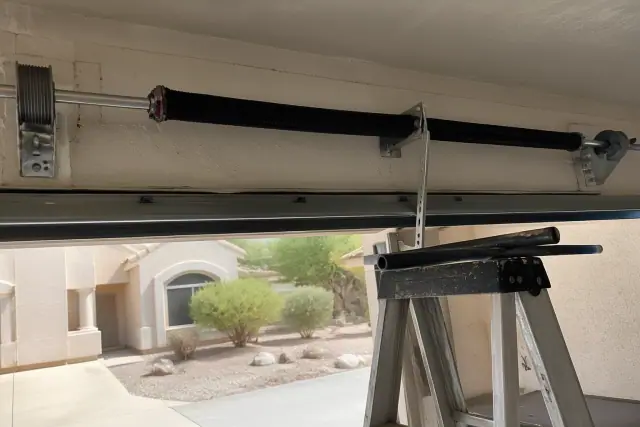
New torsion spring and hardware installed on a garage door in Tempe, AZ.

A loud bang, a door that will not lift, or a door that suddenly feels heavy can point to a snapped torsion or extension spring. Technicians inspect the coil, cable drums, bearing plates, center brackets, and paired spring before sizing a safe replacement with proper winding bars and clamps.

Explore Service

Garage Door Opener Repair

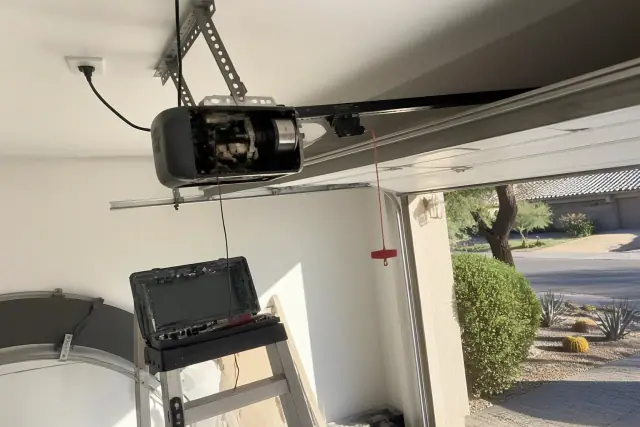
Technician repairing a garage door opener motor on a ceiling mount in Tempe, AZ.

Grinding, stalling, or remote-control failure may come from a worn gear, drive belt, logic board, sensor alignment, or force setting. Because an unbalanced spring can mimic an opener fault, the diagnostic covers both the lift system and chain-, belt-, or screw-drive opener before a repair is quoted.

Explore Service

New Garage Door Installation & Replacement

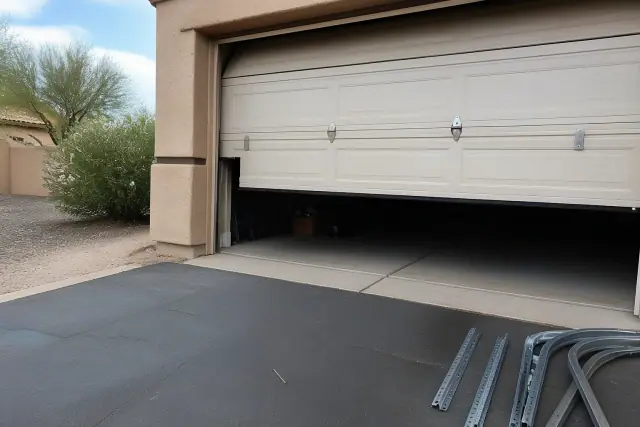
Garage door installation in progress with partially lifted panels on a residential driveway in Tempe, AZ.

New and replacement sectional doors are available in insulated or non-insulated wood, steel, aluminum, and composite options. Planning covers opening size, headroom, side clearance, R-value, Arizona monsoon wind-load needs, and removal and haul-away of the old door; structural changes also receive permit coordination.

Explore Service

Garage Door Opener Installation

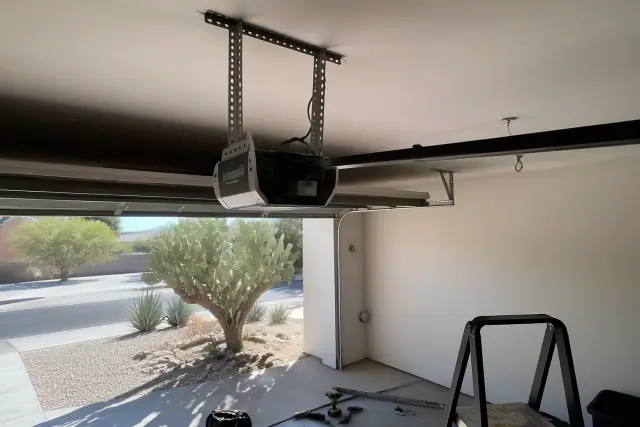
Garage door opener motor being installed on ceiling brackets in a garage in Tempe, AZ with desert plants outside.

Belt-drive, chain-drive, and jackshaft openers are matched to the door's size, material, and horsepower needs. Options include quieter operation, rolling-code security, and battery backup for monsoon outages, with safety sensors placed to current UL 325 entrapment-protection standards and tested before handoff.

Garage Door Cable Repair

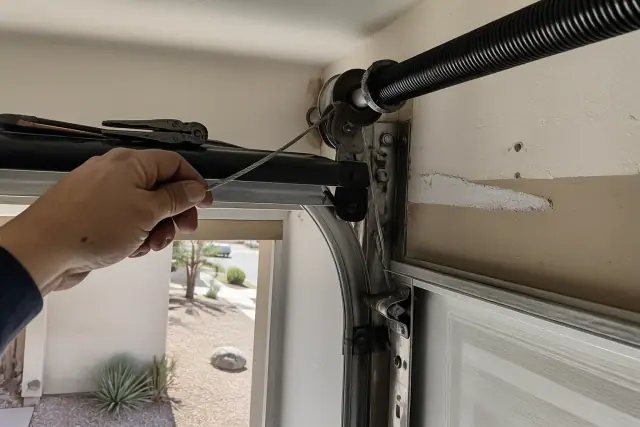
Garage door cable repair in progress near the ceiling assembly of a home garage in Tempe, AZ.

Frayed or snapped lift cables can leave a door hanging crooked or allow one side to drop. Replacement uses galvanized aircraft-grade steel rated to the door's weight, followed by checks of the cable drums and track alignment for damage caused by the failure.

Off-Track Garage Door Repair

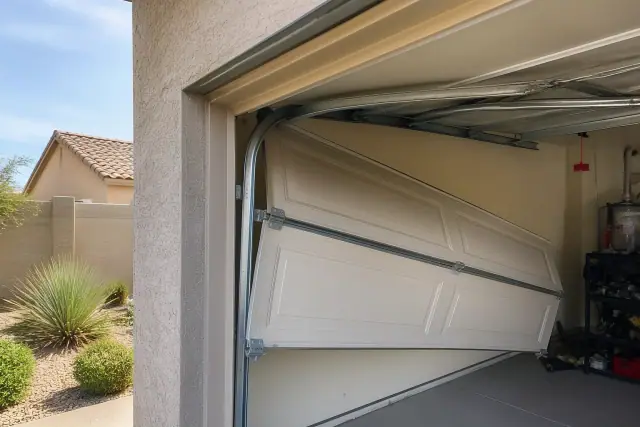
Garage door segment hanging off the metal guide tracks at a residential home in Tempe, AZ.

A vehicle bump, broken roller, bent track, or storm impact can pull a door out of alignment and place its panels at risk. Repair includes securing the door, realigning or replacing damaged track sections, reseating the rollers, and cycling the system through a full test run.

Garage Door Panel Replacement

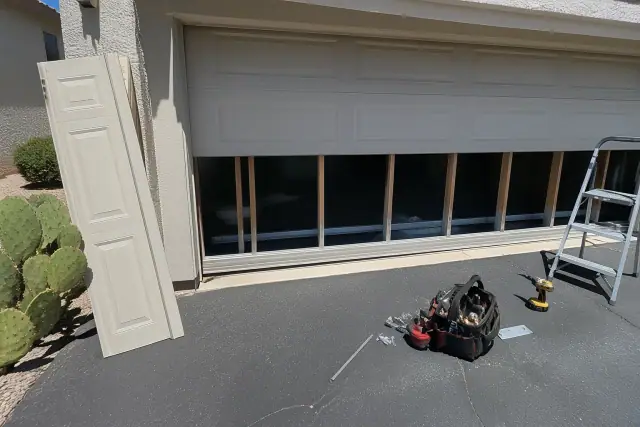
Garage door panel replacement in progress on a home in Tempe, AZ, with a removed panel propped against the garage.

Minor collisions and wind-driven monsoon debris can dent or bend one section without ruining the whole door. When a compatible manufacturer and color match is available, a single damaged panel can often be replaced instead of requiring full door replacement.

Garage Door Roller Replacement

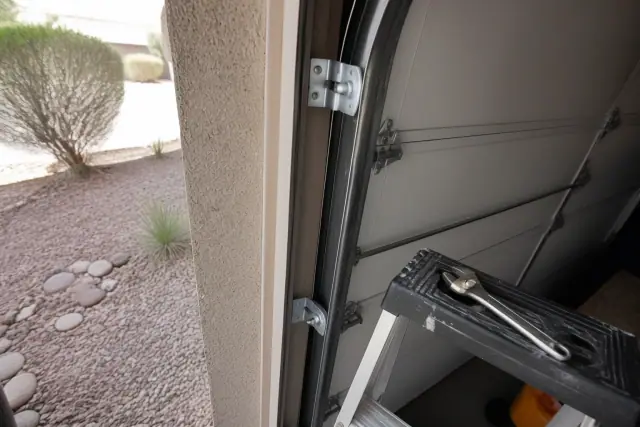
New metal garage door rollers installed in tracks on a stucco home in Tempe, AZ.

Squeaking, shaking, and rough travel often trace back to worn nylon or steel rollers, especially when Tempe dust has entered the bearings. Sealed-bearing rollers rated for extended cycle life can restore smoother travel after the tracks and nearby hinges are inspected.

Garage Door Maintenance & Tune-Ups

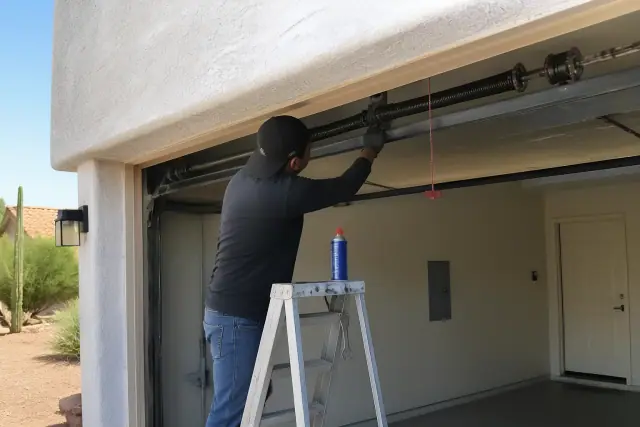
Contractor maintaining torsion springs on a garage door at a stucco home in Tempe, AZ.

Preventive visits combine lubrication, hardware tightening, balance testing, spring-tension checks, safety-sensor testing, opener-force adjustment, track inspection, and weatherstripping review. This Arizona-focused checklist targets heat-dried lubricant, embedded grit, and small gaps that admit dust or rain.

Commercial Garage Door Repair

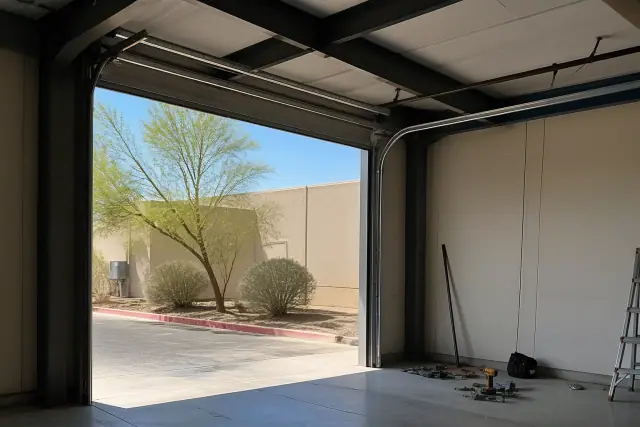
Commercial garage door repair in progress with tools and hardware in an industrial bay in Tempe, AZ.

Commercial service covers roll-up doors, sectional doors, and high-cycle spring systems used by Tempe warehouses, auto shops, retail loading bays, and businesses near the airport corridor and industrial parks. Scheduling can work around business hours to reduce downtime while technicians address springs, tracks, cables, rollers, and operators.

Service Selection

How to Choose the Right Garage Door Service in Tempe

A useful recommendation depends on more than the part that stopped moving. Door weight and dimensions, spring type and cycle rating, opener design, panel condition, property use, insulation needs, and exposure to west-afternoon sun all help determine whether targeted repair, component replacement, or a full new system makes sense.

Match the Spring System

Torsion springs mount on a shaft above the opening for smoother, more controlled lift, while extension springs stretch beside the horizontal tracks. The existing setup, door weight, available headroom, and desired service life guide which correctly matched spring belongs on the door.

Size Springs to the Door

A standard double-car steel door can weigh 130 to 400 pounds depending on its material and insulation. Exact door height and cable-drum circumference are measured so wire gauge, coil length, wind direction, and lift capacity match the actual system.

Choose the Right Cycle Rating

Standard low-cycle springs are rated closer to 10,000 cycles, while high-cycle options may be rated for 20,000 to 50,000+ cycles. A household that opens the door several times daily or a commercial bay with frequent traffic may benefit from the higher rating, particularly under Tempe heat.

Plan for Opener Performance

The correct opener depends on the door's weight, material, ceiling clearance, noise priorities, and power-outage planning. Belt drive favors quiet operation, chain drive offers a familiar durable setup, and a wall-mounted jackshaft can preserve overhead space when the structure allows it.

Compare Repair with Replacement

A matching panel, roller, cable, or opener component can preserve a door that is otherwise sound. Full replacement becomes more practical when sections are warped, rusted through, repeatedly patched, or poorly suited to the property's insulation and wind-load needs.

Account for Property Use

An aging low-cycle spring on a 1970s-era Tempe home, an opener serving a student rental near campus, and a commercial roll-up door all face different traffic and access demands. The use pattern helps set spring cycle rating, opener power, noise priorities, insulation, and maintenance frequency.

Tempe Garage Door Issues

Common Garage Door Problems for Tempe Properties

Properties near Tempe Town Lake, Papago Park, the Kyrene corridor, and South Tempe may have different door ages, but the same desert forces repeatedly affect springs, openers, cables, rollers, tracks, and panels. A prompt inspection can separate a single worn component from a broader balance or alignment problem before continued operation damages nearby hardware.

Request Inspection

Broken or Worn Springs

A sharp bang, a visible gap in the coil, a door that will not move, or a door that feels unusually heavy are classic spring-failure symptoms. Stop using the opener, because the motor is not designed to lift the full door without spring assistance.

Heat-Dried Lubrication

Sustained garage heat can dry lubricant on springs, rollers, and hinges, increasing friction and noise. Fresh lubrication helps only after a technician confirms that rough movement is not coming from a cracked roller, failing bearing, bent track, or incorrectly balanced spring.

Straining Garage Door Openers

Grinding, stalling, slow travel, or repeated reversal can indicate worn opener parts, heat-stressed electronics, blocked sensors, or excess door weight from a weak spring. Testing the door balance separately from the motor prevents a spring problem from being mistaken for an opener-only repair.

Dust-Clogged Rollers and Tracks

Fine desert grit collects in roller bearings and track channels, causing squeaks, vibration, and rough movement. Dust combined with irrigation overspray or monsoon moisture can also accelerate corrosion on tracks and exposed hardware, especially when regular lubrication has been skipped.

Frayed or Snapped Lift Cables

A damaged lift cable can make one side lag, leave the door crooked, or allow it to drop unexpectedly. The door should remain still until the cable, drum, spring tension, and track alignment are inspected together and the replacement cable is matched to the door's weight.

Bent Panels and Off-Track Doors

Vehicle contact, a failed roller, or wind-driven debris can bend a panel and pull rollers out of the track. Continuing to move a crooked door may deform more sections, so the safer response is to stop operation and have the door secured before alignment or panel work begins.

Why Choose Us

Why Choose Garage Door Experts in Tempe?

Garage doors across Maricopa County face similar heat and dust, but Tempe's mix of established homes, campus rentals, apartment properties, and commercial corridors creates distinct access and traffic patterns. Phoenix Garage Door Repair Co. combines local climate knowledge with licensed and insured service, correctly rated parts, straightforward options, and testing that covers the whole operating system.

Tempe Climate Knowledge

Recommendations account for Sonoran Desert heat, dust, sudden monsoon wind, west-facing sun, and moisture followed by rapid drying. That local context affects spring cycle choices, roller and hinge lubrication, weatherstripping, panel insulation, and wind-load discussions.

Licensed, Insured, and Permit-Aware

The company provides licensed and insured garage door service, and technicians carry that coverage and training onto the property. When a new installation requires structural changes to the opening, permitting can be coordinated with the City of Tempe Building Safety Division.

Clear Quotes and Complete Testing

Residential repair begins with a straightforward, itemized quote before work starts, while free estimates are available for larger projects such as full door replacement or commercial installation. The final check covers door balance, spring tension, safety reversal, sensor response, track alignment, and smooth full-cycle operation.

Safe Spring Service

Our Spring Replacement Process in Tempe

Spring replacement follows a measured sequence because the component stores substantial tension and must be matched to the entire door. The process moves from inspection and precise sizing through controlled removal, installation, balance adjustment, and opener safety testing.

01.

Inspect the Complete System

The technician visually checks the failed spring along with the cables, drums, bearing plates, end bearings, brackets, rollers, and track alignment. This identifies adjacent wear that may have contributed to the failure or been stressed when the spring broke.

02.

Measure the Door and Cable Drum

Door height, weight, material, and cable-drum circumference are confirmed before a replacement is selected. Those measurements establish the correct wire gauge, coil length, wind direction, and cycle rating instead of relying on appearance alone.

03.

Secure the Door and Release Tension

The door is secured against movement before any remaining spring tension is relieved with proper winding bars and clamps. The damaged component can then be removed without transferring uncontrolled force to the door or nearby hardware.

04.

Install the Correctly Rated Spring

A spring matched to the door's lift and cycle needs is mounted in the correct wind direction. When a paired system has springs of the same age, replacing both can preserve even tension and avoid leaving one near-end-of-life spring beside a new one.

05.

Balance and Adjust the Door

With the opener disconnected, the door is moved partway open to see whether it holds position without drifting. Spring tension is adjusted until the door lifts evenly and remains balanced rather than making the opener carry excess force.

06.

Reconnect and Safety-Test

The opener is reconnected after the manual balance check. Safety-reversal sensors, opener force, cables, rollers, and track movement are tested through several complete cycles to confirm smooth, quiet operation before the job is finished.

Service Outcomes

Garage Door Service Outcomes for Tempe Homes & Businesses

Case Study 1: Balanced residential lift: Correctly sized spring work can restore even travel and keep the opener from carrying the door's unsupported weight.

Case Study 2: Smoother everyday operation: Aligned tracks, sealed-bearing rollers, adjusted force settings, and responsive safety sensors help a repaired system move more quietly and predictably.

Case Study 3: Reduced business disruption: Commercial scheduling around operating hours helps Tempe shops, warehouses, and loading areas address roll-up or sectional door problems while limiting downtime.

Request Local Service

Schedule Tempe
Garage Door
Service

Describe the door type, what changed, and whether the door is stuck open, stuck closed, crooked, noisy, or unresponsive. Phoenix Garage Door Repair Co. can provide an itemized repair quote before work begins, or a free estimate for a larger full-door replacement or commercial installation.

Tempe Garage Door Help

Garage Door Repair FAQs for Tempe, AZ

Use these answers to understand spring costs and lifespan, safety concerns, repair timing, maintenance, opener symptoms, replacement options, and service coverage before scheduling garage door work in Tempe.

Call Our Experts

Single spring replacement typically runs $150 to $250 including parts and labor, while double spring replacement generally falls between $200 and $350. Extension spring replacement often ranges from $100 to $200 per spring. Spring type, cycle rating, door size, and related cable or roller wear can change the final quote.

Most garage door springs last around 8.5 years on average, or roughly 10,000 open-close cycles, although spring type, quality, door weight, and daily use matter. Tempe heat can shorten that service life, so periodic balance checks can identify wear before a break.

When paired springs were installed together, replacing both is generally recommended after one fails because they have experienced similar wear. A matched pair also supports even tension and reduces strain on the opener and cables. The inspection confirms whether the door uses a paired system and whether both springs are the same age.

If the door is already open, it may be possible to move the vehicle, but do not try to close the door manually afterward because it can drop suddenly or become impossible to lift again. Avoid using the automatic opener and leave the door in its current position until a technician can assess it safely.

Most single or double spring replacements are completed within 30 to 90 minutes on-site. Door size and additional wear on cables, rollers, drums, or bearings can affect the timing. The appointment also includes balance testing and several full operating cycles.

Torsion springs twist on a shaft mounted above the opening, producing smoother, more controlled lift and handling heavier doors evenly. Extension springs stretch beside the horizontal tracks to supply lift. Torsion systems generally last longer, while the correct choice still depends on the door and existing hardware.

No. Torsion springs store substantial tension, and releasing or adjusting them without proper winding bars, clamps, and technique can cause serious injury. Even an incorrectly matched spring can leave the door unbalanced and damage the opener or cables.

A maintenance visit is generally recommended at least once a year in Tempe, or more often for a door used multiple times daily. A tune-up checks lubrication, hardware, balance, spring tension, rollers, cables, tracks, weatherstripping, opener force, and safety sensors.

A loud bang, a visible gap in the spring coil, uneven lift, a door that will not open, or a door that feels unusually heavy can indicate spring failure. Stop operating the door and opener until the springs, cables, and nearby hardware can be inspected.

Grinding, stalling, or remote failure can come from opener gears, belts, logic boards, sensor alignment, or force settings. A weak or broken spring can create similar symptoms by making the motor lift excess weight. Testing the door balance with the opener disconnected helps separate the two causes.

New sectional doors are available in wood, steel, aluminum, and composite, with insulated and non-insulated configurations. Selection can consider R-value, opening dimensions, headroom, side clearance, west-afternoon sun, and wind-load needs during Arizona monsoon season.

Visible fraying, a snapped cable, a crooked door, one side that lags, or a sudden drop can signal cable trouble. Do not keep cycling the door. Cable replacement should include checks of the drum, spring tension, and track alignment because the failure can stress nearby hardware.

Stop operating the door and avoid trying to force it back into place, since bent panels or damaged rollers can worsen. A technician can secure the door, realign or replace the affected track, reseat the rollers, and inspect the cables before a full-cycle test.

Same-day service is standard practice for many spring, cable, and opener calls received during business hours. Urgent safety issues such as a door stuck open, a snapped spring with the door down, or an off-track door receive priority. Availability depends on the call time, hardware needed, and current schedule.

Tempe coverage includes neighborhoods around Arizona State University, South Tempe near Warner and Elliot Roads, the Kyrene corridor, Tempe Town Lake, and Papago Park. The stated surrounding coverage also includes Mesa, Chandler, Scottsdale, Guadalupe, and South Phoenix across the greater Phoenix metro.