Proudly serving Phoenix, Mesa, Scottsdale, Tempe, Glendale, Chandler & surrounding areasCall or Text 24/7: 602-449-9593
Aerial view of a Phoenix, AZ suburban neighborhood featuring stucco houses, desert landscaping, and Saguaro cacti.

Garage Door Panel Replacement and Damaged Section Repair in Phoenix, AZ

Phoenix Garage Door Repair Co. provides garage door panel replacement for residential and commercial properties across Phoenix, Arizona. Our team also handles spring repair, opener installation and repair, cable repair, off-track garage door repair, roller replacement, and full new garage door installation. We match the replacement section's panel gauge, finish, and hardware specifications to the existing door for a cohesive result.

Salt River Valley summer temperatures routinely climb past 110 degrees, while UV exposure and monsoon dust place additional stress on garage door panels. Bent, cracked, or bowed sections can shift weight onto the tracks, rollers, springs, and cables instead of remaining a cosmetic issue. Our licensed and insured technicians inspect the full door before recommending a matched panel, related hardware correction, or full replacement.

Panel gauge, insulation, door age, color-match complexity, and hardware condition all affect the right solution. We provide a firm, itemized quote after an in-person inspection because photos alone cannot confirm track alignment or the condition of the complete door assembly.

Phoenix Garage Door Repair Co. provides garage door panel replacement throughout Phoenix, Scottsdale, Tempe, Mesa, Glendale, and the greater Maricopa County metro area.

★ ★ ★ ★ ★4.9/5.0 Customer Rating · 19 Years of Garage Door Experience · Thousands of Doors Serviced · Licensed, Bonded & Insured · Residential & Commercial Service

Garage Door Panel Replacement Options & Benefits

What Is Garage Door Panel Replacement?

A sectional garage door is built from independent horizontal panels joined by hinges. When damage is isolated, a matching section can often be unbolted and replaced without disturbing the usable panels, provided its profile and mounting pattern fit the existing door.

Replacement also requires checking how the section affects the tracks, rollers, springs, and cables. Leaving a bad panel in service can allow a $250-$400 repair to become a $1,500-$2,500 full replacement within a year or two as uneven loads accelerate wear.

The final match may be a steel, insulated, non-insulated, wood composite, OEM, aftermarket, or custom-fabricated panel. Manufacturer, door series, design profile, finish, hinge spacing, and any window cutout all guide the selection.

Benefits of Replacing a Damaged Panel

Replacing the failed section can restore smooth travel, a secure closure, and a consistent exterior while retaining the parts of the door that remain serviceable. The inspection determines whether panel-only replacement is practical or whether wider deterioration makes a full-door change the better choice.

  • Retains serviceable tracks, springs, opener, and surrounding sections
  • Restores a secure closing surface after impact or cracking
  • Corrects uneven loading caused by a bent or bowed section
  • Matches panel gauge, finish, profile, and hardware specification
  • Allows insulated construction where an attached garage needs heat-load control
  • Supports on-site color matching when Arizona sun has faded the original finish
  • Creates an opportunity to correct worn hinges, rollers, or track alignment
  • Provides a focused alternative to replacing an otherwise sound door
Panel Repair Services

Garage Door Panel Services

Phoenix panel damage generally falls into three categories: vehicle or debris impact, heat and UV-related fatigue, and age-related rust or delamination. We tailor the inspection and replacement approach to the damage, the existing door line, and the condition of its supporting hardware.

Single-Panel Replacement

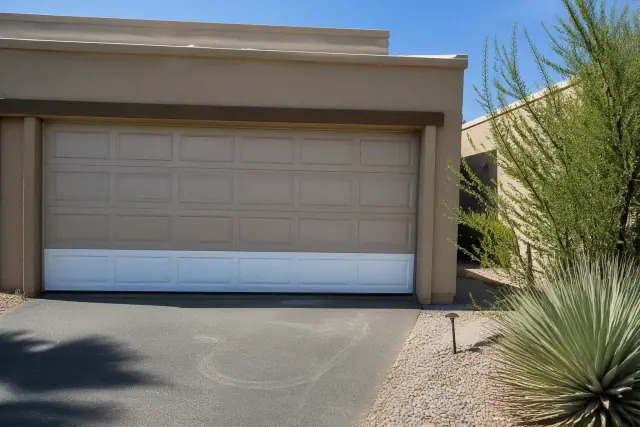
New single garage door panel replacement on a house with xeriscaping in Phoenix, AZ.

An isolated section can be replaced when the surrounding panels, tracks, springs, and opener remain in good working condition. We confirm the door series and mounting pattern before sourcing a compatible section.

Request Estimate

Dented and Creased Panel Replacement

A new garage door panel installed on a home in Phoenix, AZ, with a xeriscaped front yard and asphalt driveway.

Minor steel-panel dents may respond to panel-massaging techniques, but a deep crease compromises the section's structure and continues to bow through daily thermal cycling. We determine whether repair is realistic or replacement is needed.

Request Estimate

Vehicle-Impact Panel Repair

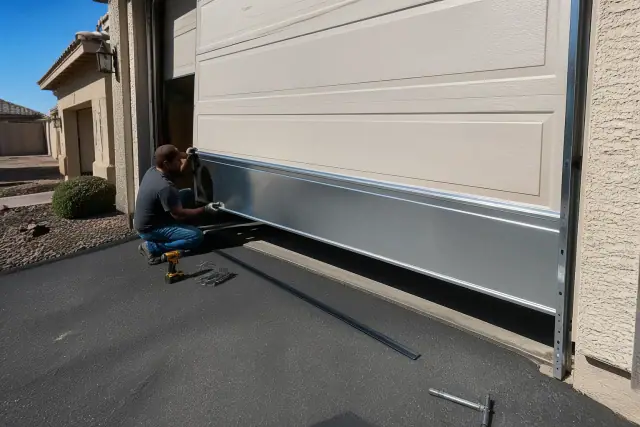
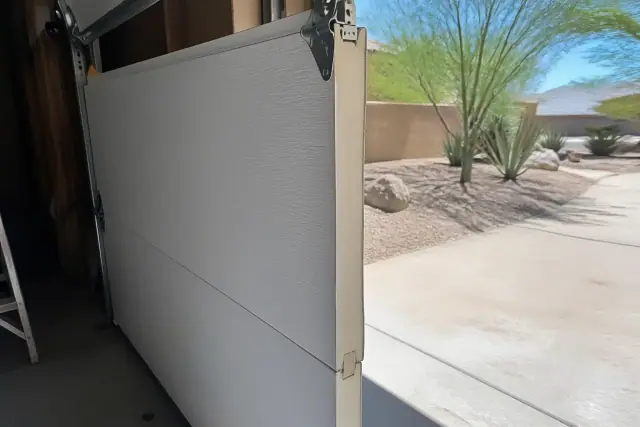
Contractor installing a new metal garage door panel in a residential driveway in Phoenix, AZ.

Lower panels struck by a bumper or trailer hitch may also leave tracks and hinges bent. We inspect the full opening so the quote addresses both the visible panel and any supporting hardware damaged by the collision.

Request Estimate

Color Matching and Refinishing

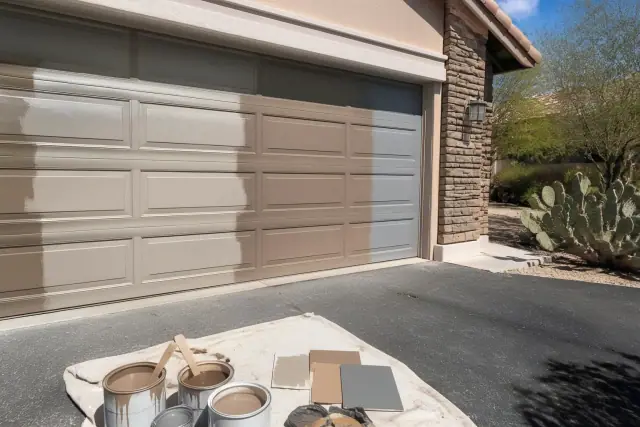
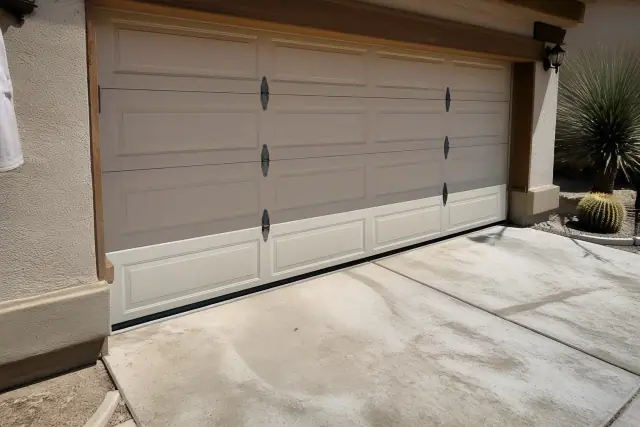
Color matching and refinishing on a garage door in a residential driveway in Phoenix, AZ.

Factory finishes often fade unevenly under Arizona sun, so a catalog color may not blend with an older door. On-site color matching and refinishing help the new section fit the surrounding panels instead of looking like a patch.

Request Estimate

Same-Day Panel Replacement

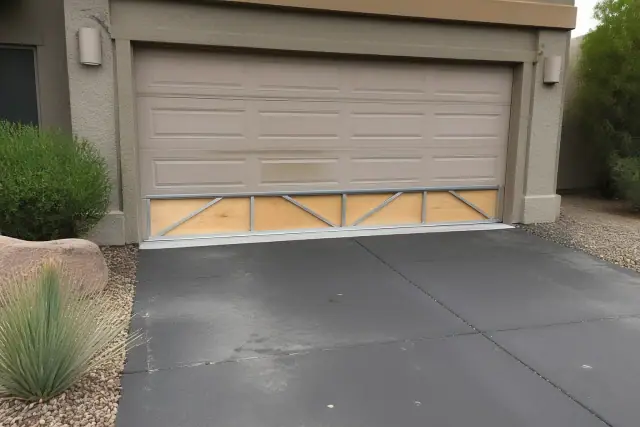
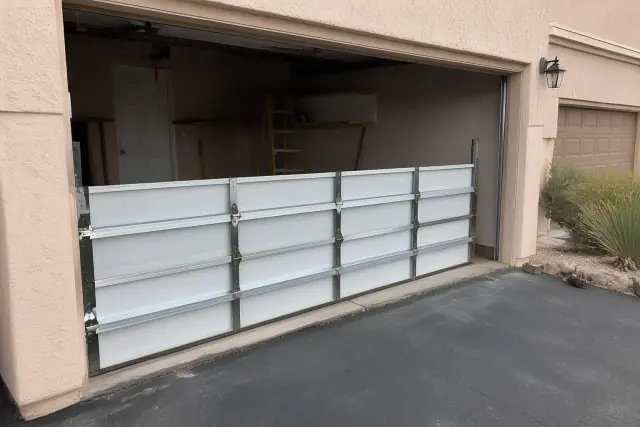
Garage door replacement with a new partially painted panel on a house in Phoenix, AZ.

We prioritize same-day replacement when service-vehicle stock matches the damaged residential steel section. Photos sent before the visit help the technician prepare the likely panel size, finish, and hardware.

Request Estimate

Wood Panel Replacement

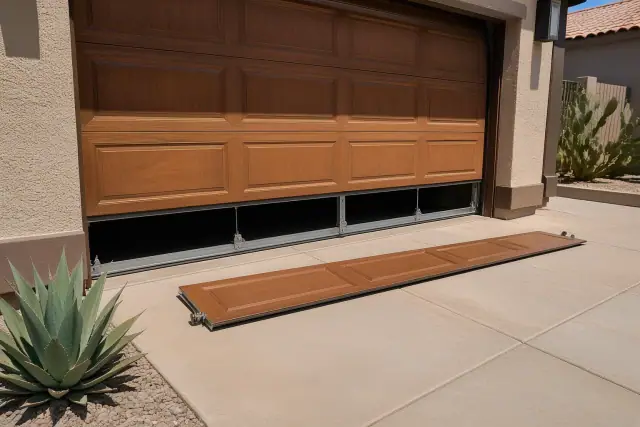
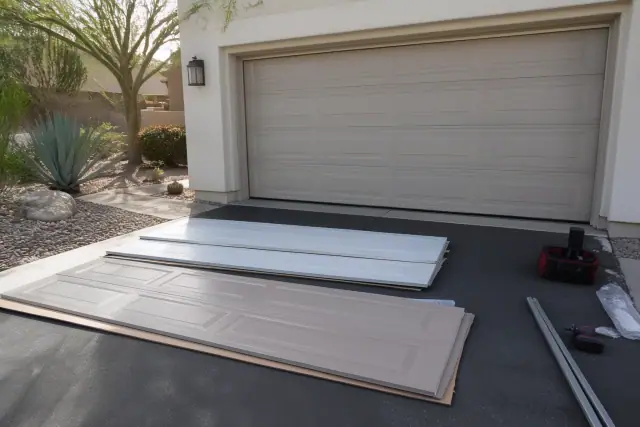
Garage door with a removed bottom panel and a new replacement panel on the driveway in Phoenix, AZ.

Traditional wood doors in Paradise Valley, Arcadia, and historic Encanto need grain, stain, and panel-style matching as well as protection from dry heat and monsoon moisture. Custom raised-panel and carriage-house sections can be fabricated for styles no longer in standard production.

Request Estimate
Replacement Panel Options

Types of Garage Door Panel Options

The right replacement depends on the original door's construction and the reason the panel failed. We compare material, insulation, profile, finish, sourcing route, and hardware compatibility before recommending an option.

Standard steel garage door panels being installed on a residential driveway in Phoenix, AZ.

Standard Steel Panels

Steel is common across Phoenix residential and commercial door lines and is available in stock and matched configurations. Correct gauge, profile, finish, and hinge placement matter as much as the panel's overall dimensions.

  • Available in 24 to 27 gauge steel
  • Stock sizes for commonly installed residential door lines
  • Raised, flush, and ranch-style profiles
  • Factory finish matching where the original color remains available
  • Non-insulated construction for detached garages where efficiency is not a priority
Request Estimate
Insulated garage door panel with exposed foam core during installation at a home in Phoenix, AZ.

Insulated Garage Door Panels

Insulated sections cost more than non-insulated steel but handle the summer heat load better on an attached garage. The panel's added weight also needs to remain compatible with the door's springs, cables, and opener settings.

  • Polystyrene-core panel construction
  • Polyurethane-core panel construction
  • Useful for attached garages exposed to sustained summer heat
  • Matched profile and insulation configuration across sections
  • Balance and opener settings checked for the new weight distribution
Request Estimate
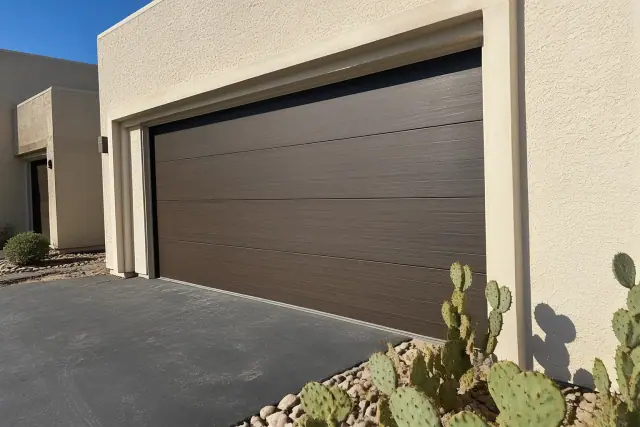
New wood and composite garage door panels installed on a home in Phoenix, AZ.

Wood and Composite Panels

Wood and wood-composite sections suit traditional and custom doors but require careful finish matching. Phoenix dry heat can pull moisture from the grain, while monsoon downpours can drive it back unevenly and promote splitting.

  • Raised-panel and carriage-house styles
  • Custom fabrication for discontinued designs
  • On-site grain and stain matching where possible
  • Exterior-grade sealants rated for high-UV environments
  • All six sides sealed before installation to limit moisture cycling
Request Estimate
OEM and aftermarket garage door panels being replaced in a residential driveway in Phoenix, AZ.

OEM and Aftermarket Panels

OEM panels offer an exact factory match when the original line remains available, though discontinued products may involve a premium or longer lead time. A reputable aftermarket panel can be a practical compatible choice for an older door.

  • Manufacturer and door-series identification
  • Matching profile and mounting pattern
  • Window cutout alignment where applicable
  • Factory-source options for current production lines
  • Compatible aftermarket matching for older or imported doors
Request Estimate
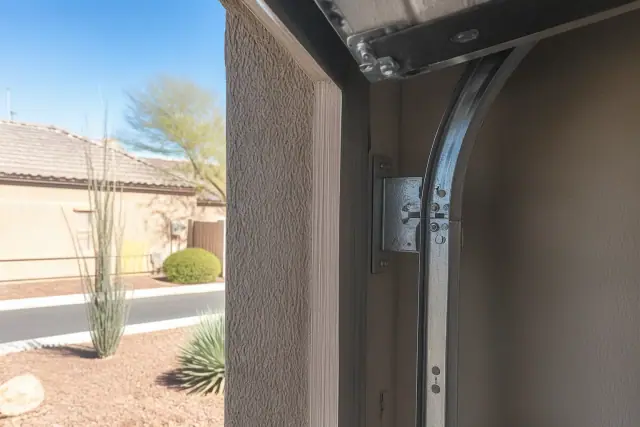
Garage door track and roller upgrade on a stucco home in Phoenix, AZ.

Hardware and Roller Upgrades

Panel removal exposes hinges, rollers, and track contact points that may already show fatigue. Correcting worn hardware during replacement protects the new section from inheriting the same alignment or movement problem.

  • Worn hinges replaced instead of reused on a new panel
  • Galvanized steel hinges rated for high-cycle use
  • Quieter nylon rollers suited to Phoenix heat
  • OEM-spec panel fasteners and hinge hardware
  • Track alignment checked before final cycling
Request Estimate
Finding Your Right Fit

Choosing the Right Panel Replacement Approach

Single-panel replacement makes sense when damage is isolated and the rest of the balanced door system is sound. Multiple worn sections, a door beyond 20 years old, or a planned change in insulation and opener compatibility may make full-door replacement more practical.

Licensed and Insured Technicians

Every technician is licensed through the Arizona Registrar of Contractors and carries liability insurance. That coverage applies from the initial inspection through the panel's final adjustment.

Phoenix Climate Matching

We account for thermal cycling, UV exposure, monsoon moisture, and open-desert wind exposure when matching material, finish, insulation, and hardware. These conditions are especially important for west-facing doors in South Phoenix and Laveen.

Whole-Door Diagnosis

We inspect the panel, tracks, rollers, hinges, springs, cables, and opener settings instead of treating the visible damage in isolation. This helps identify the alignment or hardware issue that may have contributed to the failure.

What Sets Us Apart

Why Choose Us for Panel Replacement Expertise?

Our installation approach follows DASMA-recommended practices and ANSI/DASMA 108 wind-load guidance for exposed properties near open desert terrain. We use OEM-spec hardware, align the new section within the tracks, and test the full open-close cycle before the job is complete.

Request Inspection

Deep Dents and Creases

A visible dent deeper than an inch or a crease across the section can compromise structural integrity. Creased steel tends to keep bowing as the door heats and cools, making section replacement more dependable than cosmetic reshaping.

Cracks and Seam Separation

Cracks along a panel seam and sections pulling apart at their joints indicate material fatigue. Repeated daytime expansion and overnight contraction can weaken seams and factory welds across a Phoenix summer.

Rust Beneath the Finish

Rust bubbling through paint means the protective finish has already failed. UV-damaged coatings can expose bare steel, and monsoon moisture may then create flash rust that spreads beyond the visible bubble.

Warped or Bowed Panels

A section that no longer sits flush when the door closes may have bowed from heat stress or moisture cycling. The deformation can drag against the track and leave daylight visible around the edges.

Vehicle Impact Damage

A bumper, trailer hitch, or other collision often damages the lower panel first, but the impact may also distort hinges or tracks. Inspecting the entire opening prevents hidden impact damage from carrying into the new section.

Binding, Shuddering, or Gaps

Shuddering, binding partway through travel, or gaps around a closed door can point to a warped panel dragging on the track. Continuing to cycle the opener may add strain to drive gears, cables, rollers, and springs.

How it works

Our Garage Door Panel Replacement Process

Every job follows a measured sequence that protects the balanced door assembly while the damaged section is removed and replaced. The process covers identification, sourcing, installation, alignment, cycling, and final coverage review.

01.

Inspect and Identify the Door

We inspect the damaged section and supporting assembly, then identify the manufacturer and series where possible. Spring tension and track alignment are checked for secondary issues that the visible damage may be masking.

02.

Measure and Source the Match

Panel dimensions, hinge spacing, design profile, finish, insulation, gauge, and window cutouts are documented. We then locate a stock, OEM, aftermarket, or custom-fabricated section that matches those requirements.

03.

Secure the Door and Remove Damage

The door is secured and the opener disengaged before hinges, rollers, and hardware are removed from the damaged section. Adjacent panels and track surfaces are inspected for stress damage during removal.

04.

Install and Align the Panel

The new panel is set, hinged, and bolted with OEM-spec hardware, and its rollers are seated in the track. We square the section so it does not place uneven loads on springs or cables.

05.

Test Balance and Opener Settings

We cycle the door multiple times, check balance, and listen for grinding or binding. Opener force and travel settings are confirmed for the door's updated weight distribution.

06.

Review Finish and Coverage

The final inspection confirms smooth travel, complete closure, hardware alignment, and the visual match. We also review the installed parts, final adjustments, and relevant maintenance considerations with the customer.

Get a Clear Quote

Schedule a Garage Door Panel
Replacement
Inspection

Send photos to help us prepare, then schedule an in-person inspection for a firm, itemized quote. We will evaluate the panel, hardware, and track alignment before recommending a matched section or a broader door replacement.

Panel Replacement Help

Garage Door Panel Replacement FAQs

These answers cover panel pricing, matching, timing, materials, weather damage, and the choice between replacing one section and replacing the complete door. An in-person inspection is still needed to confirm compatibility and a firm quote.

Call Our Experts

A single panel replacement generally costs $250 to $800 depending on material, insulation, stock availability, and color-match complexity. A standard steel panel on a typical 16-foot residential door usually falls in the $300-$550 range including labor, while related track or hardware repair can change the final quote.

Yes, a single damaged section can often be replaced because sectional garage doors use independent horizontal panels connected by hinges and rollers. The replacement works best when its profile and mounting pattern match and the surrounding panels, tracks, springs, and opener remain sound.

In most cases, yes, once the manufacturer, series, style, and hardware pattern are identified. Doors older than 12 to 15 years may need a compatible aftermarket section or custom fabrication when the original production line has been discontinued.

Replacement panels can be sourced for most residential and commercial door models sold in the Phoenix market over the past two decades. With the manufacturer and model number, availability can often be checked within a day or two before repair and full-replacement options are compared.

Full replacement may make more sense when multiple panels are worn, the door is beyond 20 years old, or insulation and opener compatibility are being upgraded. Complete-door replacement generally runs $1,200 to $3,500 depending on size, material, and opener compatibility, so the condition of the whole assembly should guide the comparison.

Same-day replacement is prioritized when a stocked panel matches the door. A custom-fabricated section for an older, imported, or traditional wood door typically adds one to two weeks of lead time before installation.

Options include 24 to 27 gauge steel, insulated and non-insulated sections, and wood-composite panels for traditional-style doors. Insulated panels may use polystyrene or polyurethane cores, while the correct profile, hardware, and finish still need to match the existing door.

Heat above 110 degrees drives daily expansion and contraction, while UV exposure can break down unmaintained paint finishes within five to seven years. Monsoon moisture can then reach exposed steel, and sun-facing doors should be reviewed every 12 to 18 months for fading, warping, and seam separation.

Yes, on-site color matching and refinishing can help a new section blend when the factory finish has faded unevenly. If a wood door's existing finish has changed significantly, refinishing the complete door may produce a more consistent appearance than treating one panel alone.

Yes. A bent or bowed section changes how weight moves through the rollers, tracks, springs, and cables, and a vehicle impact may bend the track or hinges at the same time. Binding, shuddering, or a door that no longer closes flush warrants a full-opening inspection.

Avoid repeatedly forcing the opener because that can strip drive gears or snap an already stressed cable. Phoenix Garage Door Repair Co. offers 24/7 emergency service for doors that are off track, stuck open, or unable to secure the property; explain the door's position and send photos when you call.

Our technicians follow DASMA-recommended installation practices and ANSI/DASMA 108 wind-load guidance for exposed properties near open desert terrain. The panel is installed with OEM-spec hardware, aligned in the tracks, and cycled to confirm balance and opener settings.

Yes. Panel removal exposes hinges, rollers, and track contact points, so worn hardware can be identified before the new section is put into service. Replacing a fatigued hinge or upgrading worn rollers at that stage helps keep the matched panel aligned and moving smoothly.