Proudly serving Phoenix, Mesa, Scottsdale, Tempe, Glendale, Chandler & surrounding areasCall or Text 24/7: 602-449-9593
Aerial view of a Phoenix, AZ suburban neighborhood featuring stucco houses, desert landscaping, and Saguaro cacti.

Garage Door Maintenance, Safety Inspections, and System Tune-Ups in Phoenix, AZ

Phoenix Garage Door Repair Co. provides garage door maintenance and tune-ups for homes and businesses in Phoenix, Arizona. Our technicians inspect, lubricate, balance, align, and safety-test the connected parts that keep a door moving smoothly. We also diagnose spring, opener, cable, track, roller, hinge, panel, and commercial rollup-door problems uncovered during service.

Phoenix summers can push a steel garage door's surface past 150°F when the air reaches 115°F, accelerating lubricant breakdown, spring fatigue, and panel stress. Dust, temperature swings, and monsoon humidity add wear to rollers, tracks, cables, and opener components. Seasonal maintenance helps expose that wear before grinding, uneven travel, or a failed safety feature turns into a larger repair.

Our technicians follow manufacturer torque specifications and DASMA cycle-rating guidelines, then test auto-reverse and photo-eye sensors against UL 325 entrapment-protection standards. Phoenix Garage Door Repair Co. is licensed through the Arizona Registrar of Contractors and carries full liability insurance as a properly bonded operation.

Phoenix Garage Door Repair Co. provides garage door maintenance and tune-ups throughout Phoenix and the surrounding metro, including Scottsdale, Tempe, Mesa, Glendale, Chandler, and Peoria.

★ ★ ★ ★ ★4.9/5.0 Customer Rating · 19 Years of Garage Door Experience · Thousands of Doors Serviced · Licensed, Bonded & Insured · Residential & Commercial Service

Preventive Garage Door Maintenance Benefits

What Does a Garage Door Tune-Up Include?

A professional tune-up treats the door as one connected system. Our 20-point inspection covers springs, cables, rollers, hinges, tracks, brackets, opener operation, auto-reverse, and photo-eye sensors rather than stopping after lubrication.

Expect the technician to spend about 45 minutes to an hour moving from visual inspection through balance, alignment, torque, and safety checks. Rollers, hinges, and torsion springs receive lithium-based lubricant rated for high-heat environments.

We recommend seasonal garage door maintenance twice a year in Phoenix: once before peak summer heat and once before monsoon season. Those visits target the different stresses caused by prolonged heat, dust, humidity, and soil movement.

Benefits of Routine Garage Door Maintenance

Routine professional maintenance can increase the working lifespan of springs, rollers, hinges, and cables by an estimated 30 to 50 percent compared with running them until failure. That can help close the gap between a door lasting 10 years and one lasting 20 while supporting safer, quieter operation.

  • Catch worn springs and frayed cables before they fail
  • Reduce grinding with high-heat lithium lubrication
  • Keep spring tension matched to door weight
  • Ease unnecessary load on the opener motor
  • Correct track spacing before misalignment worsens
  • Verify auto-reverse and photo-eye operation
  • Tighten bolts, hinges, and brackets to proper torque
  • Spot connected wear across the entire door system
Tune-Up Services

Professional Garage Door Tune-Up Services

Each tune-up follows a complete inspection-to-testing sequence designed for Phoenix heat, dust, and monsoon conditions. We evaluate load-bearing parts, moving hardware, alignment, opener behavior, and safety features before recommending any repair uncovered during service.

Complete Lubrication Service

Lubricated garage door rollers and tracks during a maintenance service at a home in Phoenix, AZ.

We apply lithium-based high-heat lubricant to rollers, hinges, and torsion springs. The correct lubricant grade is important because Phoenix heat can break down standard grease within months.

Request Estimate

Spring Tension and Door Balance

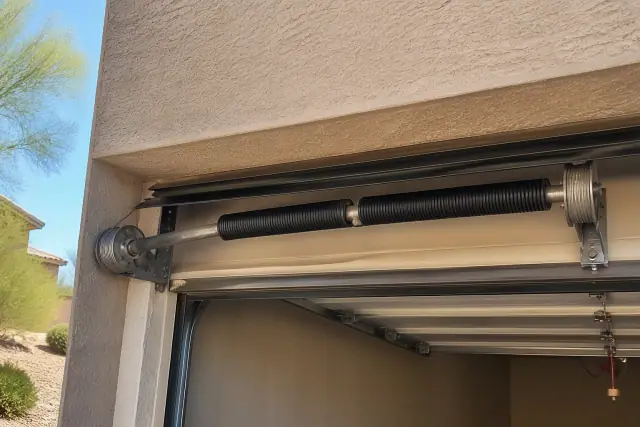
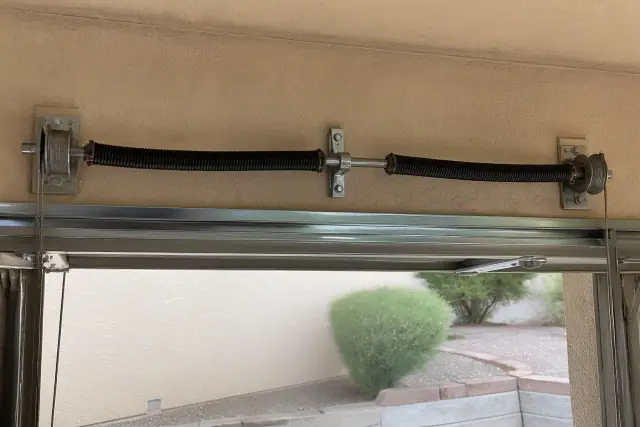
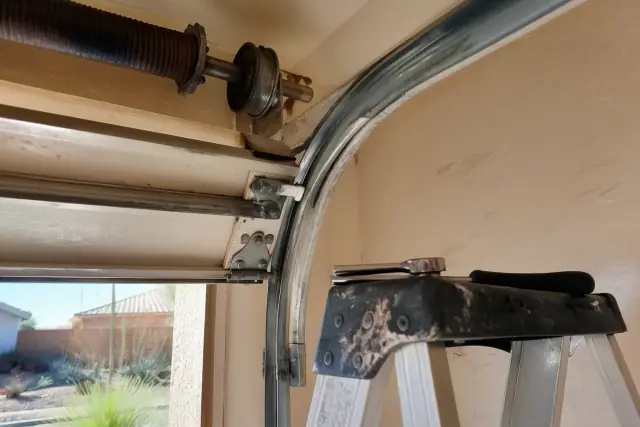
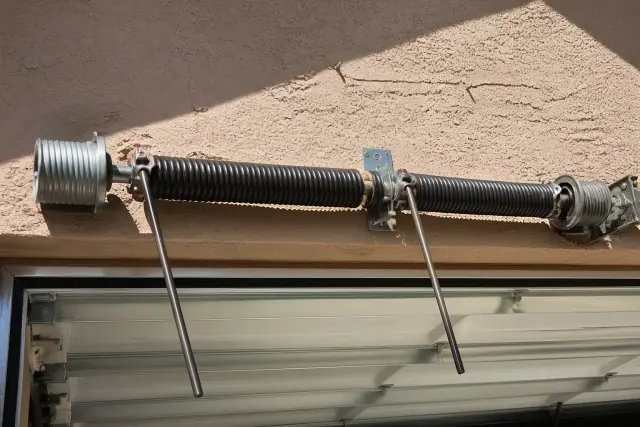
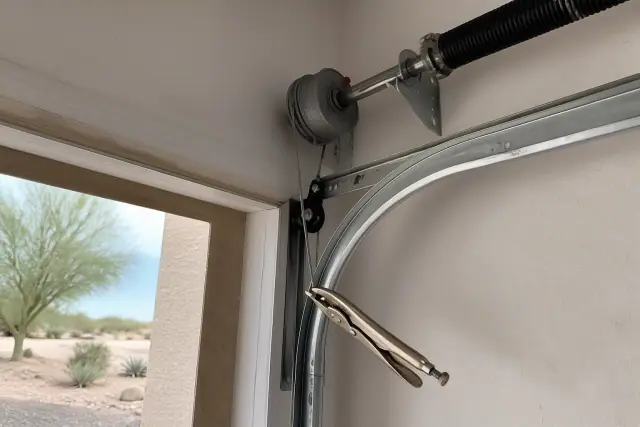
Torsion springs and cable drums on a garage door shaft at a home in Phoenix, AZ.

Spring tension is checked against door weight and cycle count, then adjusted so the door balances correctly. Proper balance reduces the extra work placed on the opener motor by an over- or under-tensioned spring.

Request Estimate

Track Spacing and Alignment

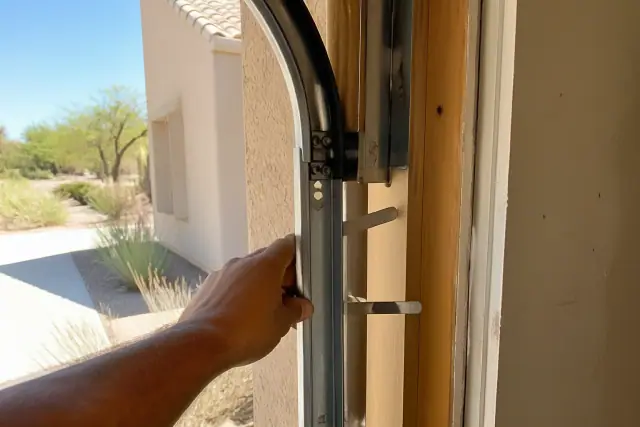
Technician adjusting garage door metal guide tracks and alignment in Phoenix, AZ.

We use a level to measure vertical alignment and track spacing, looking for widening gaps caused by temperature swings or desert soil movement. Brackets are reset and re-torqued when adjustment can restore proper travel.

Request Estimate

Opener and Safety Sensor Testing

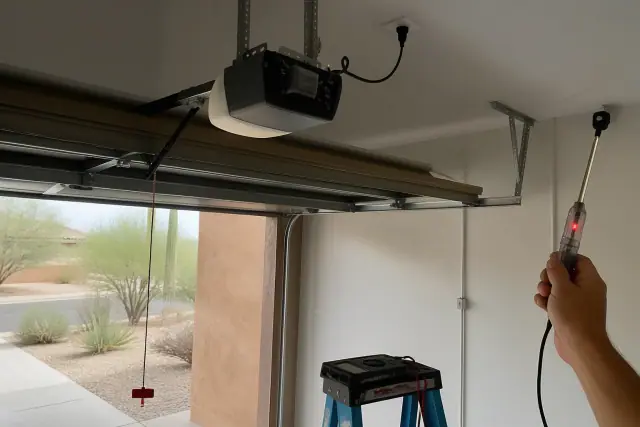
Technician testing a garage door safety sensor with a multimeter on a ladder at a home in Phoenix, AZ.

The opener is cycled while we verify photo-eye alignment and auto-reverse performance against UL 325 entrapment-protection standards. Grinding, hesitation, or remote-response problems can then be traced to the circuit board, capacitor, drive gear, sensor, or drive mechanism.

Request Estimate

Cable and Drum Inspection

Torsion springs and cable drums on a garage door shaft during maintenance in Phoenix, AZ.

We examine cables near the drums and bottom brackets for fraying, dried galvanized coating, corrosion, and uneven loading. Finding wear during a tune-up helps prevent a cable from parting under spring tension.

Request Estimate

Roller, Hinge, and Hardware Check

Technician performing a garage door roller and hardware check in Phoenix, AZ.

Rollers are checked for flat spots, hinges for cracks or bending, and bolts and brackets for vibration-related loosening. Hardware is matched to the door's gauge and panel weight when replacement is needed.

Request Estimate
Related Repair Options

Garage Door Components We Inspect and Service

A tune-up often reveals the specific component behind noise, hesitation, uneven movement, or an unsafe door. Our inspection separates adjustment and maintenance needs from spring, opener, track, cable, roller, or hinge damage that requires repair.

Torsion springs and cable drums on a garage door shaft during maintenance in Phoenix, AZ.

Garage Door Spring Service

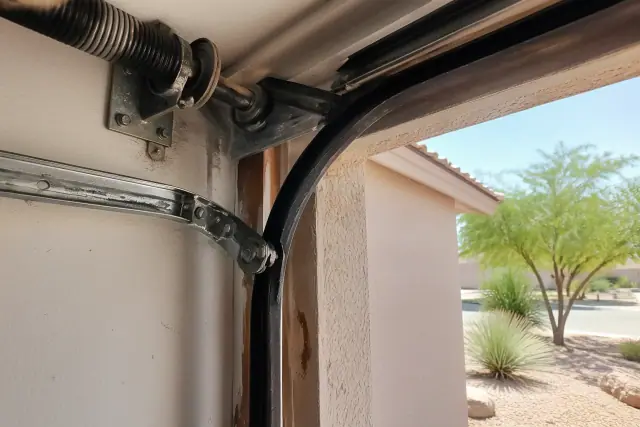
Torsion and extension springs carry dangerous stored tension, so inspection and adjustment require the right winding bars, gauges, clamps, and training. Most Phoenix homes built in the last 20 years use torsion systems, while extension springs still appear on older homes such as those in Sunnyslope.

  • Torsion spring balance and cycle-count checks
  • Extension spring condition inspection
  • Door-weight and spring-tension matching
  • Visible coil-gap and fatigue checks
  • Manufacturer torque-spec adjustments
Request Estimate
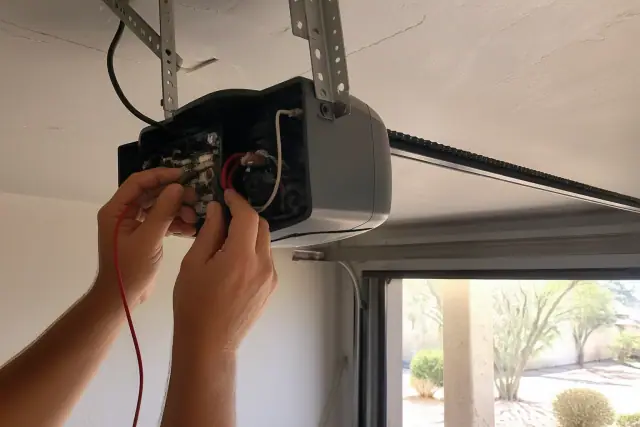
Technician testing a garage door opener motor with a multimeter in a garage in Phoenix, AZ.

Opener Diagnostics and Safety

Grinding, hesitation, or no remote response usually points to one of three failure areas, so we test components before assuming the motor has failed. Phoenix dust can accelerate drive-gear wear inside opener housings that are not sealed properly.

  • Circuit board and capacitor testing
  • Drive-gear wear inspection
  • Photo-eye realignment and testing
  • Chain-drive tension adjustment
  • Belt-drive tension evaluation
Request Estimate
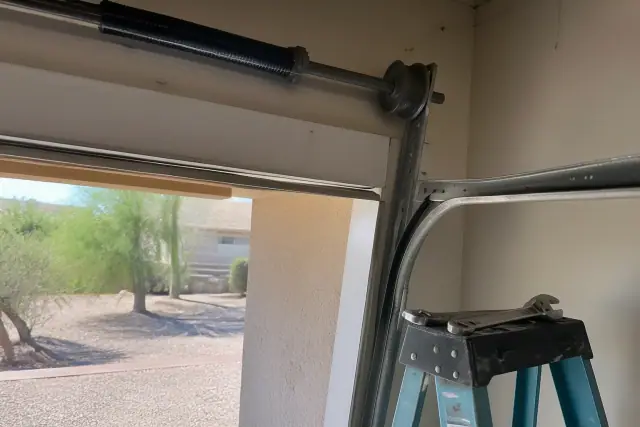
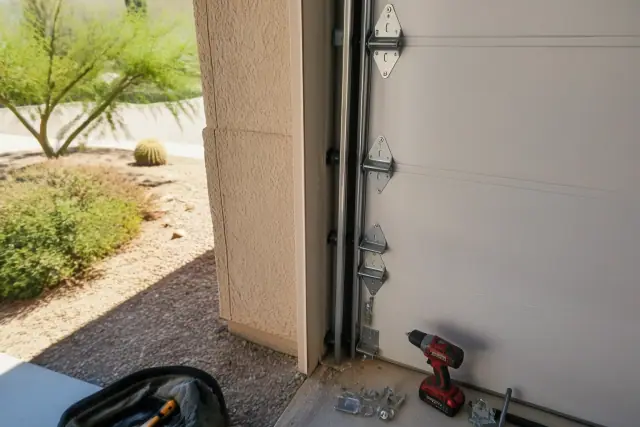
Misaligned garage door track and rollers in a Phoenix, AZ garage with tools on a ladder.

Off-Track and Track Repair

A door that has jumped its track can close unevenly, bend the track, or overload a cable if forced. We reset vertical and horizontal alignment with a level and replace significantly bent sections rather than relying on reshaping that may not hold.

  • Vertical and horizontal alignment measurement
  • Track-spacing and bracket inspection
  • Roller and cable damage checks
  • Bracket reset and re-torquing
  • Damaged track-section replacement
Request Estimate
Technician repairing garage door cables near the tracks in a Phoenix, AZ garage with desert views outside.

Garage Door Cable Repair

Cables share the door's load with the springs, making fraying or corrosion under tension a serious failure point. Replacement cables are installed in matched pairs for the door's weight class after spring tension is fully released.

  • Fraying near bottom brackets
  • Uneven door-hang diagnosis
  • Drum connection inspection
  • Matched cable-gauge installation
  • Full tension release before replacement
Request Estimate
Garage door roller and hinge replacement in progress at a residential property in Phoenix, AZ.

Roller and Hinge Replacement

Flat-spotted rollers and cracked or bent hinges can create jerky movement and make panels bind together. We commonly install nylon rollers for quieter residential operation and match hinges to the door's gauge and panel weight.

  • Grinding and jerky-movement diagnosis
  • Flat-spot roller inspection
  • Quiet-running nylon roller installation
  • Cracked or bent hinge replacement
  • Door-gauge and panel-weight matching
Request Estimate
Measured Maintenance

Choosing the Right Garage Door Maintenance Approach

The right approach depends on the door's balance, component wear, opener behavior, and exposure to Phoenix conditions. We use inspection findings and measured checks to distinguish routine lubrication and adjustment from repairs that require a matched spring, cable, track, roller, hinge, or opener component.

20-Point System Inspection

We assess springs, cables, rollers, tracks, hinges, brackets, opener function, and safety sensors as one system. This connected view helps identify how wear in one component is loading another.

High-Heat Lubrication and Precise Adjustments

High-heat lithium lubricant addresses rapid grease breakdown, while torque wrenches, cable gauges, levels, and balance testing support measured adjustments. Spring work follows manufacturer torque specifications and DASMA cycle-rating guidance.

Licensed, Bonded, and Insured Arizona Team

Phoenix Garage Door Repair Co. is licensed through the Arizona Registrar of Contractors, carries full liability insurance, and operates as a properly bonded business. We bring the same process to single-car residential doors and multi-door commercial rollup systems.

Professional Standards

Why Choose Us for Garage Door Maintenance Tune-Ups?

Our tune-ups combine manufacturer torque specifications, DASMA cycle-rating guidelines, and UL 325 safety testing with Phoenix-specific attention to heat, dust, humidity, and soil movement. The same torque wrenches, cable gauges, levels, and balance-testing process support work on Arcadia bungalows, Phoenix homes, and commercial rollup doors near Sky Harbor.

Request Tune-Up Estimate

Dry, Grinding Rollers and Hinges

Heat can break down standard grease within months, while dust works into rollers and hinges. Grinding, jerky movement, or visible roller flat spots signal that lubrication or hardware replacement is due.

Incorrect Spring Balance

A door that will not stay open may have improper spring tension or a failing spring. Incorrect balance forces the opener motor to work harder and can add wear across the system.

Misaligned Safety Sensors

Photo-eye sensors near the floor track can be knocked out of alignment, preventing the door from closing on command. We realign the sensors and test entrapment protection against UL 325 standards.

Shifting or Bent Tracks

Monsoon rainfall after a dry Phoenix summer can contribute to slight slab movement that pulls track brackets out of alignment. A worn opener or broken roller can accelerate the shift, leaving the door uneven or off track.

Frayed or Uneven Cables

Visible fraying near a bottom bracket, a door hanging lower on one side, or a popping sound can indicate cable wear. Phoenix UV exposure and dust can dry the galvanized coating and promote corrosion at drum and bracket connections.

Loose Hardware and Binding Panels

Daily cycling gradually loosens bolts and brackets, allowing alignment problems to develop. Cracked or bent hinges can also make panels bind against each other as the door travels.

How It Works

Our Garage Door Tune-Up Process

A complete tune-up moves from system inspection to measured adjustment and final safety testing. Each step helps identify whether routine maintenance is enough or a worn component requires repair or replacement.

01.

Inspect the Connected System

We begin the 20-point inspection with springs, cables, rollers, hinges, tracks, brackets, panels, the opener, and safety sensors. Visible wear and operating symptoms guide the remaining checks.

02.

Check Spring Tension and Balance

Spring tension is compared with door weight and cycle count. We balance the door so the spring system supports it without forcing the opener motor to carry excess load.

03.

Lubricate High-Friction Parts

Rollers, hinges, and torsion springs receive lithium-based lubricant rated for high-heat conditions. Application focuses on moving contact points without substituting generic grease that breaks down quickly in Phoenix heat.

04.

Align Tracks and Safety Sensors

Track spacing and vertical alignment are measured with a level, while photo-eye sensors are checked near the floor track. Misalignment is corrected before the final operating test.

05.

Tighten Hardware to Torque Specs

Bolts, hinges, and brackets are checked with a torque wrench and tightened to appropriate specifications. This helps keep vibration-related loosening from turning into track or panel problems.

06.

Cycle-Test the Door and Auto-Reverse

We run the door to confirm smoother, even travel and opener response. Auto-reverse and photo-eye sensor performance are then tested against UL 325 entrapment-protection standards.

Plan Preventive Service

Schedule a Garage Door Tune-Up Consultation

Schedule a Phoenix garage door inspection when the door starts grinding, moving unevenly, hesitating, or missing its seasonal maintenance. We will evaluate the system, explain the wear we find, and identify whether adjustment, lubrication, or component repair is appropriate.

Garage Door Maintenance Help

Garage Door Maintenance FAQs

These answers cover tune-up timing, inspection steps, Phoenix climate concerns, and common garage door wear. A system inspection can clarify whether your door needs routine maintenance or a specific repair.

Call Our Technicians

We recommend seasonal maintenance twice a year in Phoenix: once before peak summer heat and once before monsoon season. Heat and moisture stress different components, so the two visits serve distinct preventive purposes.

Our 20-point inspection covers load-bearing and moving parts, including springs, cables, rollers, hinges, tracks, brackets, opener function, auto-reverse, and photo-eye sensors. We also lubricate high-friction parts, check balance and alignment, and tighten hardware.

A complete tune-up generally takes about 45 minutes to an hour. That time allows the technician to inspect the system from start to finish instead of performing only a quick lubrication pass.

A standard tune-up in the Phoenix market runs roughly $100 to $250, depending on door size and condition. Repairs uncovered during inspection, such as spring replacement or opener work, are separate from routine maintenance.

Industry estimates associate routine professional maintenance with a 30 to 50 percent increase in the working lifespan of springs, rollers, hinges, and cables compared with running them until failure. Actual wear still depends on heat exposure, use, door weight, and component condition.

We use a lithium-based lubricant rated for high-heat environments on rollers, hinges, and torsion springs. Standard grease can break down within months under Phoenix conditions.

Torsion springs are typically rated for 10,000 cycles, or roughly 7 to 10 years of average use. Extreme heat exposure in Phoenix garages can shorten that window, so condition and balance checks matter more than age alone.

A door that will not stay open, a loud bang from the garage, or a visible gap in a spring coil can indicate spring failure. Stop operating the door and have the spring system inspected because continued use may also damage a cable.

Garage door springs store enough tension to cause serious injury when released incorrectly. Professional spring work uses winding bars, tension gauges, clamps, and a controlled release-and-reset process.

A photo-eye sensor that has been knocked out of alignment is a common reason a door will not close on command. We realign the sensors and test the opener's entrapment-protection features against UL 325 standards.

Yes. Chain-drive openers run louder and need periodic chain tensioning, while belt-drive units require different tensioning tools and procedures. Diagnosing the drive type helps separate opener noise from roller or door-hardware noise.

Stop using the door rather than forcing it closed, because the track can bend further and a loaded cable can fail. Professional realignment resets vertical and horizontal positioning, re-torques brackets, and replaces track sections with significant bending.

We provide residential and commercial maintenance throughout Phoenix and the surrounding metro, including Scottsdale, Tempe, Mesa, Glendale, Chandler, and Peoria. Our experience includes single-car residential doors and multi-door commercial rollup systems.