Yes, If the Door Is Sectional
Most residential sectional doors use three to five horizontal sections, so one damaged panel can be detached at its hinges and rollers while the rest of the door stays in place.
In most cases, Phoenix Garage Door Repair Co. can replace one or more damaged sections on a sectional garage door in Phoenix without replacing the sound panels, track, springs, or opener. Whether that is the right choice depends on the door's age, exact panel availability, and whether the damage extends beyond a single section.
Most residential sectional doors use three to five horizontal sections, so one damaged panel can be detached at its hinges and rollers while the rest of the door stays in place.
Doors under 10 years old often still have panels in stock, and doors within roughly 10-15 years match most reliably when the manufacturer, model, size, profile, and gauge can be identified.
Photograph the damaged section and the manufacturer sticker, then confirm that the adjacent panels, hinges, rollers, reinforcement struts, track, and springs remain sound before ordering a replacement.
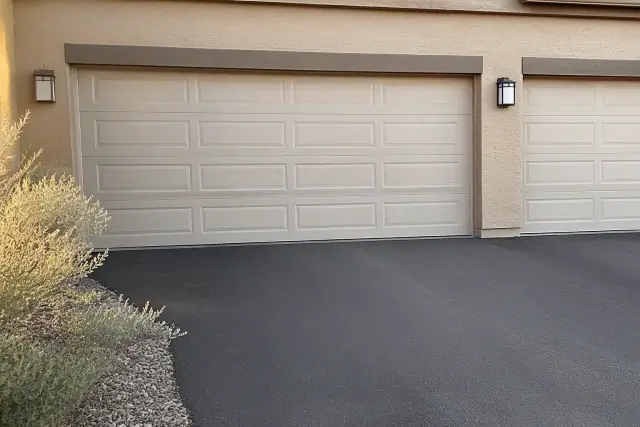
The entire door straight on so the damaged section, adjoining seams, fading, and any damage across multiple panels are visible.
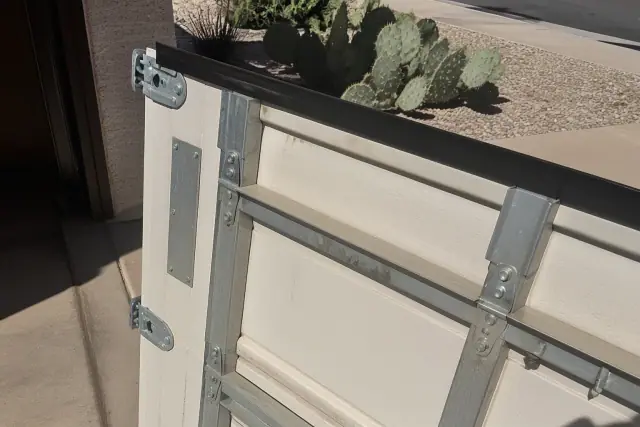
Capture the door-edge label and the raised, recessed, flush, or carriage-house profile. These details help locate the correct model, dimensions, finish, and insulation value.
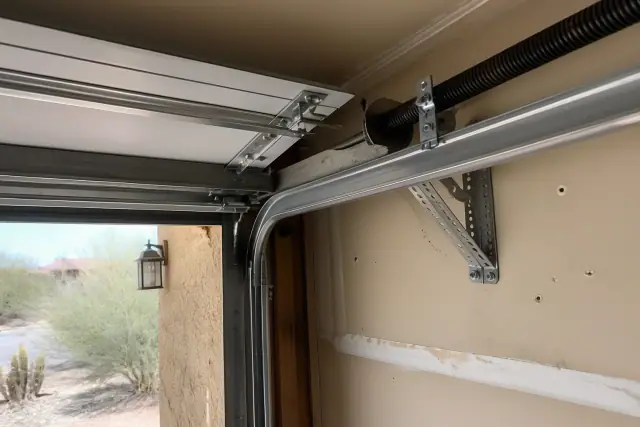
Include close views of the rollers, end hinges, track, cracked seams, bent stiles, rust-through, and any temporary bracing. Structural damage can change a panel-only job into a broader repair.
One isolated damaged section favors panel replacement; damage spanning several sections shifts the comparison toward replacing the full door.
Panel profile, gauge, dimensions, finish, and insulation should match. A visually similar replacement can still look wrong or operate poorly beside the original sections.
A shallow dent without a cracked skin may be pulled and repainted, but a cracked seam, bent stile, rust-through, or warping that prevents a bottom seal usually points to replacement.
Panel work takes place beside a loaded torsion spring system. The exact reinforcement strut and aligned hardware matter because a poor fit can upset door balance and track alignment.
| Door Condition | Match Outlook | Likely Direction |
|---|---|---|
| One damaged section; track, springs, and other panels are sound | The exact profile is available | Replace the damaged panel |
| A dent without a cracked skin, seam, or bent stile | The original panel may remain usable | Assess pulling and repainting first |
| Two or more damaged sections | Matching several panels adds cost and mismatch risk | Compare full-door replacement |
| Door is 15-20 years old or the panel line is discontinued | Exact sourcing and color matching become less reliable | Compare panel sourcing with a full replacement |
A panel-only repair removes the hinges, roller brackets, and damaged section while leaving a functioning opener, spring system, track, and sound panels intact. After the new section is installed, the door should be cycled for binding, noise, and track alignment, then checked for correct balance at 1-2 inches of manual lift resistance according to the manufacturer specification.
Steel, aluminum, wood, and fiberglass panels differ in weight, finish, insulation, cost, and durability. Phoenix UV exposure can fade or warp unprotected panels, especially on west- and south-facing doors, while monsoon debris, hail, vehicle impacts, and landscaping rock strikes can damage seams and stiles. Uneven fading, discontinued profiles, damage across multiple sections, or a door nearing its 20-30 year service life can make full replacement the better long-term choice. Commercial sections may also use heavier-gauge steel and reinforcement tied to ANSI/DASMA 108 wind-load ratings.
Can the color and insulation match? Usually, if the manufacturer, model, profile, gauge, size, finish, and insulation value are still available; common profiles used across Valley subdivisions built from the 1990s through today may be easier to source. How long does the work take? A single-panel swap typically takes one to two hours once the correct part is on the truck, while custom or multi-panel orders take longer. Does it need a permit? Straightforward panel repair generally does not, but changing the opening or header can alter the requirement.
Send clear photos of the damaged panel, the full door, and the manufacturer label for a free panel-replacement estimate. A technician can compare panel availability with the door's remaining condition before you choose a single-section repair or full replacement.