Most Common Failure Points
No-open and no-close calls usually begin with power, remote batteries, photo-eye alignment, drive gears, capacitors, or force and travel settings rather than a failed motor.
At Phoenix Garage Door Repair Co., opener problems across Phoenix most often trace to lost power, misaligned photo eyes, worn drive gears, failed capacitors, or incorrect force and travel limits. Heat above 110°F and monsoon dust can accelerate those failures, so recognizing the symptom helps distinguish a safe first check from a repair that needs a technician.
No-open and no-close calls usually begin with power, remote batteries, photo-eye alignment, drive gears, capacitors, or force and travel settings rather than a failed motor.
Sustained heat ages belts, capacitors, and circuit boards, while monsoon dust, sun glare, and spiderwebs can interrupt the photo eyes. An unbalanced door adds motor overload because the opener is forced to do the springs' work.
Check the outlet, compare the remote with the wall button, clean and align the photo eyes, listen during one cycle, and use the manual release to rule out a binding or unbalanced door.
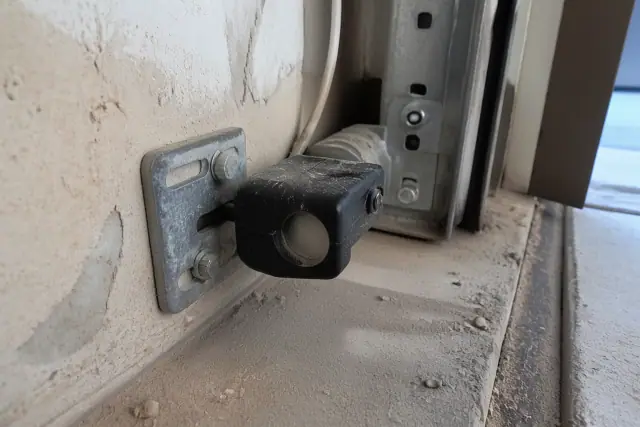
Dust on the lenses and sensor brackets sitting at different heights. This helps readers recognize why a clear line of sight matters when the door will not close.
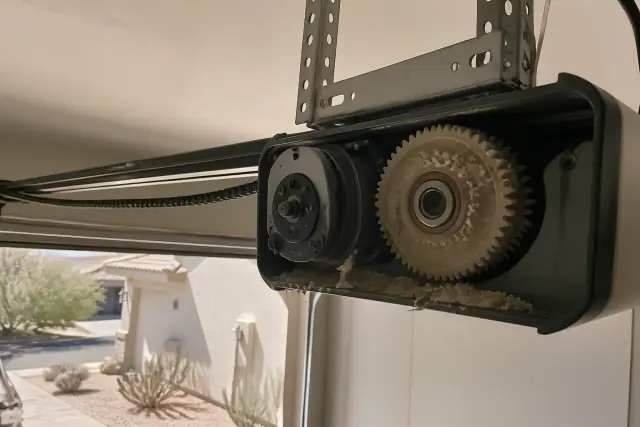
Worn gear teeth beside a sagging or displaced chain. These details connect grinding, slack, and lost trolley movement to drive-component wear.
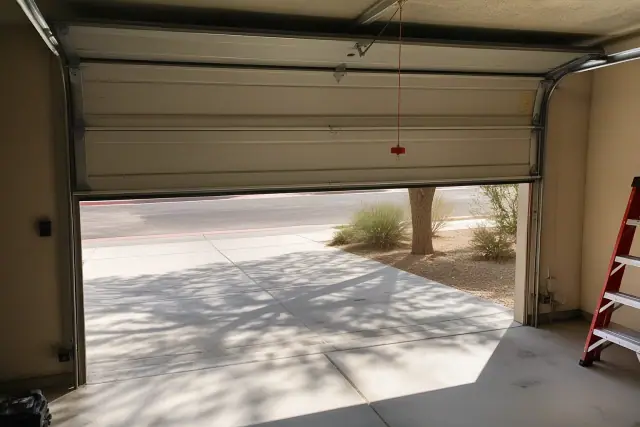
The opener disconnected while the door is moved by hand. A door that binds or will not stay balanced can overload the motor and distort force-setting diagnosis.
Check the breaker and outlet, then test the remote and wall button separately. A click without movement points more strongly to a failed capacitor or stripped gear than to a dead motor.
Photo eyes need a clear line of sight and should sit within a half inch of each other's height. If cleaning and alignment do not help, the close-force or travel-limit setting may need recalibration.
Grinding suggests stripped gears or metal-on-metal contact after a chain jumps its track. Squealing more often means a chain or belt needs lubrication, tensioning, or replacement because it is cracked or fraying.
Nylon drive gears wear over thousands of cycles, especially after the 10-year mark. With most openers lasting 10-15 years, frequent repairs, inconsistent operation, obsolete remote technology, or rising motor energy draw can support replacement rather than another isolated repair.
| Symptom | Likely Cause | Best Next Check |
|---|---|---|
| Will not open | Lost power, dead remote battery, failed capacitor, or stripped drive gear | Check the breaker and outlet, then compare the remote with the wall button. |
| Will not close or reverses | Dusty or misaligned photo eyes, close-force setting, or travel limit | Clean both lenses, confirm a clear line of sight, and recheck alignment. |
| Grinding | Stripped nylon gear or a chain that has jumped its track | Avoid repeated cycling and have the drive components inspected. |
| Squealing or visible slack | Dry or loose chain, or a cracked and fraying belt | Inspect tension and condition before the drive component fails. |
| Clicks but does not move | Failed start capacitor or stripped gear | Rule out a door bind with the manual release, then have the opener diagnosed. |
| Intermittent after heat or an outage | Logic-board, capacitor, receiver-sync, or battery-backup trouble | Note when it recurs and whether a reset only helps temporarily. |
Most opener problems fall into four groups: power and controls, safety sensors, drive components, and force or travel settings. UL 325 has governed photo-eye safety for openers manufactured since 1993, and units meeting its 2019 update include battery backup. The symptom matters because resetting a receiver may solve a programming issue, while a stripped gear, failed capacitor, or binding door requires mechanical diagnosis.
Phoenix's Sonoran Desert conditions change how components age: sustained heat above 110°F degrades belt material and electronics, while garage temperatures above 120°F contribute to capacitor failures that spike in July and August. Dust and direct sun can disrupt photo eyes, and battery backups often need replacement every 2-3 years in summer heat. Drive type, opener age, door balance, horsepower, and whether the system uses heavier-duty NEMA-rated commercial components all change whether adjustment, component repair, or replacement makes sense.
Unplugging an opener may reset logic-board memory, but it will not repair a failed capacitor, stripped gear, or worn belt. Sensor, capacitor, and gear repairs commonly fall in the $150-$300 range, while the broader standard repair range reaches $150-$350; a unit alone typically runs $200-$450, and installed replacement runs $300-$700. A full tune-up once a year can catch 80% of failure points by checking lubrication, sensor alignment, capacitor condition, force, and travel settings. Commercial service generally costs more because warehouse and retail openers use heavier-duty motors and NEMA-rated components.
Describe whether the opener clicks, grinds, reverses, or will not move, and note whether the remote and wall button behave differently. A Phoenix technician can inspect the sensors, drive components, settings, and door balance before recommending repair or replacement.