Proudly serving Phoenix, Mesa, Scottsdale, Tempe, Glendale, Chandler & surrounding areasCall or Text 24/7: 602-449-9593
Guides

What are the common red flags of fake garage door repair services?

Phoenix Garage Door Repair Co. helps Phoenix homeowners spot fake garage door repair services before urgency turns into an inflated bill or unsafe work. Warning signs include unmarked vehicles, a generic phone greeting, missing credentials, price changes after disassembly, and demands for untraceable upfront payment. With summer temperatures regularly above 110 degrees contributing to spring and roller wear, knowing how to verify the technician, estimate, parts, and company identity matters before anyone touches the door.

Quick Summary

  • Treat an unmarked truck, no uniform or company name, and a generic phone greeting such as "garage door service" as identity red flags.
  • Ask for an Arizona Registrar of Contractors license number, proof of liability insurance, and a registered business address before work begins.
  • Get an itemized written estimate before disassembly, ask to see each failed part, and approve any change in scope before more work continues.
  • Decline full payment upfront or a cash-only, Venmo, Zelle, or Cash App request to a personal account; use a traceable invoice and business payment.

How to Spot a Fake Repair Service

Verify the Company Identity

Match the specific business name on the phone greeting, marked vehicle, uniform, written estimate, and fixed address. Temporary plates, out-of-state registration, fresh magnetic signs, or different names across those touchpoints deserve more questions.

Compare the Written Estimate

A standard torsion spring replacement typically runs $150-$350 in the Phoenix market. A $700-$1,200 quote for the same job is a bait-and-switch warning, especially when the increase appears only after the door is disassembled.

Verify License and Insurance

Ask for the contractor license number and proof of general liability coverage before the repair starts. Verify the license through the Arizona Registrar of Contractors and stop if the technician cannot produce it or becomes evasive.

What Garage Door Scam Evidence Looks Like

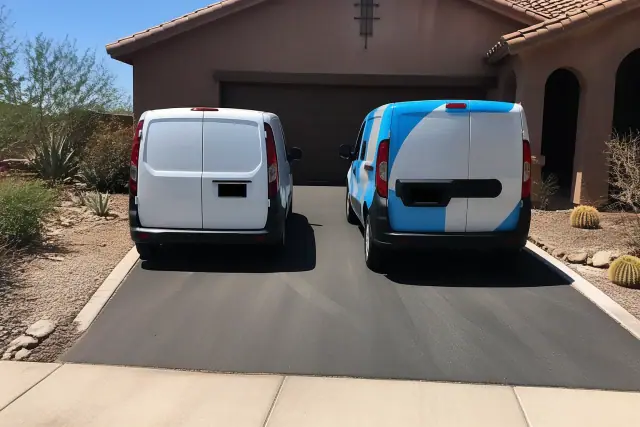
Unmarked Van vs. Branded Service Vehicle

An unmarked van and a branded service vehicle parked in a residential driveway in Phoenix, AZ.

The contrast between a plain vehicle and one with a consistent company name and phone number. Vehicle identity is one of the first details a homeowner can check before opening the garage.

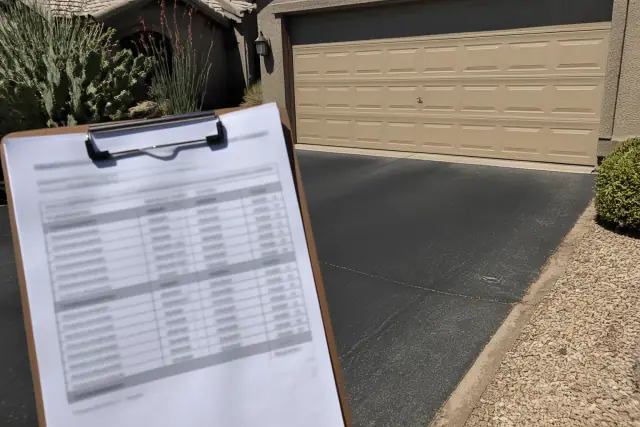
Itemized Estimate Before Garage Door Work

Clipboard with an itemized garage door repair estimate in a residential driveway in Phoenix, AZ.

A written estimate listing the diagnosis, specific parts, labor, and total price before any bolts are removed. That documentation makes undisclosed trip, diagnostic, or disposal fees easier to challenge.

Torsion Spring Label and Manufacturer Stamp

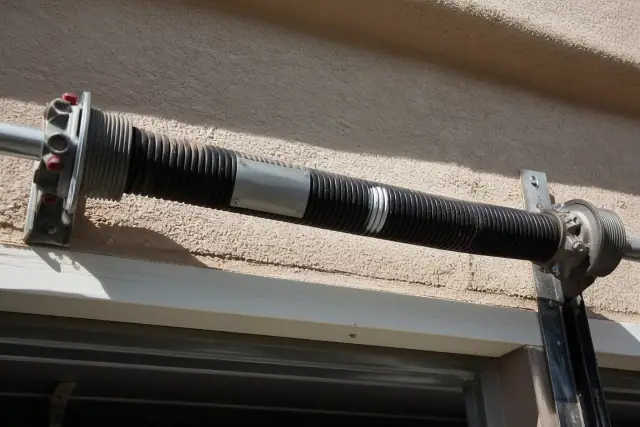
Torsion spring with manufacturer label mounted on a shaft above a garage door in Phoenix, AZ.

The packaging, manufacturer stamp, and cycle rating beside the removed spring. Properly rated torsion springs may be built for 10,000-25,000 cycles, so those details help expose generic parts billed as OEM components.

Garage Door Scam Warning Snapshot

Match Every Business Detail

Compare the company name on the invoice, truck signage, website, physical address, and phone greeting. Conflicting names or an address that cannot be tied to a registered business make complaints harder to trace.

Compare Common Phoenix Price Ranges

Straightforward off-track realignment typically falls between $125 and $300, while opener repair runs $100-$250 depending on whether the issue is the sensor, circuit board, or motor. New garage door installation generally ranges from $750 to $2,500 depending on door size, material, and insulation rating; a quote far outside the relevant scope deserves a second opinion.

Stop Before the Door Is Disassembled

Pause if the price changes, the technician claims the spring could fail immediately, or additional parts suddenly become necessary. Ask to see the failed component and require the revised scope in writing before work continues.

Avoid Verbal Promises and Manufactured Reviews

A verbal lifetime warranty has no value without written parts, labor, and exclusion terms. Online profiles showing only five-star reviews from the same week, repeated generic wording, or no reviews older than a few months also warrant closer scrutiny.

Garage Door Repair Scam Checklist

Before Anyone Touches the Garage Door

CheckCredible SignalRed FlagSafer Response
Company identityThe same business name appears on the phone greeting, vehicle, estimate, and address.An unmarked vehicle, generic greeting, or conflicting business names.Match the details before allowing access to the door.
CredentialsA verifiable Arizona contractor license number and proof of liability insurance.Evasive answers or credentials that cannot be produced.Verify the records before work begins.
EstimateDiagnosis, parts, labor, and total price are written down before disassembly.A low phone quote that jumps after the door is taken apart.Pause and approve any scope change in writing.
PaymentAn invoice and traceable payment tied to the registered business.Full payment upfront, cash only, or a transfer to a personal account.Do not prepay a routine repair through a personal payment app.
Parts and warrantyPackaging, manufacturer marks, cycle rating, and written warranty terms are available.Generic parts billed as OEM or a verbal lifetime promise with no terms.Confirm the part and coverage before the old component is discarded.

How Fake Repair Services Create Urgency

Fake repair services often start with an $89 phone quote, arrive quickly, remove a torsion spring, and then announce additional damage while the garage door is hanging open. The homeowner feels trapped once the door is disassembled, which gives the operator leverage to inflate the bill. Phoenix has more than 1.6 million residents across 517.9 square miles, so an unmarked operator can move between neighborhoods without building a consistent local identity. A legitimate change in scope is explained and approved in writing before more work continues.

How to Verify a Garage Door Company

Verify the contractor license through the Arizona Registrar of Contractors, then match the business name and address through the Arizona Corporation Commission and Maricopa County records. Ask for a certificate of general liability insurance; a legitimate business should be able to produce it on the spot or within a day. Before parts are removed, insist on a written estimate listing the diagnosis, specific parts, labor, and total price. Ask to see the failed part, packaging, and manufacturer stamp before the old component is discarded.

Common Follow-Up Questions

For a door-to-door offer, an unsolicited claim that someone noticed a problem-especially when paired with pressure to decide immediately-is a warning; ask for ID, a company name, and a license number. If a technician may be exaggerating, ask to see the broken spring coil, worn cable, or cracked roller and request a plain-language explanation. A 25-year-old garage door may still be worth repairing when its panels and track are structurally sound, while an original opener that lacks modern safety sensors can be considered separately. For online reviews, look for varied dates and specific service details rather than a burst of identical praise.
Ask a Local Pro

Need a Clear Written Estimate?

Describe the garage door symptom and the repair you were quoted. A local team can inspect the door and provide a written, itemized estimate before work starts.